
Water parameters
Overview
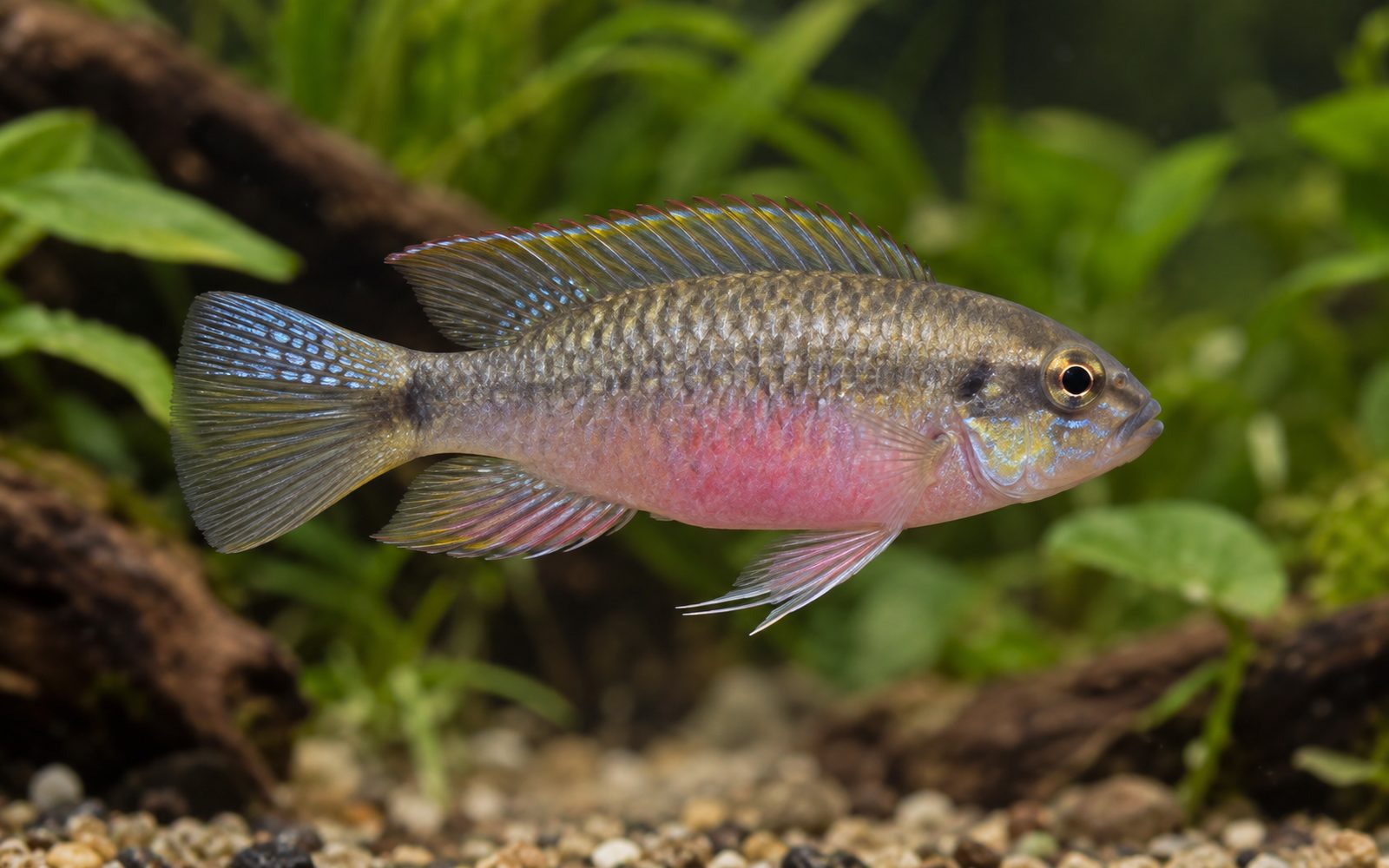
Pelvicachromis humilis lives in the oxygen-rich, slow-flowing rivers and streams of Guinea, Sierra Leone and Liberia and is the largest species of its genus. Males are in brown-beige tones, with vertical bars that appear and disappear depending on mood and reddish fins. Females are more colorful: they have a silvery-gray body, a pink belly that deepens as they mature and a bright silvery-blue color on the upper half of the tail. It has local forms such as "Kasewe", "Kenema", "Liberia Red" and "Guinea"; these should not be mixed with each other.
Tank Setup
- At least 150 liters and 100 cm of length for a pair.
- 24–26°C; soft, slightly acidic water (pH 5.5–6.5 for breeding).
- Several caves and a bottom divided up with roots, stones and plants; good filtration and oxygenation.
Diet
Omnivorous. It feeds on sinking granules and tablets, frozen bloodworms, mysis and brine shrimp; foods with plant content should also be offered.
Behavior and Compatibility
Hardier than its relatives, but aggressive toward its own kind; unless the tank is very large, keep a single pair. It spawns in a cave; the female tends the eggs while the male guards the territory. It does not get along well with very active or large species. It eats shrimp.
Good companions: medium-sized soft-water schooling fish (African characins, tetras), bristlenose plecos (Ancistrus).
Avoid: other Pelvicachromis pairs, large and dominant cichlids, shrimp, small bottom-dwelling fish.
A short profile for this species
The Pelvicachromis humilis page has the basics, but the sections below have not been written yet. If you keep this species, write a section from your own experience; it will be published under your name after editor approval.
Tank mates
This list is calculated automatically from the species profile and grows as new species are added to the catalog. Try it in the planner for a definite answer.
Usually compatible
 Emerald Betta
 Keyhole Cichlid
 Firemouth Cichlid
 Cupid Cichlid
 Buffalohead Cichlid
 Festivum
 Geophagus surinamensis
 Rainbow Cichlid
 Gymnogeophagus balzanii
Should not be kept together





Hobbyist notes
Things you won't find in books, learned by trial and error. The most helpful ones are on top.
Change history and contributors
- Page created · October 16, 2026