
Water parameters
Overview
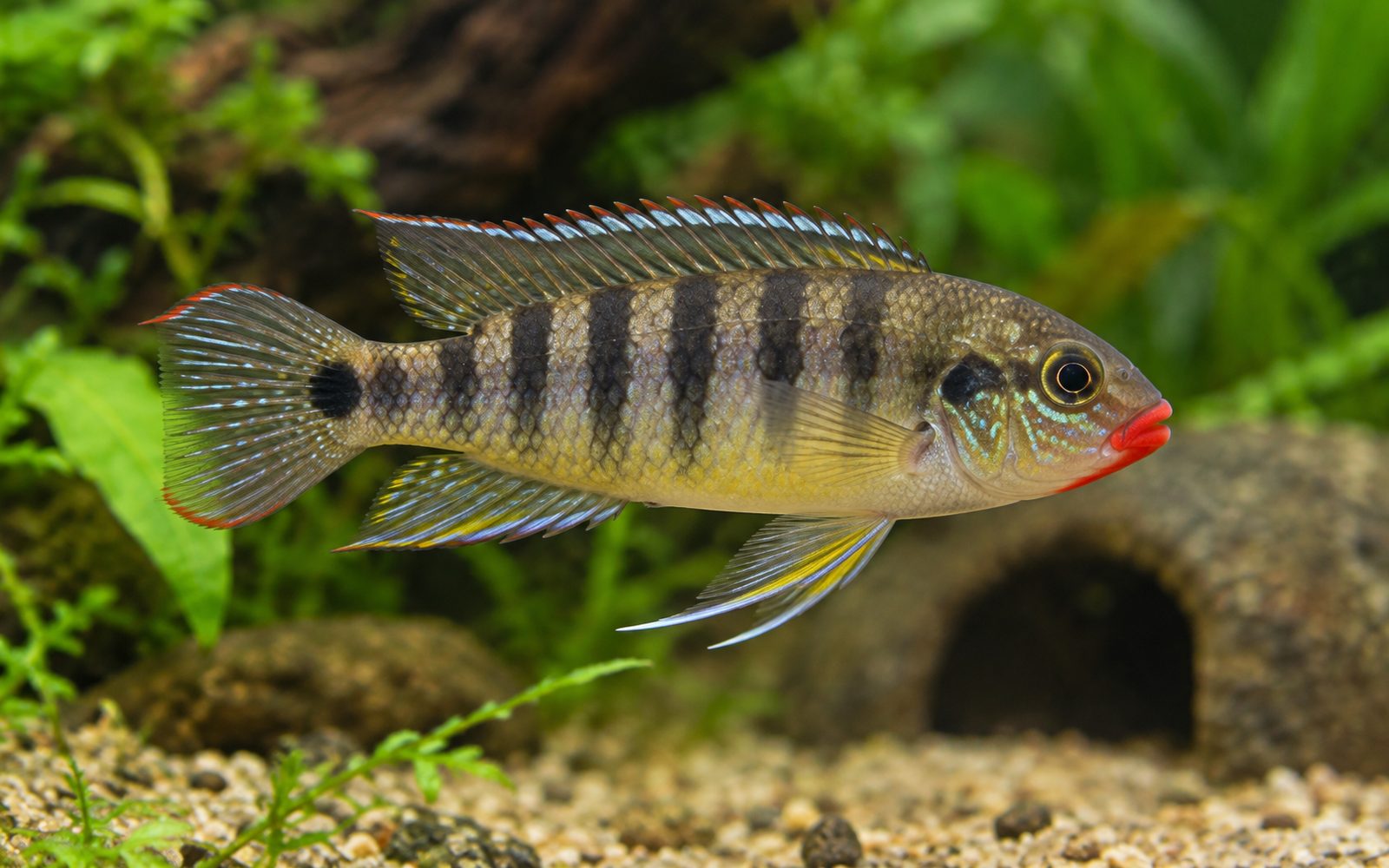
Pelvicachromis rubrolabiatus was described in 2004 together with P. signatus and was previously counted within the P. humilis group; in the trade it is also known as "Bandi 2". The male's red lips give the species its name; when displaying, seven dark vertical bars appear on its body along with a dark spot on the caudal peduncle. Females are yellowish, with a pinkish-silver belly, dark pelvic fins and a prominent dark spot on the dorsal fin. Males reach 10 cm, while females stay slightly smaller.
Tank Setup
- At least 120 liters and 90 cm of length for a pair.
- 24–26°C, soft and acidic water; since it comes from forest streams, avoid hard water.
- Roots, hardy plants such as Anubias, several caves and plenty of hiding places.
Diet
Omnivorous. Make granules and flakes with plant content the staple; supplement in moderation with frozen brine shrimp, mysis and bloodworms.
Behavior and Compatibility
Calmer than humilis and signatus; it can be kept in a community tank with carefully chosen companions. It spawns in a cave; the female does most of the egg care, and both parents guard the fry together. It eats shrimp.
Good companions: medium-sized soft-water schooling fish, African characins, bristlenose plecos (Ancistrus).
Avoid: other Pelvicachromis pairs (in a small tank), large cichlids, shrimp, small bottom-dwelling fish.
A short profile for this species
The Pelvicachromis rubrolabiatus page has the basics, but the sections below have not been written yet. If you keep this species, write a section from your own experience; it will be published under your name after editor approval.
Tank mates
This list is calculated automatically from the species profile and grows as new species are added to the catalog. Try it in the planner for a definite answer.
Usually compatible
 Emerald Betta
 Keyhole Cichlid
 Festivum
 Geophagus surinamensis
 Cryptocoryne Parva
Adonis Pleco
Cryptocoryne Parva
Adonis Pleco
 Weeping Moss
 Flame Moss
 Alternanthera Reineckii 'Mini'
Should not be kept together





Hobbyist notes
Things you won't find in books, learned by trial and error. The most helpful ones are on top.
Change history and contributors
- Page created · October 16, 2026