
Water parameters
Overview
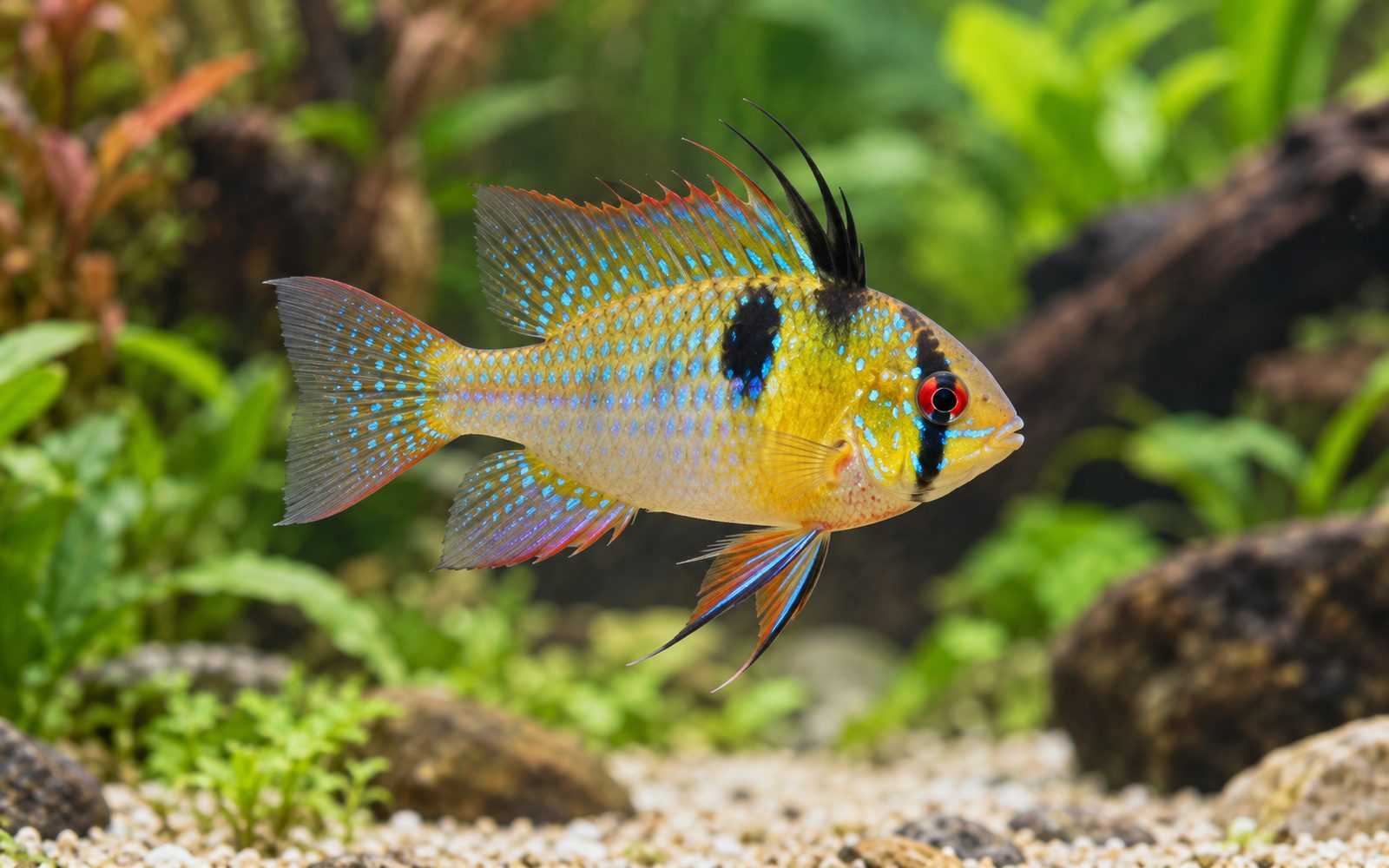
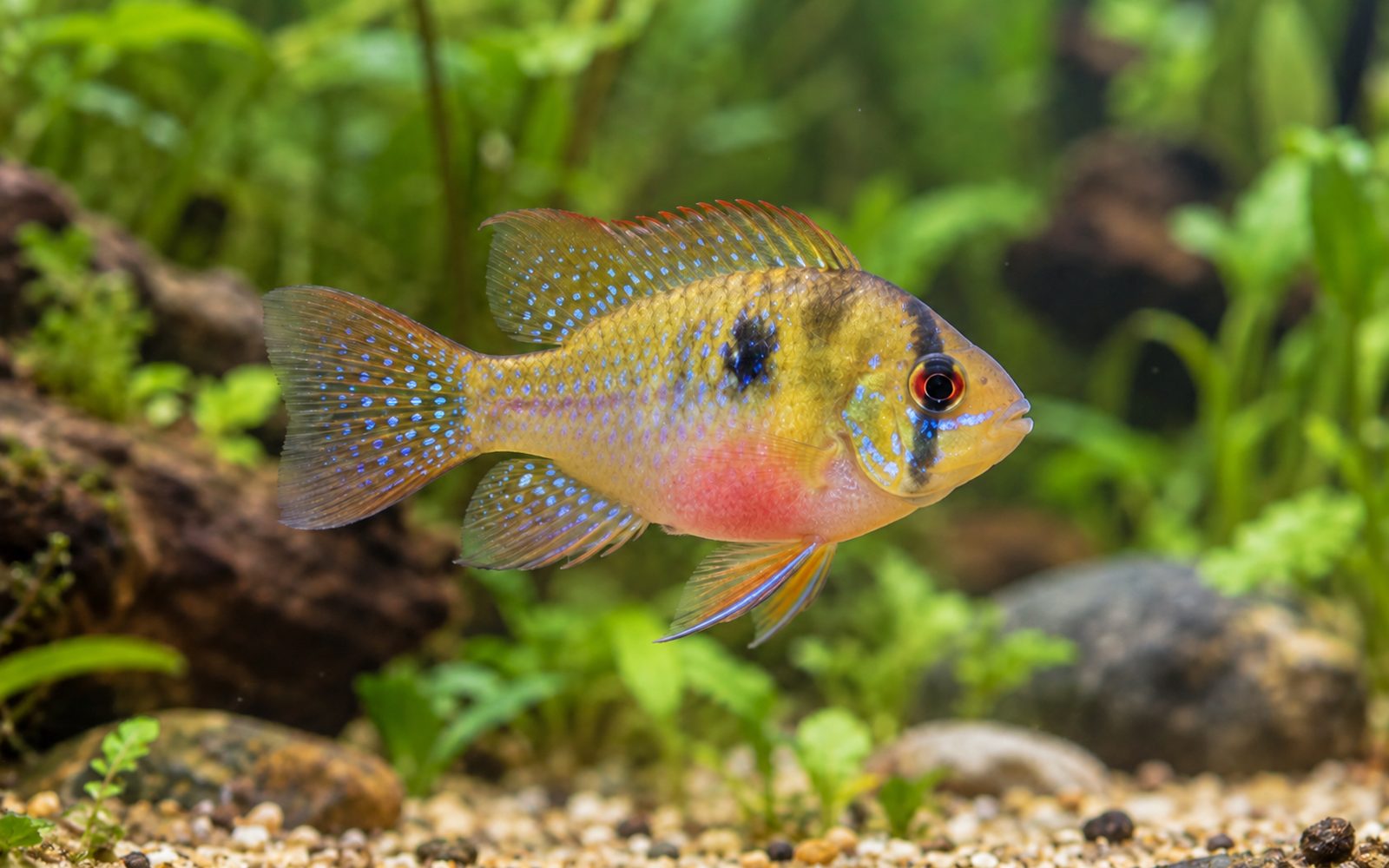
With its yellow–gold body, turquoise spots, red eye and black dorsal fin ray, the ram is one of the most colorful dwarf cichlids. Gold, "electric blue" and balloon forms are also bred; however, selectively bred forms are generally more delicate.
It is among the most peaceful cichlids but it is not "easy": it needs high temperatures, low nitrate and stable water values. It is recommended for hobbyists used to a mature aquarium and regular water changes.
Natural Habitat
It lives in shallow, warm (up to 30°C), soft and acidic lakes and swamps on the plains of Venezuela and Colombia known as the "llanos." The bottom is covered with leaves and plants.
Tank Setup
- Volume: 60 liters for a pair, 100 liters or more together with a community.
- Temperature: 27–29°C. Low temperatures immediately weaken its immune system.
- Water: soft, pH 6–7, nitrate as low as possible. A 30–40% water change every week.
- Substrate and decor: fine sand (it feeds by sifting), flat stones (spawning surfaces), roots and dried leaves.
Diet
Omnivorous but feeds mainly on protein; it picks food from the substrate. Small sinking granules, frozen bloodworms, brine shrimp and daphnia. Newly arrived fish often accept only live/frozen food; wean them onto dry food gradually.
Behavior and Compatibility
Peaceful; only during breeding does it guard its spawning site and chase approaching fish, without doing serious harm. It can be kept as a pair or, in a large aquarium, with several pairs.
Good companions: small tetras that tolerate warm water (cardinal, rummy-nose), Sterba's corydoras, otocinclus, discus, harlequin rasboras (at the upper end of their temperature range).
Avoid: neon tetras and zebra danios (they like cooler water), large or aggressive cichlids, greedy fish that grab food fast.
Group and Colony Structure
The ram seems made to be kept as a pair: the male and female set up a territory together and guard the eggs and fry together. A single ram can survive but will not show most of its behavior.
To get a pair, the easiest way is to buy 4–6 juveniles and wait for them to pair off, or to buy an already bonded pair from the store. Two pairs can be kept in an aquarium of 100 liters or more; each pair should have a territory visually separated by stones and plants.
Breeding
The pair choose a flat stone or a pit they have cleaned in the substrate and lay 150–300 eggs. The parents guard the eggs and fry together and may carry the fry in their mouths from pit to pit. Young pairs may eat the eggs in their first attempts. The eggs hatch in 2–3 days, and the fry are fed newly hatched brine shrimp.
Health and Common Problems
- Bacterial infections and darkening: at low temperatures and high nitrate.
- Internal parasites: common in store fish; wasting and white feces.
- Because it is delicate, keeping new fish in quarantine in warm, clean water significantly reduces losses.
Sexing
In males the front rays of the dorsal fin (especially the 2nd and 3rd rays) are longer and black, and males are generally larger. Females have a pink–red belly, and the black spot on their flank contains turquoise spots.
Tank mates
This list is calculated automatically from the species profile and grows as new species are added to the catalog. Try it in the planner for a definite answer.
Usually compatible
 Emerald Cory
 Keyhole Cichlid
 Cupid Cichlid
 Discus
 Geophagus altifrons
 Geophagus surinamensis
 Cryptocoryne Parva
 Gold Spot Pleco (L001)
African Red-eyed Tetra
Reticulated Loach
Gold Spot Pleco (L001)
African Red-eyed Tetra
Reticulated Loach
Should not be kept together






Hobbyist notes
Things you won't find in books, learned by trial and error. The most helpful ones are on top.
Change history and contributors
- Page created · October 16, 2026