
Water parameters
Overview
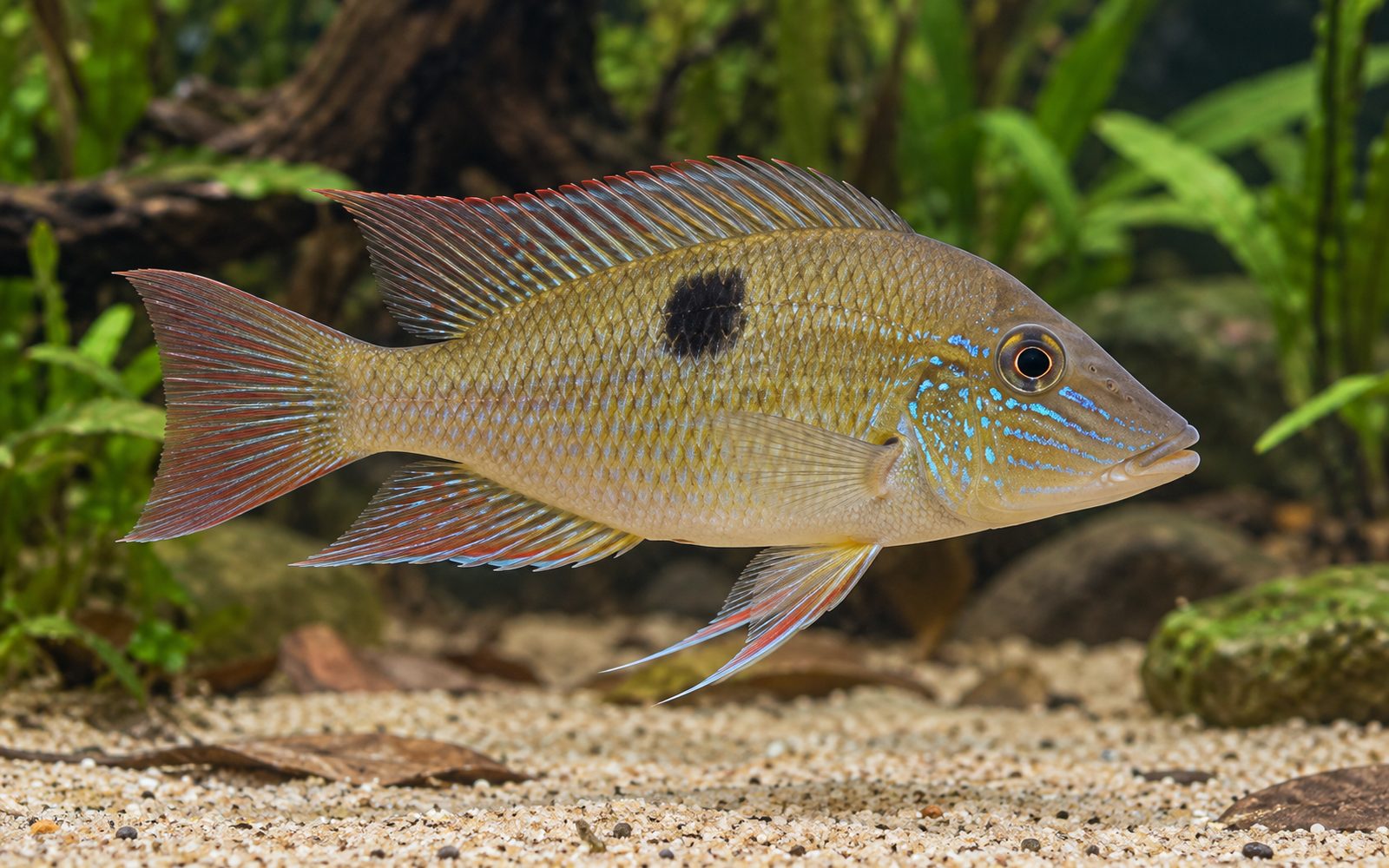
Satanoperca lilith is a long-snouted eartheater similar to the other species of the genus; its most distinctive difference is the single large black blotch on the upper body, below the dorsal fin. It has an elegant appearance with its golden–olive body and blue lines on the cheeks. It comes from the soft waters of the Rio Negro and central Amazon; it is somewhat more sensitive to water quality than S. jurupari. It is a delayed mouthbrooder.
Tank Setup
- At least 300 liters and 150 cm of length for a group of 4–6.
- Fine, round sand is a must; gravel damages the gills.
- Roots, leaf litter and dim light; an open sand area.
- Soft, acidic, clean water; change 30–40% weekly.
Diet
Omnivorous. Make small sinking granules and tablets the staple; vary them with frozen bloodworms, brine shrimp and mysis. Give 2–3 small meals a day.
Behavior and Compatibility
Peaceful and social; apart from minor squabbles within the group, there is no fighting.
Good companions: angelfish, discus, Biotodoma, medium to large tetras, corydoras, plecos.
Avoid: aggressive cichlids, fast and greedy feeders, coarse substrate, small shrimp.
A short profile for this species
The Satanoperca lilith page has the basics, but the sections below have not been written yet. If you keep this species, write a section from your own experience; it will be published under your name after editor approval.
Tank mates
This list is calculated automatically from the species profile and grows as new species are added to the catalog. Try it in the planner for a definite answer.
Usually compatible
 Emerald Betta
 Emerald Cory
 Altum Angelfish
 Keyhole Cichlid
 Firemouth Cichlid
 Cupid Cichlid
 Buffalohead Cichlid
 Discus
 Festivum
Should not be kept together






Hobbyist notes
Things you won't find in books, learned by trial and error. The most helpful ones are on top.
Change history and contributors
- Page created · October 16, 2026