
Water parameters
Overview
Tropheus brichardi is a Tropheus species spread over a large part of the lake, with many local forms. Its juveniles are distinguished from other Tropheus juveniles by the distinct light and dark vertical bars on their bodies; in adults these bars are kept in some forms, while in others they turn into a dark, plain color. In the trade it is named after the place where it is found. Its care, feeding sensitivity and need for a group are the same as for Tropheus moorii.
Tank Setup
- At least 300 liters and 150 cm of length for a group of 12–20.
- Plenty of rocks that break lines of sight, high oxygen and a strong filter.
- pH 8–9, hard and stable water; a 30% water change every week.
- Only one species and one local form is kept in the aquarium.
Diet
Herbivorous; low-protein food based mainly on spirulina is given in very small amounts several times a day. Bloodworms, tubifex and mammal meat are not given because they cause bloat.
Behavior and Compatibility
It is very aggressive toward its own species; the aggression is spread out only in a large group. Adding a single fish to an established group is risky. The female is a mouthbrooder, incubating for about four weeks and releasing a small number of large fry.
Good companions: Cyprichromis, Paracyprichromis, Synodontis catfish.
Avoid: other Tropheus species and forms, Malawi mbuna, species that need carnivorous food, shrimp and plants.
A short profile for this species
The Tropheus brichardi page has the basics, but the sections below have not been written yet. If you keep this species, write a section from your own experience; it will be published under your name after editor approval.
Tank mates
This list is calculated automatically from the species profile and grows as new species are added to the catalog. Try it in the planner for a definite answer.
Usually compatible
 Demasoni Cichlid
 Pundamilia nyererei
 Pundamilia pundamilia
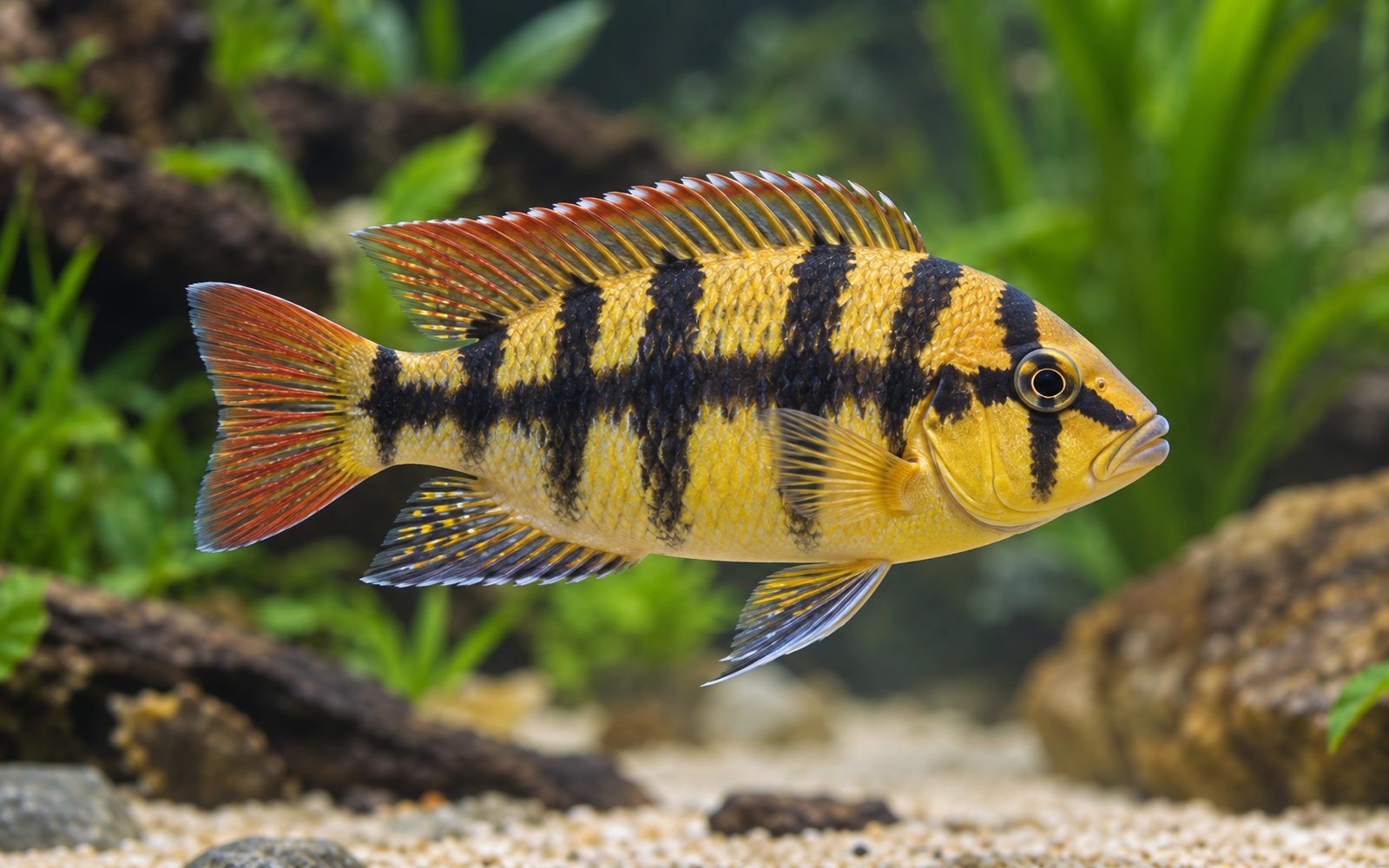 Zebra Obliquidens
Burton's Mouthbrooder
Zebra Obliquidens
Burton's Mouthbrooder
 Auratus Cichlid
 Bumblebee Cichlid
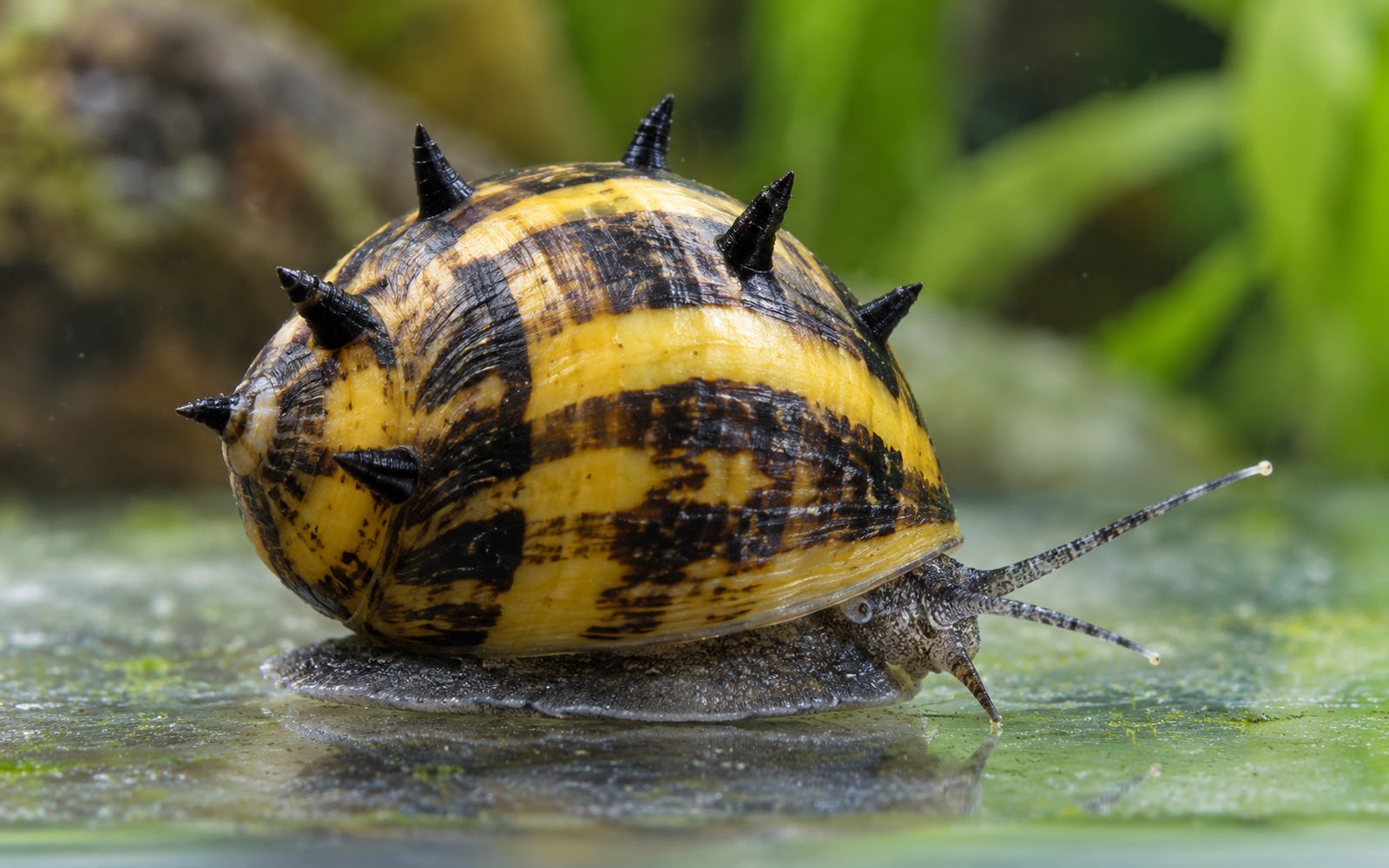 Horned Nerite Snail
Ice Blue Zebra
Horned Nerite Snail
Ice Blue Zebra
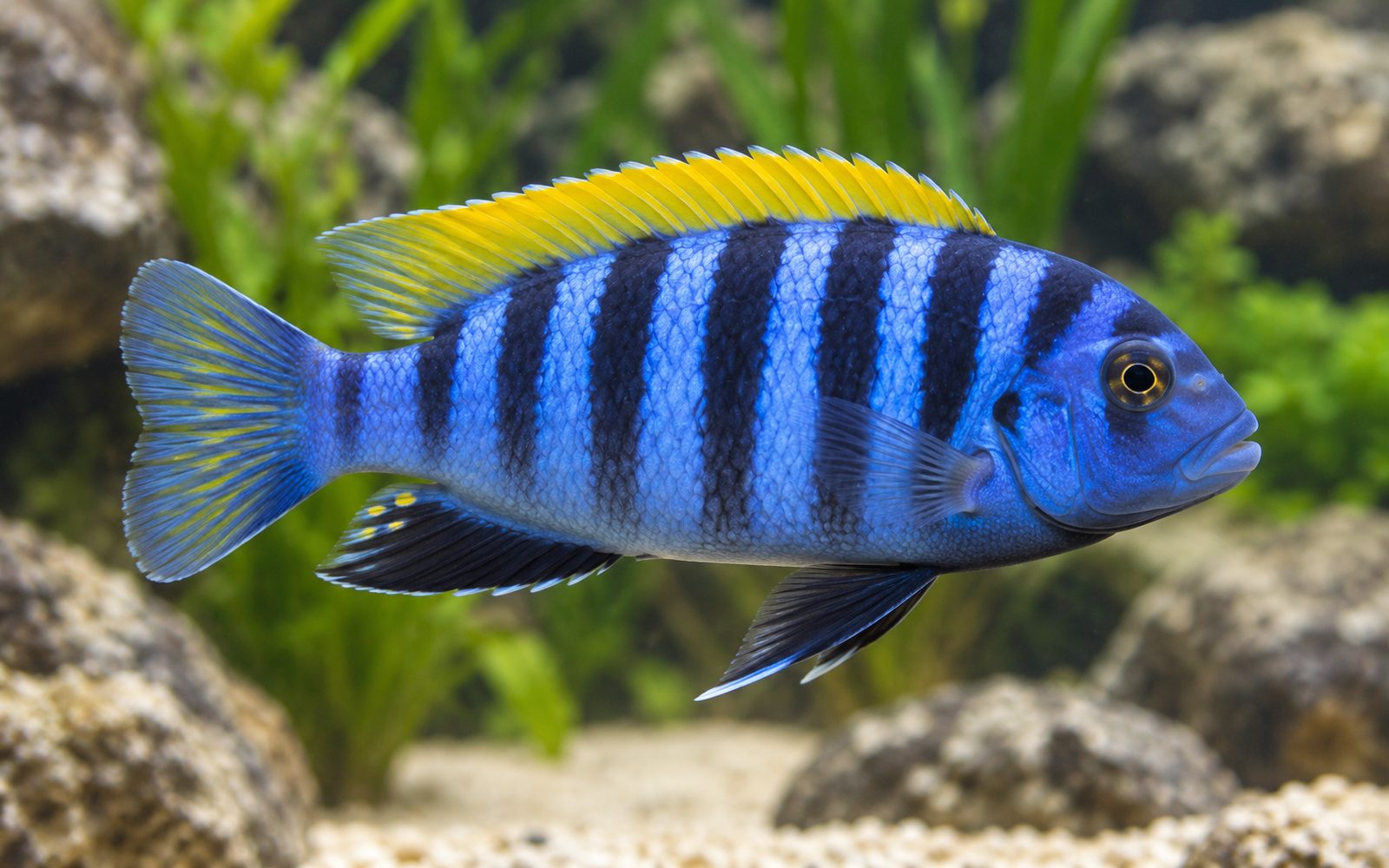 Afra Cichlid
Should not be kept together








Hobbyist notes
Things you won't find in books, learned by trial and error. The most helpful ones are on top.
Change history and contributors
- Page created · October 16, 2026