
Water parameters
Overview
Cynotilapia afra stands out among the mbuna for its teeth: whereas most mbuna have teeth with forked tips, this species has single-pointed, sharp teeth. These teeth are better suited to catching small animals in the water than to scraping algae off rocks. Its English name "dogtooth cichlid" comes from this.
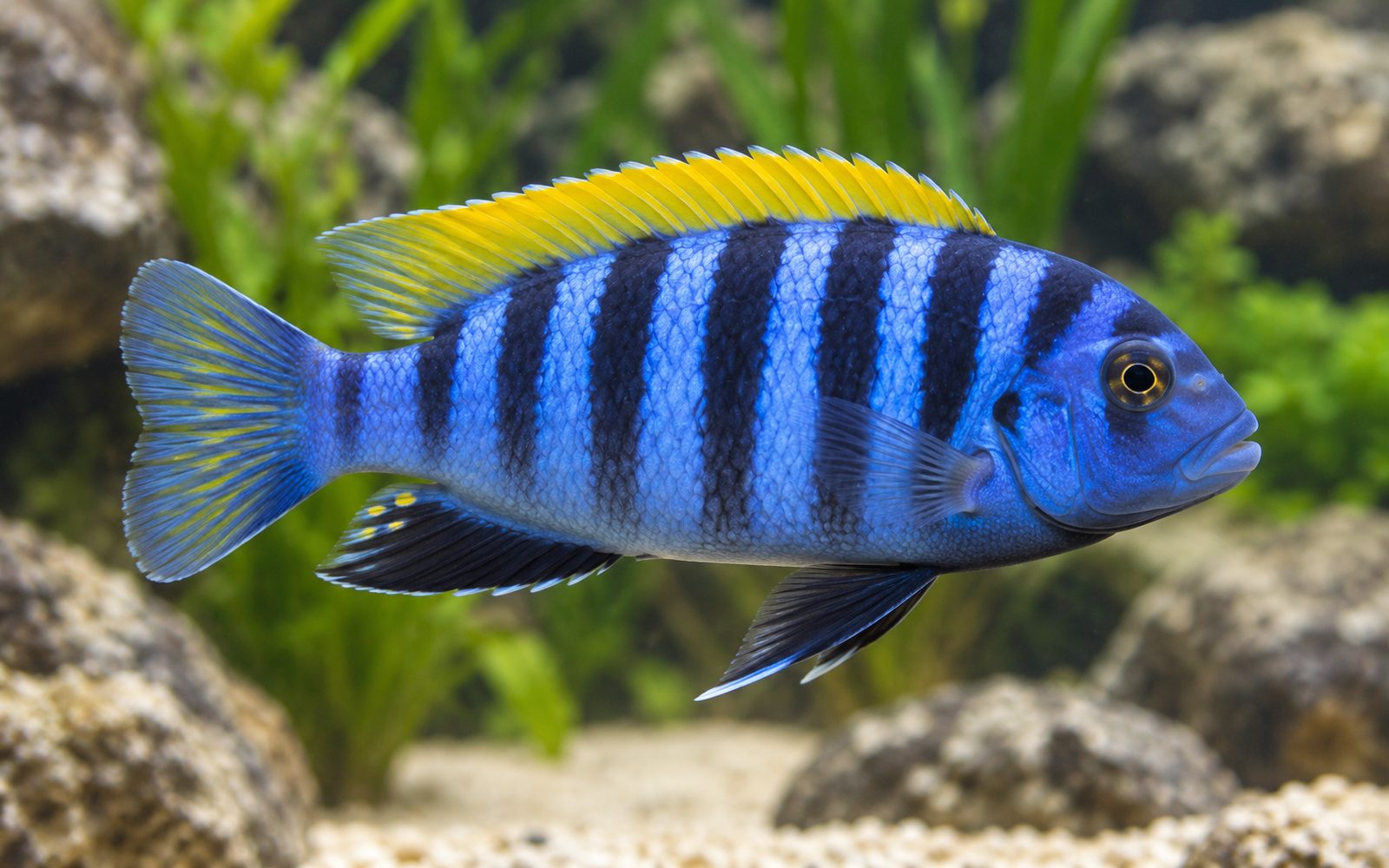
It has many local forms whose colors vary in different parts of the lake; males of the "Cobue" form have a yellow dorsal fin, while in some forms it is white. It is debated whether some of these forms may be regarded as separate species in the future. It is hardy in the aquarium, but its males defend their territory fiercely like a typical mbuna.
Natural Habitat
It lives in the rocky areas of Lake Malawi, especially around the Likoma and Chizumulu islands. It hunts zooplankton drifting in the water layer just above the rocks and, when needed, also feeds on the algae layer on the rocks. The water is hard, alkaline and clear.
Tank Setup
- Volume: At least 250 liters and 120 cm of length for a harem and a few other mbuna species.
- Rockwork: Rock piles reaching the height of the aquarium; there should be caves and ledges in the upper parts too.
- Water: Hard and alkaline (pH 7.8–8.5); aragonite substrate or Malawi salt.
- Maintenance: A strong filter and a 30–50% water change every week.
Diet
Omnivorous; it leans more toward animal-based food than other mbuna. Alternate quality cichlid granules with spirulina-based food; brine shrimp, mysis and cyclops can be added a few times a week. Foods containing bloodworms and mammalian meat should be avoided.
Behavior and Compatibility
Males set up territories in the upper parts of rock piles and chase similarly colored blue fish. Females are calmer. A balanced community can be built with mbuna of different colors and similar size.
Good companions: Labidochromis yellow, red zebra, auratus females, yellow tail acei, synodontis catfish suited to hard water.
Avoid: blue-banded species such as demasoni, saulosi and zebra mbuna, blue forms of Maylandia species (hybridization), very calm mbuna, haplochromines, community fish, shrimp.
Group and Colony Structure
- Harem: 1 male and 3–4 females; a single male is preferred.
- Single form: Because different local forms can hybridize with each other, only one form should be kept in the same aquarium.
- Rock height: Since males prefer tall rocks, vertical rock piles help to separate territories.
Breeding
A mouthbrooder. The male courts on top of a rock or in front of a cave; the female takes the eggs into her mouth and they are fertilized via the egg spots on the male's anal fin. The female carries 10–25 eggs for about 3 weeks. Once released, the fry grow on finely crushed food.
Health and Common Problems
- Malawi bloat: Wrong diet and stress.
- Fight wounds: Seen in females when there are few of them.
- Color loss: The first sign of nitrate buildup in a crowded but poorly maintained aquarium.
Sexing
Males are bright blue with distinct black bands and, depending on the form, carry a yellow or white dorsal fin; there are distinct egg spots on the anal fin. Females are a duller gray-blue or brownish, with faint bands and a plain dorsal fin. Telling juveniles apart is difficult.
Tank mates
This list is calculated automatically from the species profile and grows as new species are added to the catalog. Try it in the planner for a definite answer.
Usually compatible
 Banded Jewel Cichlid
 Demasoni Cichlid
 Pearl Cichlid
 Convict Cichlid
 Pundamilia nyererei
 Pundamilia pundamilia
 Zebra Obliquidens
 Anubias Angustifolia
 Anubias Barteri
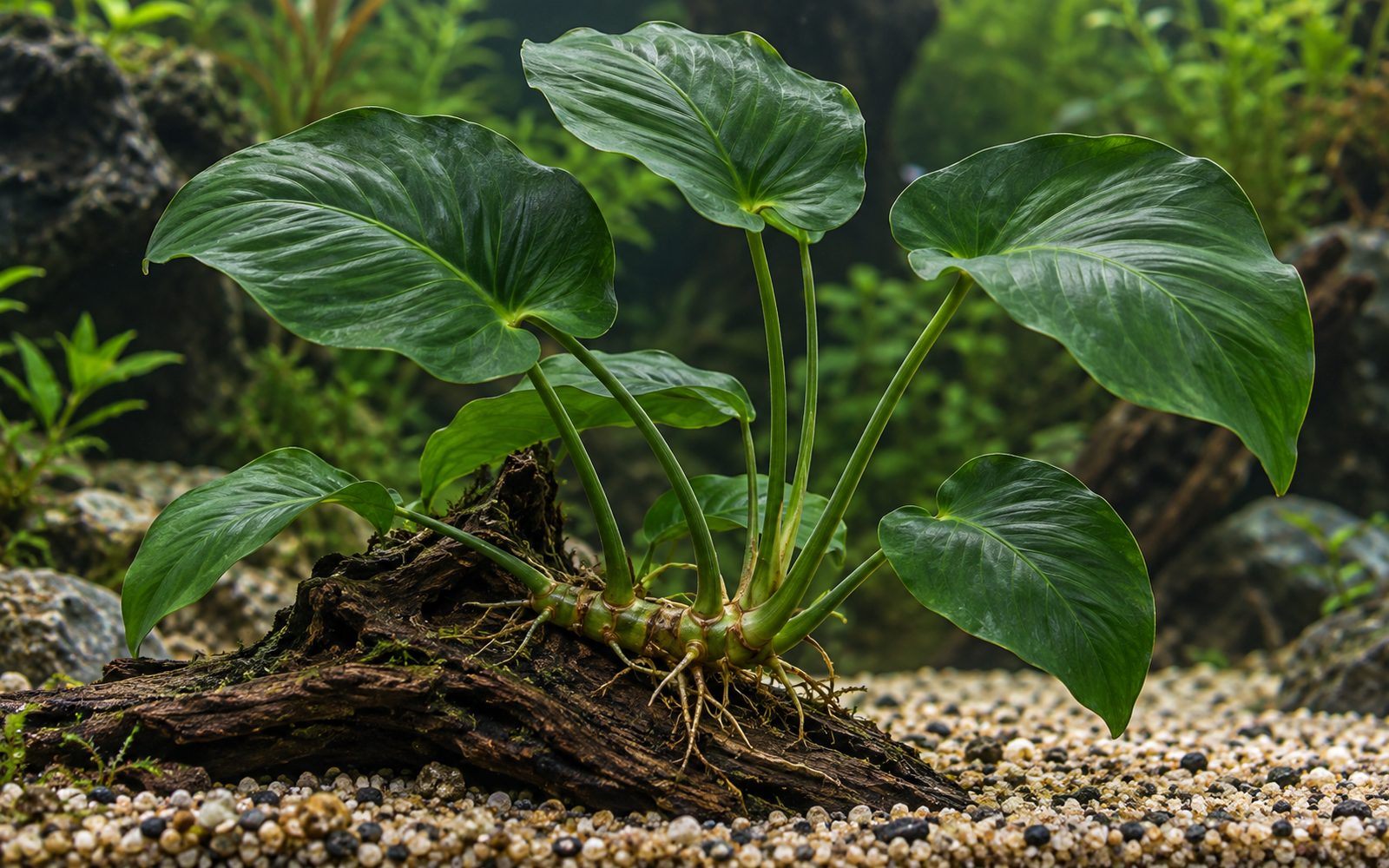 Anubias Caladiifolia
Should not be kept together








Hobbyist notes
Things you won't find in books, learned by trial and error. The most helpful ones are on top.
Change history and contributors
- Page created · October 16, 2026