
Water parameters
Overview
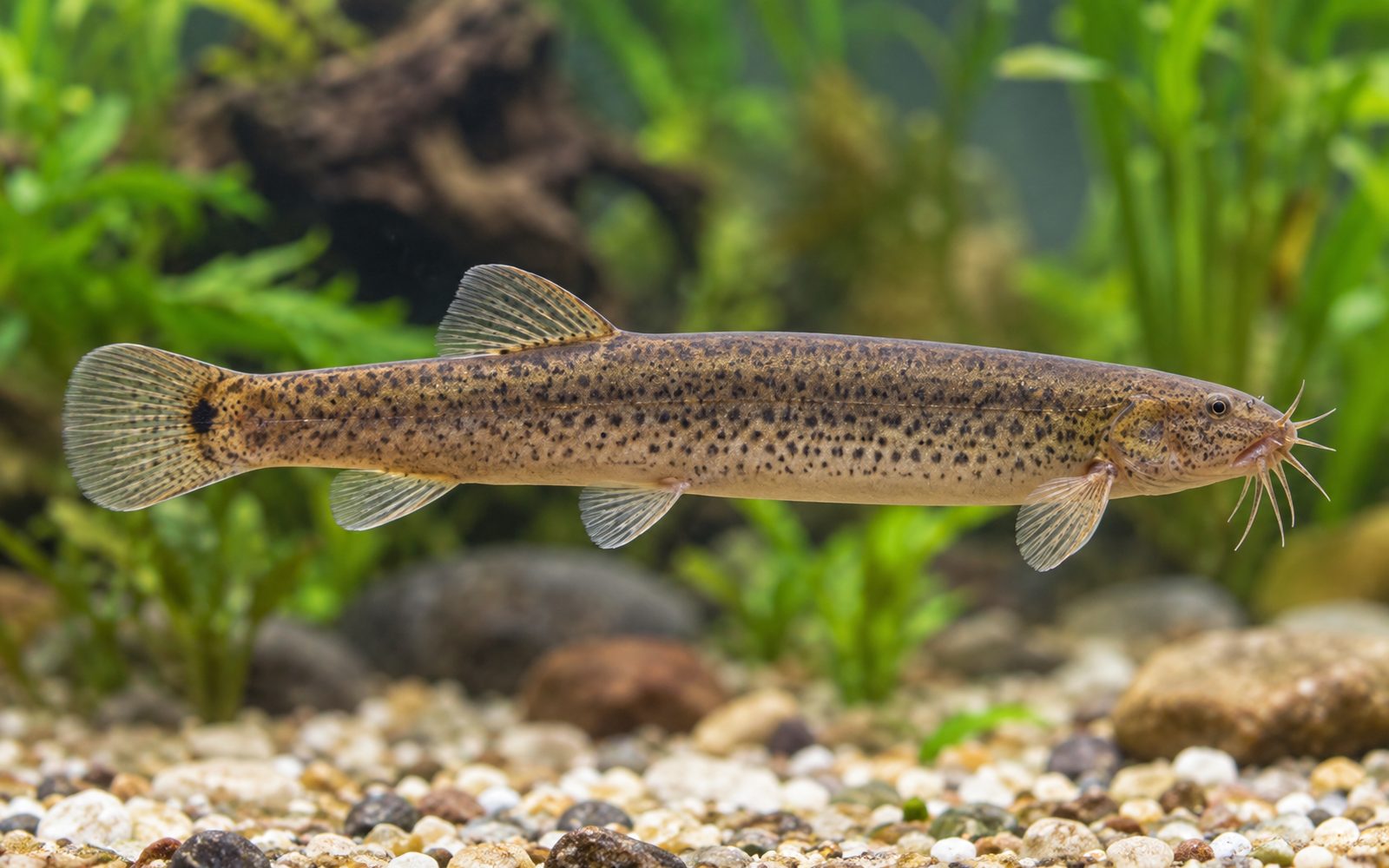
The weather loach is a bottom dweller known for its long cylindrical body, the ten short barbels around its mouth and its endearing manner. It gets its name from becoming restless and swimming up and down when air pressure changes (for example before a storm). It can also take in oxygen through its gut: in oxygen-poor water it gulps air at the surface and releases the used air through its vent.
It is sold at 8–10 cm in stores but reaches 20 cm. It is not a tropical fish but a coldwater one, comfortable at room temperature without a heater. Escaped fish have become established in many European countries, the USA and Australia; in some countries importing and keeping it is banned. It must never, under any circumstances, be released into a lake, stream or pond.
Color and Fin Varieties
- Gold (gold dojo): A yellow to orange form. Yellow individuals of the close relative Misgurnus dabryanus may also be sold under this name in the trade.
- Pink / piebald (leucistic): A pinkish white or spotted form; its care is the same as for the wild color.
Natural Habitat
It lives in still or slow waters of East Asia such as lakes, ponds, rice paddies, canals and slow-flowing streams. It hides by burying itself in the soft muddy bottom; it can withstand cold in winter and oxygen-poor water in summer.
Tank Setup
- Volume: at least 200 liters and 120 cm of length for 3–5 adults; floor area is important.
- Water: 16–24°C is ideal; it should not be kept above 26°C for long periods. pH 6.5–8, a wide hardness range.
- Substrate: Fine sand; it often buries itself and waits with only its head showing.
- Decor: Roots, rounded stones and firmly rooted plants; it can uproot weak plants while digging.
- Lid: A tight lid is essential; it jumps, especially when newly introduced.
Diet
Omnivorous with a hearty appetite. Offer sinking granules and tablets, frozen bloodworms, tubifex, brine shrimp and small worms. It eats shrimp and fish fry that fit in its mouth.
Behavior and Compatibility
Very peaceful toward other species. At feeding time it gets excited and comes all the way up to the surface, and it can even learn to take food from the hand. It may compete for food with slow-swimming fancy goldfish.
Good companions: active fish that like cool water: zebra danios, White Cloud Mountain minnows, rosy barbs, and medium to large species that swim above the middle of the tank.
Avoid: shrimp, very small fish and fry, species that need tropical temperatures.
Group and Colony Structure
It is more at ease with its own kind; 3 or more, ideally 5 individuals. Groups bury themselves together and rest entwined with each other. It is not a schooling fish, but an individual kept alone becomes more timid.
Breeding
There are few records of breeding in the aquarium. In the wild it spawns among dense plants in spring and summer; the male wraps himself around the female's body. Hormones are thought to be used in commercial breeding.
Health and Common Problems
- Temperature stress: If kept at tropical temperatures for a long time its immune system weakens.
- Substrate wounds: Sharp gravel causes wounds to the barbels and belly.
- Escape: If the lid is left open it can jump out.
Sexing
Females are plumper and slightly larger. Mature males have larger pectoral fins with a round bony plate at their base; in addition, slight swellings can be seen behind the dorsal fin when viewed from above.
Tank mates
This list is calculated automatically from the species profile and grows as new species are added to the catalog. Try it in the planner for a definite answer.
Usually compatible
 Flame Tetra
 Blackfin Corydoras
 Polystictus Corydoras
 Emerald Cory
 Emerald Dwarf Rasbora
 Porthole Catfish
 Keyhole Cichlid
 Rainbow Cichlid
 Gymnogeophagus balzanii
 Pearl Cichlid
Should not be kept together






Hobbyist notes
Things you won't find in books, learned by trial and error. The most helpful ones are on top.
Change history and contributors
- Page created · October 16, 2026