
Water parameters
Overview
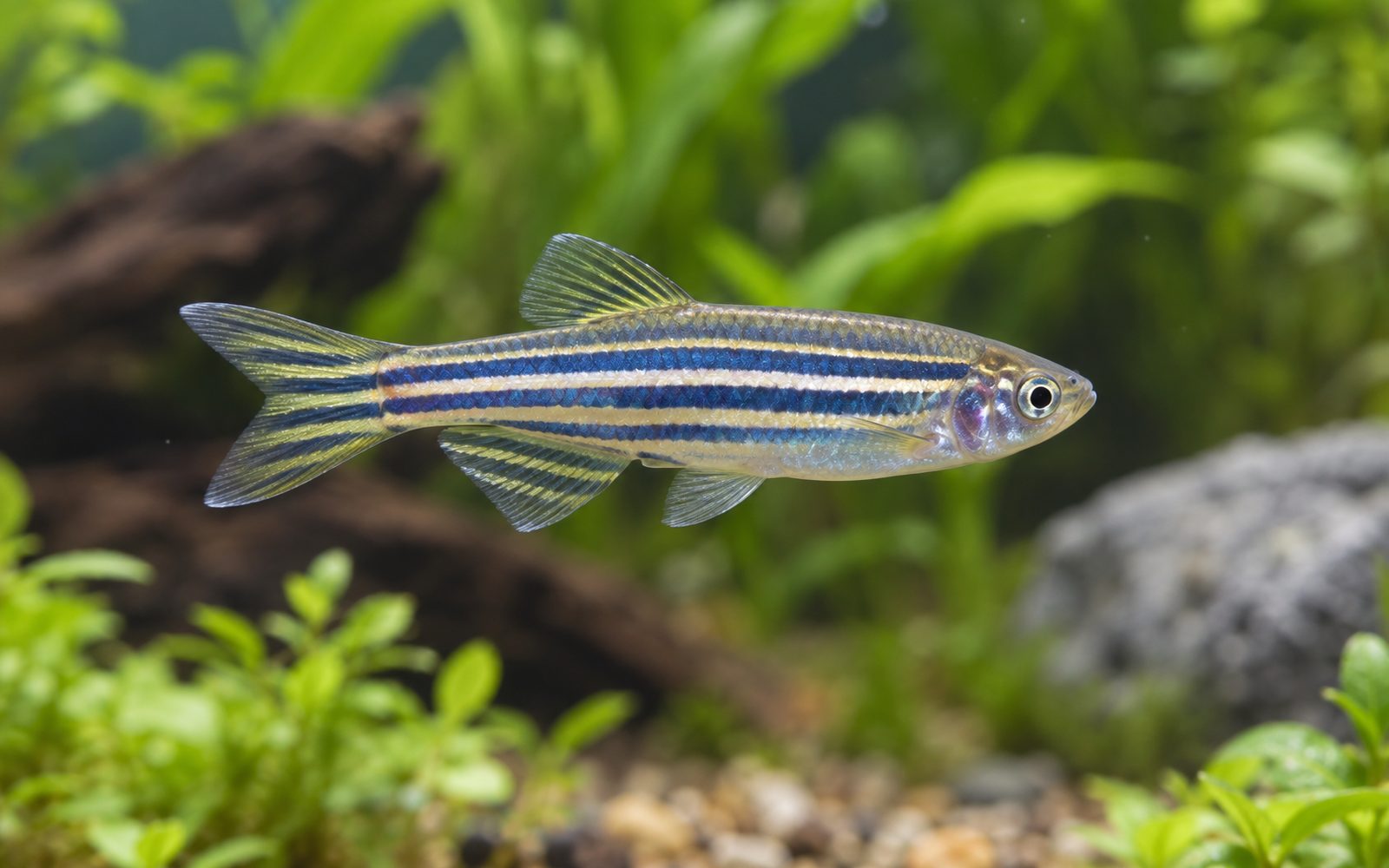
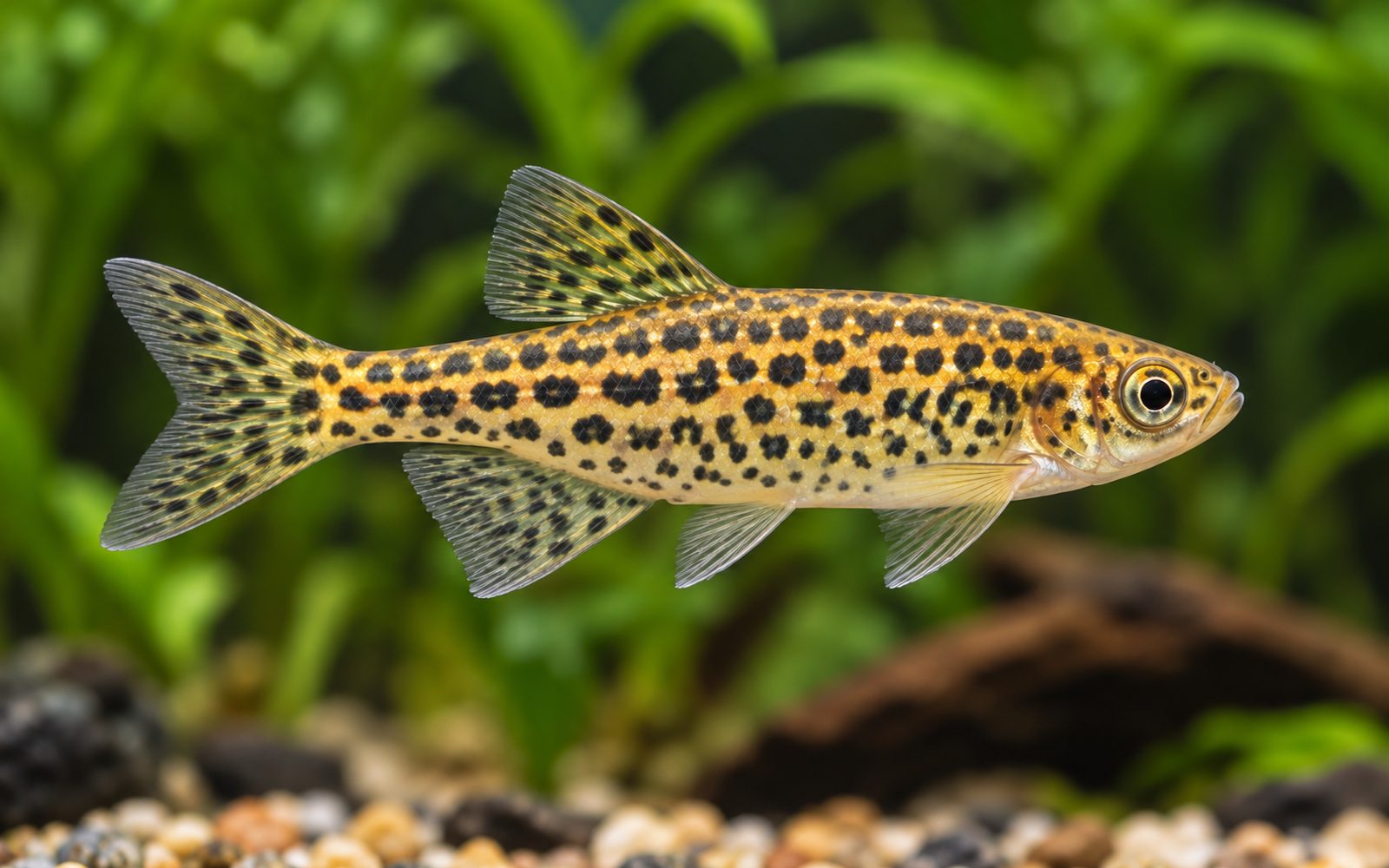
The zebra danio is recognized by the dark blue and pale yellow horizontal stripes running along its body. There are also long-finned and "leopard" patterned forms. It is also one of the most important model organisms in science: its transparent embryo has made it indispensable in genetics and developmental biology research.
Because of its hardiness, it used to be used to "cycle" new aquariums. Today this method is not recommended; the aquarium should be matured with a fishless cycle.
Color and Fin Varieties
The varieties have not been described yet. Be the first to write it.
Natural Habitat
It lives in the rice paddies, slow-flowing streams and ponds of the Indian subcontinent. Being used to seasonal temperature changes, it tolerates water as cool as 18°C.
Tank Setup
- Volume: at least 60 liters for a school of 6; a length of 60 cm or more is important, as it swims very fast and constantly.
- Water: 20–25°C, wide pH range. One of the species suited to unheated aquariums.
- Flow: it likes moderate current; it plays in the filter outflow.
- Lid: it jumps.
Diet
Omnivorous and prefers to feed at the surface. Flakes, micro granules, brine shrimp and daphnia. Because it is fast, slower fish may be left without food; feeding at two different spots helps.
Behavior and Compatibility
Peaceful but very energetic. Kept as a group of 6 or more, it plays chase among its own kind and shows no interest in other fish. Kept in small numbers it may bother slow, long-finned fish.
Good companions: guppies, platies, corydoras, other danios and rasboras, shrimp.
Avoid: bettas and slow long-finned fish (its energy stresses them), species that need very high temperatures (discus).
Group and Colony Structure
The zebra danio is kept in groups of at least 6, ideally 10 or more. Within the school they constantly chase each other; this playful behavior lets them spend their energy among themselves. Danios kept in small numbers may direct their energy at other fish and bother them.
The leopard and long-finned forms are the same species and join the same school. The sex ratio does not matter.
Breeding
It breeds very easily. It spawns at first light in the morning; the eggs scatter to the bottom and the adults eat them right away. Placing marbles or mesh on the bottom of a separate tank protects the eggs. The eggs hatch in 2–3 days; the fry are fed infusoria and then newly hatched brine shrimp.
Health and Common Problems
Very hardy. Mycobacteria and parasites may be seen in new store-bought fish; quarantine is recommended. Excessive heat (above 28°C) shortens its lifespan.
Sexing
Females are plumper and larger; the base color between their stripes is more white-silver. Males are slimmer and torpedo-shaped, and the color between the stripes is more golden yellow.
Tank mates
This list is calculated automatically from the species profile and grows as new species are added to the catalog. Try it in the planner for a definite answer.
Usually compatible
 Flame Tetra
 Blackfin Corydoras
 Polystictus Corydoras
 Emerald Cory
 Emerald Dwarf Rasbora
 Porthole Catfish
 Keyhole Cichlid
 Geophagus surinamensis
 Cryptocoryne Parva
 Gold Spot Pleco (L001)
Should not be kept together







Hobbyist notes
Things you won't find in books, learned by trial and error. The most helpful ones are on top.
Change history and contributors
- Page created · October 16, 2026