
Water parameters
Overview
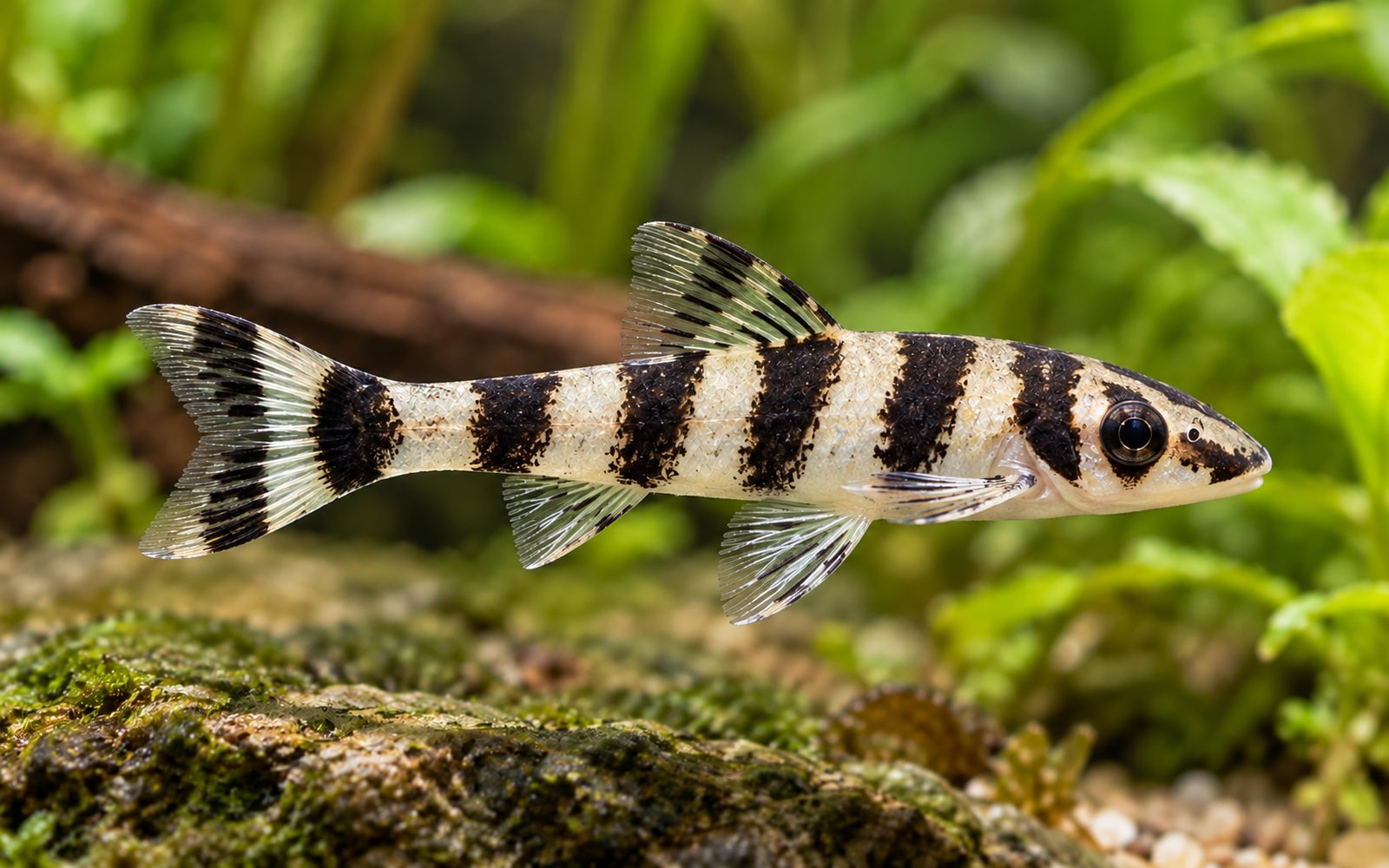
The zebra otocinclus is a small suckermouth catfish that is closely related to the common otocinclus but looks far more striking with its thick black bands on a cream-colored background. It was scientifically described in 2004. Adults stay at 4–4.5 cm; males are slightly smaller than females.
Like the common otocinclus, it grazes the fine algae and biofilm on plants and glass and does not harm plants. However, most fish sold are wild-caught and arrive hungry and exhausted after a long journey. The first weeks are critical, which is why its difficulty is "moderate".
Natural Habitat
In Peru it lives in groups in the clear, slow- to moderately flowing streams of the Ucayali basin, among the plants along the banks and grasses hanging into the water.
Tank Setup
- Volume: at least 60 liters for a group of 6.
- Maturity: an aquarium at least 2–3 months old, with biofilm and fine algae on its surfaces.
- Plants: broad-leaved plants (Anubias, sword plants) provide grazing surfaces; floating plants soften the light.
- Water: 22–24°C, clean and well-oxygenated; sensitive to nitrate.
- Quarantine: nurse new fish back to health by feeding them for a few weeks in a calm quarantine tank with plenty of algae.
Diet
Natural biofilm is its main food; always supplement: blanched zucchini and cucumber (can stay in the tank overnight), spirulina tablets, biofilm- and algae-based gel foods. Check the belly line of new arrivals; a sunken belly is a sign of starvation.
Behavior and Compatibility
Extremely peaceful and timid. It harms no fish or shrimp. It feels safe in a group and grazes more out in the open.
Good companions: Small tetras, rasboras, corydoras, dwarf shrimp, bettas, dwarf gouramis.
Avoid: Large, aggressive cichlids, greedy and fast fish, species that need warm water (discus).
Group and Colony Structure
At least 6 individuals are recommended. One or two fish often hide and have trouble feeding. Group size is determined by the amount of biofilm in the aquarium: a large group quickly uses up the natural food, so supplementary vegetables and tablets are essential. It can graze together with the common otocinclus in the same tank.
Breeding
It rarely breeds in the aquarium. The female sticks her eggs one by one onto the surfaces of leaves and glass. The fry are very small and need plenty of biofilm; in mature planted aquariums fry may appear on their own.
Health and Common Problems
- Starvation: the most common cause of losses; feed new fish in a mature, planted quarantine tank.
- Bacterial infection: can occur in the first weeks due to shipping stress.
- Sensitive to medications and copper.
Sexing
Females are larger and wider when viewed from above. Males are smaller and slimmer; the genital papilla is more prominent in males.
Tank mates
This list is calculated automatically from the species profile and grows as new species are added to the catalog. Try it in the planner for a definite answer.
Usually compatible
 Flame Tetra
 Blackfin Corydoras
 Polystictus Corydoras
 Emerald Cory
 Emerald Dwarf Rasbora
 Porthole Catfish
 Keyhole Cichlid
 Cryptocoryne Parva
 Adolfo's Cory
 African Glass Catfish
Should not be kept together







Hobbyist notes
Things you won't find in books, learned by trial and error. The most helpful ones are on top.
Change history and contributors
- Page created · October 16, 2026