
Water parameters
Overview
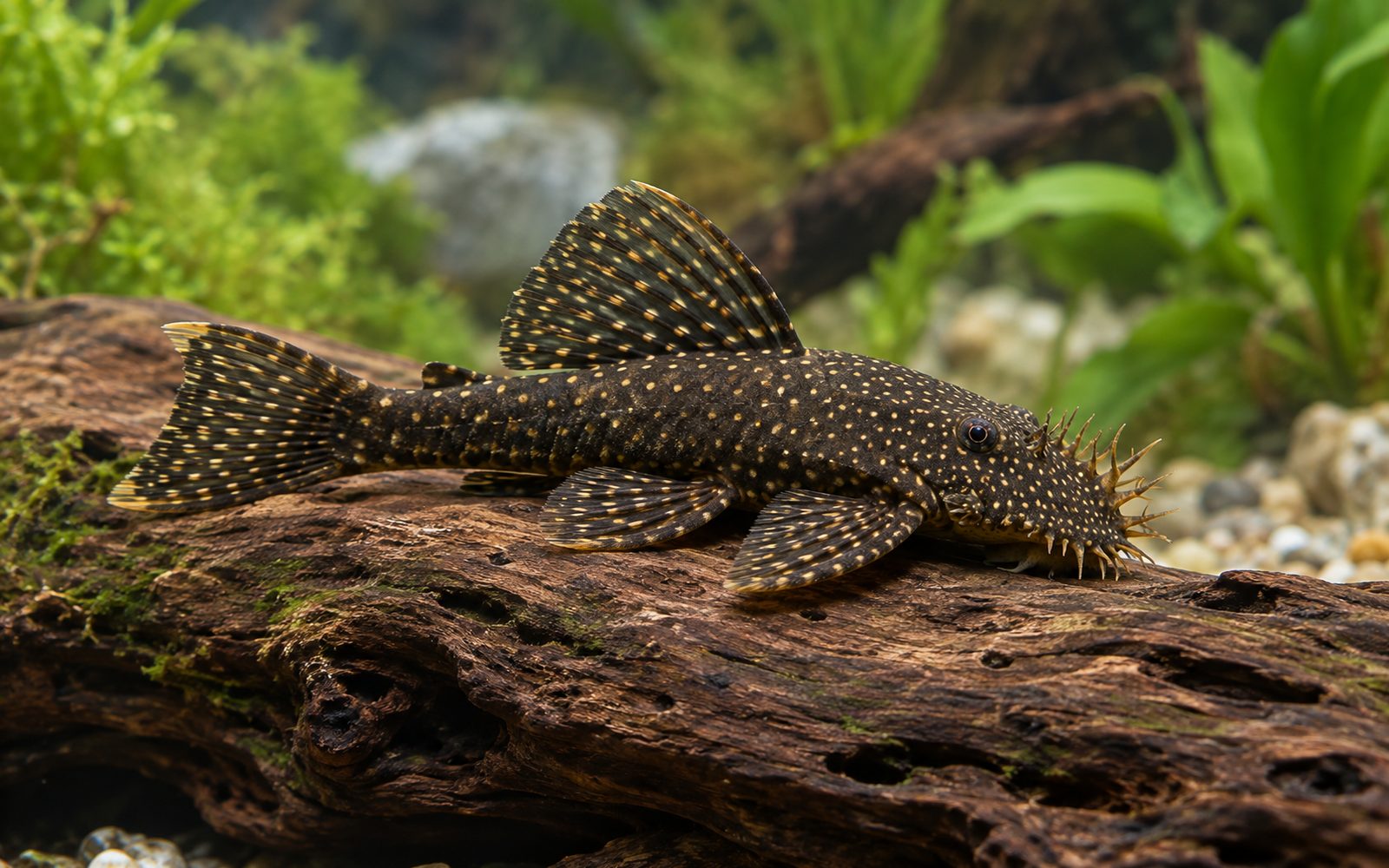
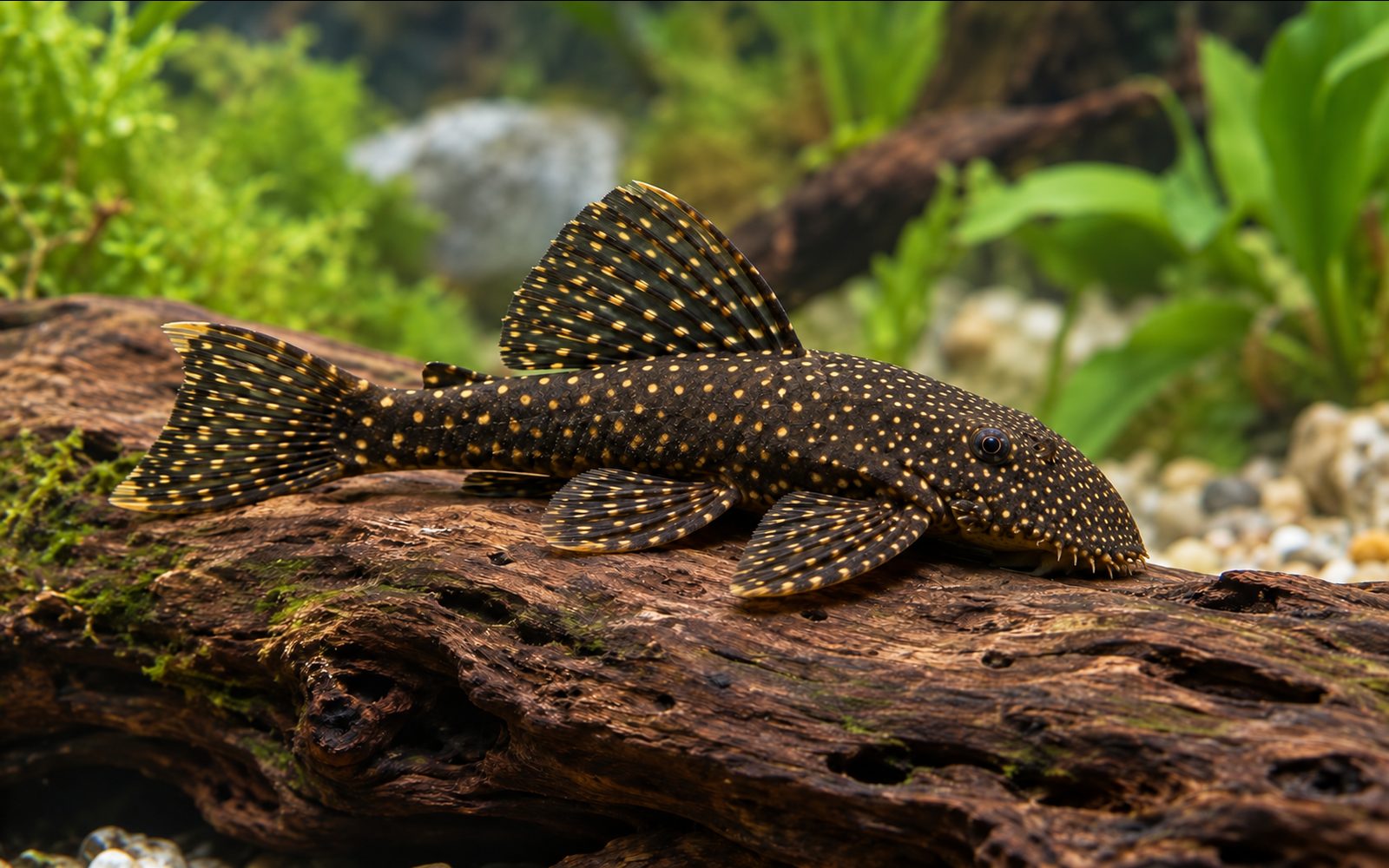
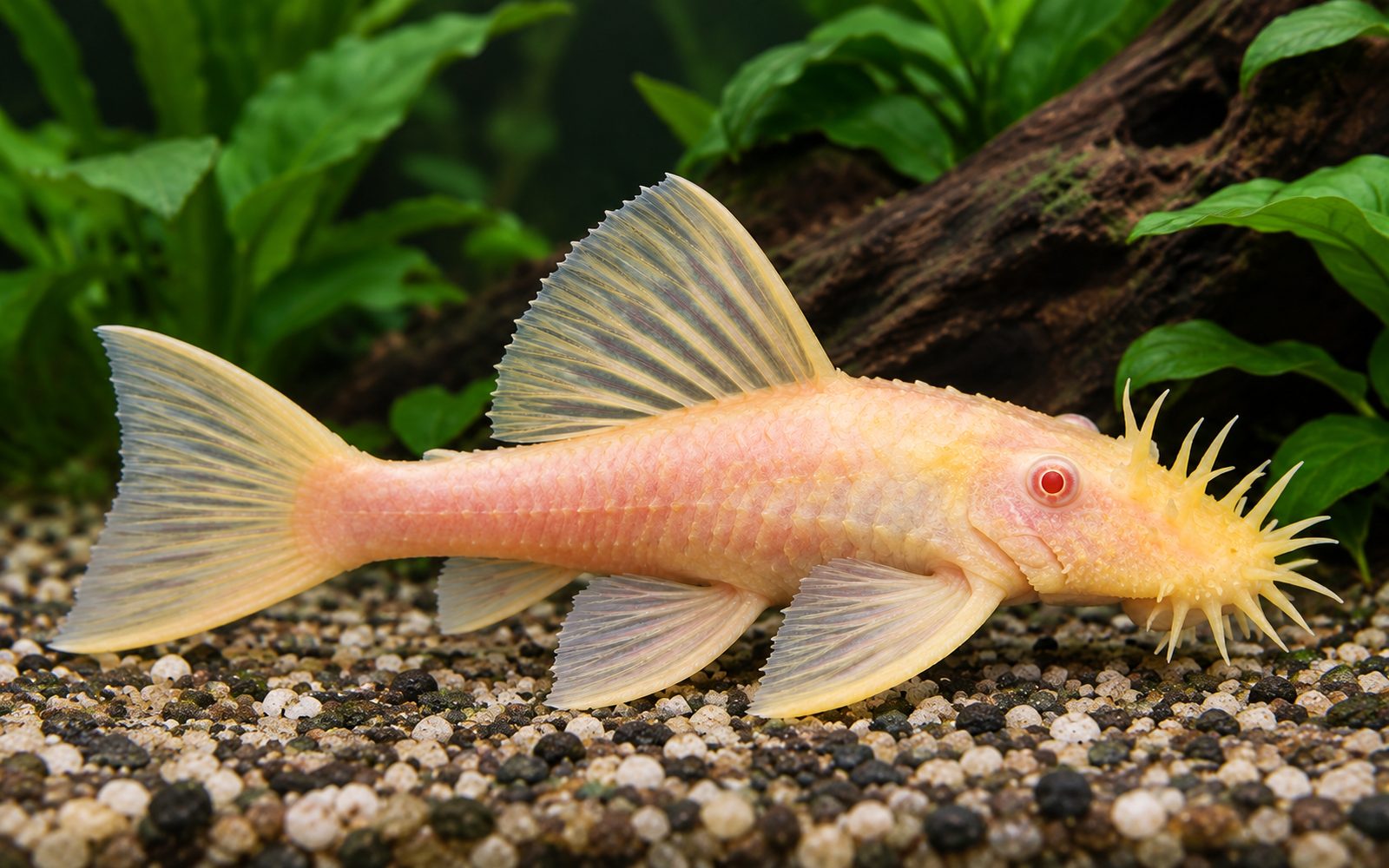
Ancistrus is the most aquarium-suitable of the suckermouth catfish sold in shops as "algae eaters." Males have soft, branch-like growths (bristles) on the snout. Besides the normal form, brown with light spots, there are also albino, "super red" and long-finned types.
Important warning: Pterygoplichthys and Hypostomus species, also sold as "algae eaters," reach 40–50 cm and do not fit in normal aquariums. Ancistrus, on the other hand, stays around 12 cm.
Color and Fin Varieties
The varieties have not been described yet. Be the first to write it.
Natural Habitat
It lives on rocks, fallen trees and roots in fast- and moderately flowing, oxygen-rich rivers and streams of the Amazon basin.
Tank Setup
- Volume: 80 liters for one individual; a larger footprint for more than one male.
- Driftwood is essential: Ancistrus rasps on wood; this fiber is necessary for its digestion.
- Hiding places: Caves, tubes or spaces under roots. Males claim a cave of their own.
- Water: Clean, oxygenated, with gentle flow.
Diet
It is mainly herbivorous, but not entirely:
- Sinking spirulina/algae wafers
- Blanched zucchini, cucumber, peas, spinach
- Frozen bloodworms or shrimp once a week
The algae in the aquarium alone is not enough. Since it is active at night, feeding after the lights go off gives good results.
Behavior and Compatibility
Peaceful; it leaves other fish alone. Males fight each other over caves; more than one male requires more than one cave. It is rarely seen sucking the slime coat of slow, flat-bodied fish (discus, angelfish); plenty of food prevents this.
Good companions: Almost all community fish, angelfish, discus, shrimp.
Avoid: Goldfish (temperature does not match), large cichlids that claim the bottom.
Group and Colony Structure
Ancistrus is not a schooling fish; it lives happily on its own. If more than one is kept, the number of males should be limited: males fight over caves and territory. Each male needs a separate cave and hiding places in different parts of the aquarium.
Those who want to breed them start with 1 male and 1–2 females; the females visit the male's cave in turn. Two males are not recommended in an aquarium under 100 liters.
Breeding
It is one of the easiest suckermouth catfish to breed in the aquarium. The male cleans his cave, the female lays a cluster of orange eggs there, and the male guards the eggs, fanning them until the fry are free-swimming (4–10 days). The fry immediately start eating vegetables and wafers.
Health and Common Problems
Hardy. Nitrate buildup and lack of oxygen cause problems. A sunken belly is a sign of starvation. It is sensitive to many medications, especially copper.
Sexing
Mature males have prominent branch-like growths on the snout and around the head. Females lack these growths or have only a short row along the edge of the mouth.
Tank mates
This list is calculated automatically from the species profile and grows as new species are added to the catalog. Try it in the planner for a definite answer.
Usually compatible
 Flame Tetra
Glass Tetra
Flame Tetra
Glass Tetra
 Blackfin Corydoras
 Polystictus Corydoras
 Emerald Betta
 Emerald Cory
 Emerald Dwarf Rasbora
 Porthole Catfish
 Keyhole Cichlid
 Cupid Cichlid
Should not be kept together






Hobbyist notes
Things you won't find in books, learned by trial and error. The most helpful ones are on top.
Change history and contributors
- Page created · October 16, 2026