
Water parameters
Overview
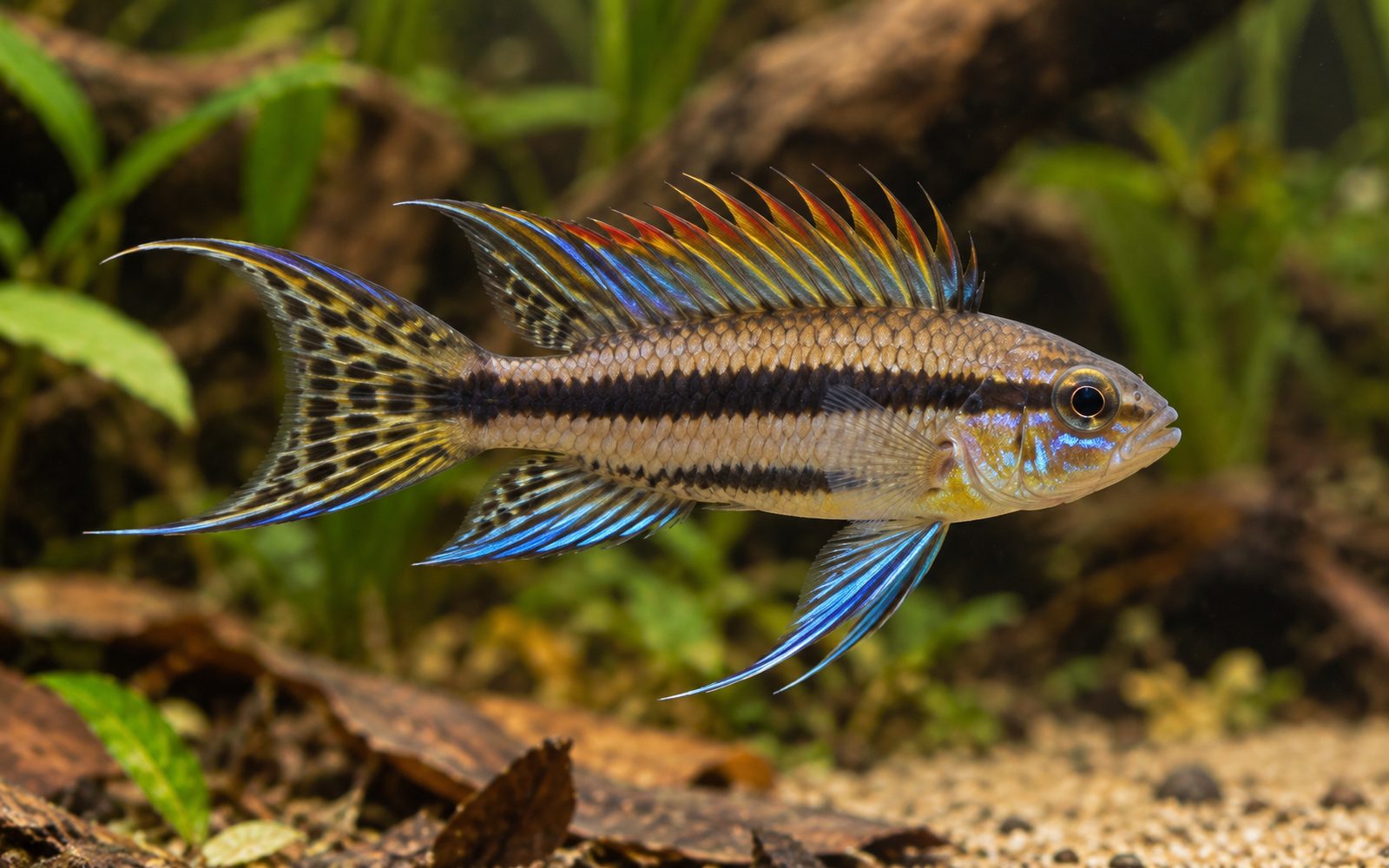
Apistogramma mendezi was described in 1994 from a stream near Barcelos in Brazil; fish that reach the trade are mostly collected further upstream around Santa Isabel and São Gabriel da Cachoeira. Along the male's light brown body runs a broad dark band from the eye to the tail, with a second line along the belly below it; the pelvic and anal fins are bluish and the dorsal fin is in red–yellow–blue tones. The dark lines on the tail are horizontal in some populations and vertical in others; an "orange" form with an orange belly is also known.
Tank Setup
- At least 60 liters for one male and two females; a cave for each female.
- 26–28°C, pH 4.5–6, GH 1–3; RO water, dried leaves and roots for blackwater conditions.
- Dim light, fine sand; small, regular water changes.
Diet
Carnivorous. Small live and frozen foods (brine shrimp, cyclops, daphnia, fine bloodworms) should be the staple; it accepts granules over time.
Behavior and Compatibility
It sets up a territory on the bottom; the female tends the eggs and fry in the cave alone and becomes aggressive during this period. In a small aquarium the male may need to be removed. It gets along well with calm blackwater fish.
Good companions: cardinal tetras, pencilfish, hatchetfish, small blackwater rasboras.
Avoid: hard-water species, large cichlids, shrimp breeding, other Apistogramma males.
A short profile for this species
The Apistogramma mendezi page has the basics, but the sections below have not been written yet. If you keep this species, write a section from your own experience; it will be published under your name after editor approval.
Tank mates
This list is calculated automatically from the species profile and grows as new species are added to the catalog. Try it in the planner for a definite answer.
Usually compatible
 Keyhole Cichlid
 Cupid Cichlid
 Festivum
 Geophagus altifrons
 Geophagus surinamensis
 Threadfin Acara
 Flame Moss
 Amazon Leaffish
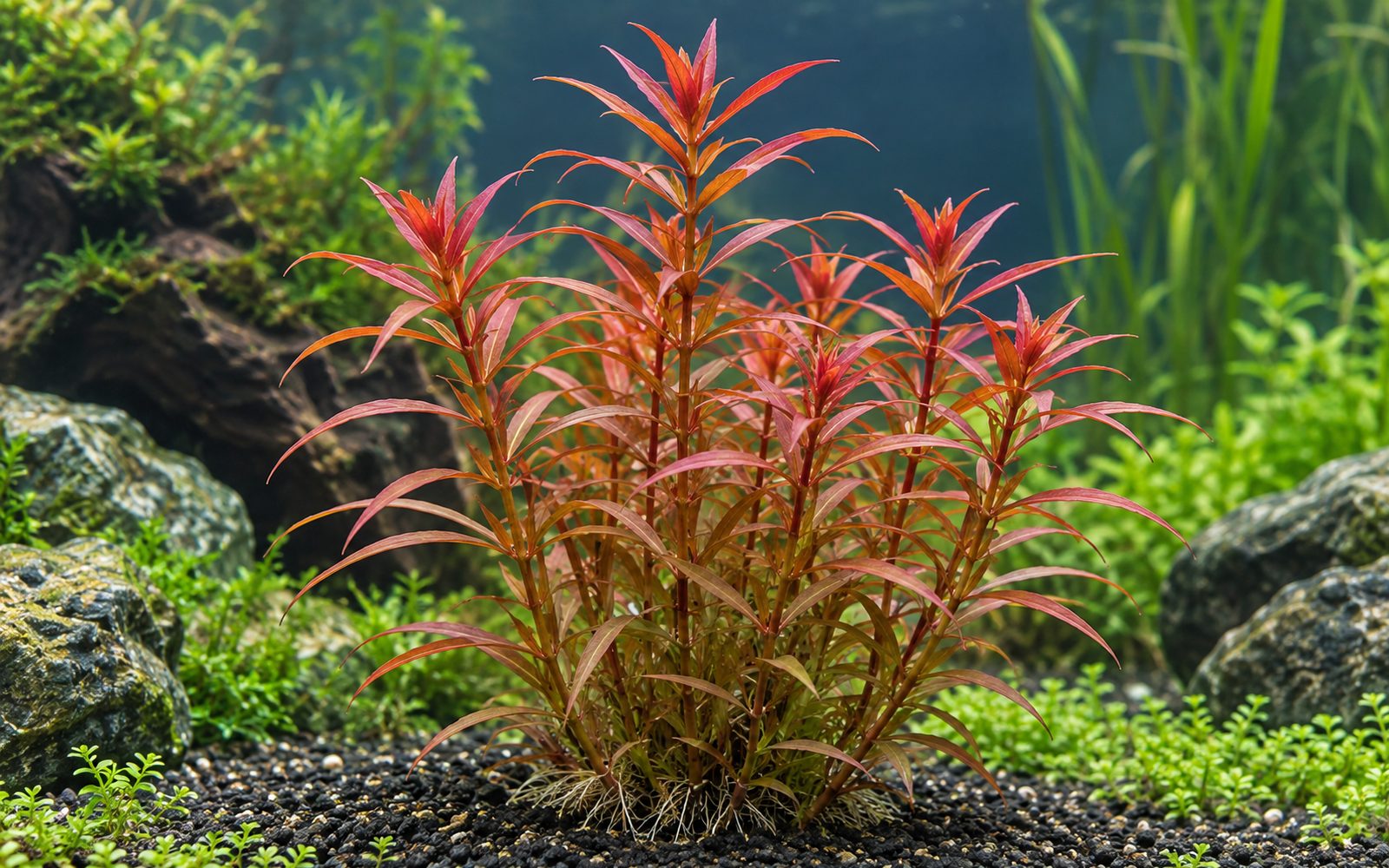 Ammannia Gracilis
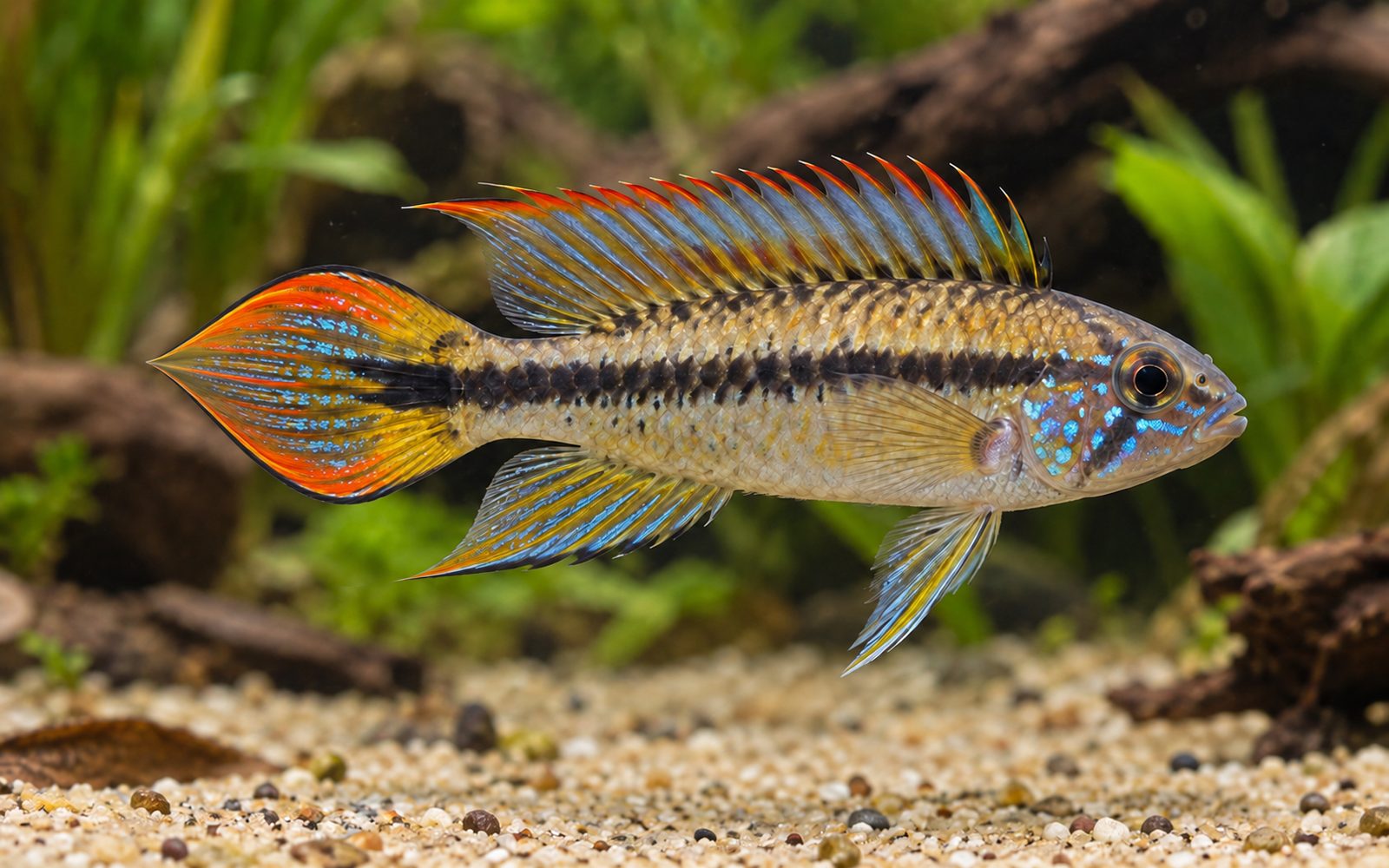 Apistogramma agassizii
Should not be kept together





Hobbyist notes
Things you won't find in books, learned by trial and error. The most helpful ones are on top.
Change history and contributors
- Page created · October 16, 2026