
Water parameters
Overview
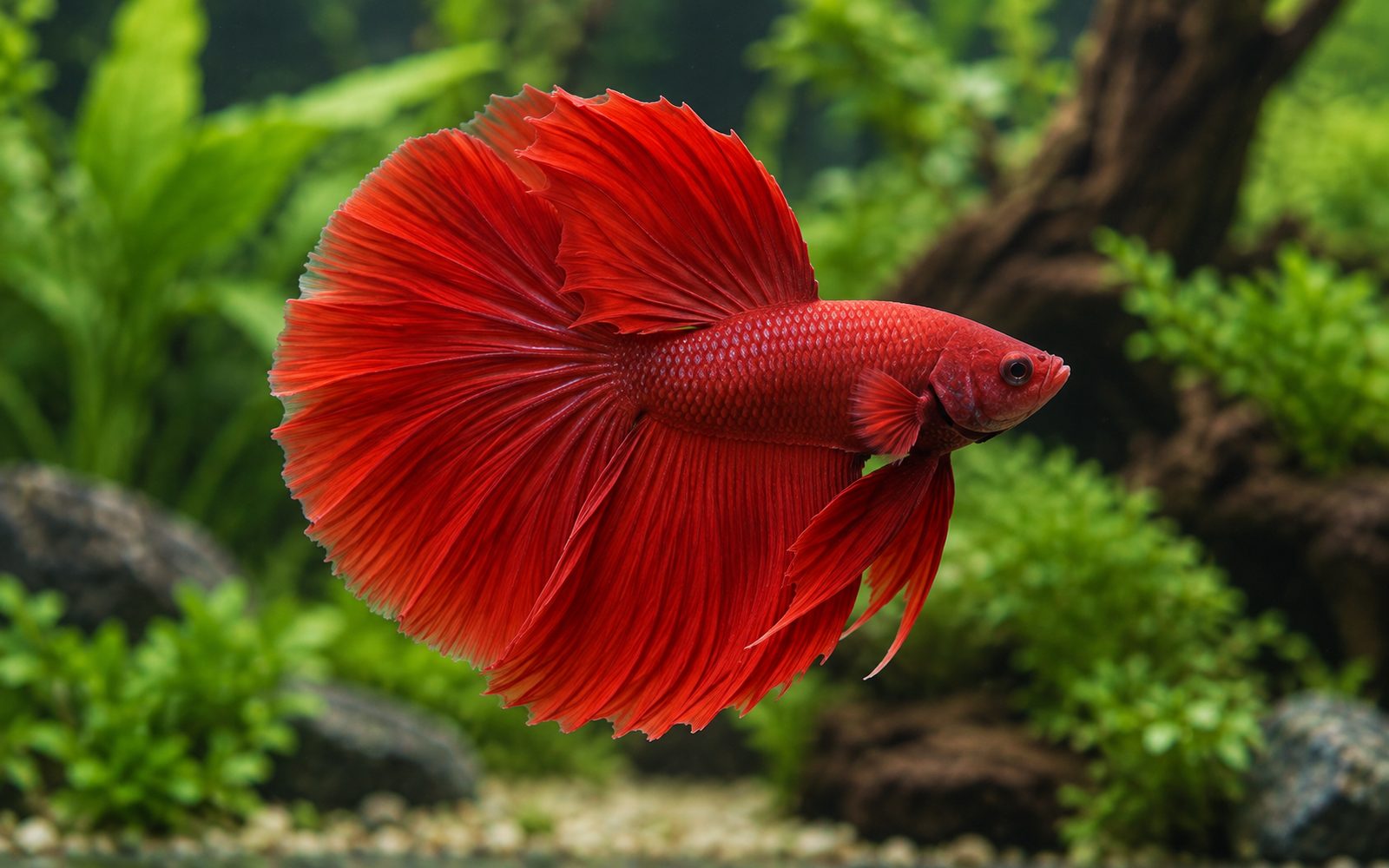
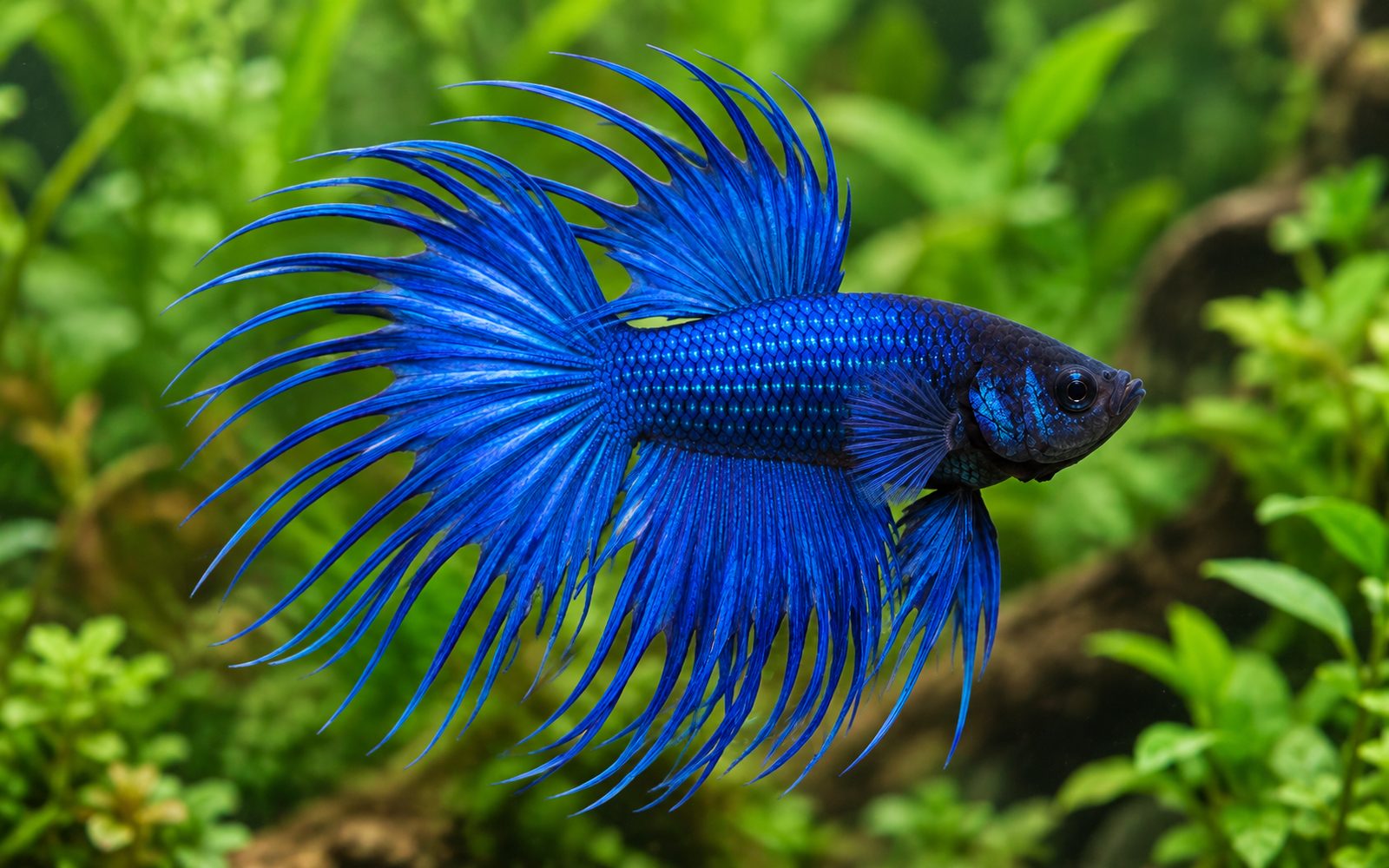
With its long, flowing fins and countless colors and tail types (halfmoon, crowntail, plakat…), the betta is one of the most popular aquarium fish. It recognizes its owner and comes to the front glass at feeding time; this "personality" is one of the main reasons it is so loved.
Thanks to its labyrinth organ, it can take oxygen from the air. This trait has led to the misconception that bettas can live in small containers: bowls and jars shorten a betta's life. It needs a heated, filtered aquarium of at least 20 liters.
Color and Fin Varieties
The varieties have not been described yet. Be the first to write it.
Natural Habitat
In the wild it lives in rice paddies, shallow swamps and slow-flowing canals. These waters are warm, planted and without current, and their oxygen level drops from time to time; the labyrinth organ is a product of these conditions. Wild bettas have much shorter fins than those in aquariums.
Tank Setup
- Volume: at least 20 liters; 30–40 liters provides more stable water.
- A heater is essential: 25–28°C. Room temperature weakens the betta's immune system.
- Flow: Long-finned bettas cannot swim in strong flow; use a sponge filter or a softened outlet.
- Lid: Bettas jump. But there must be an air gap between the surface and the lid; the betta takes air from the surface, and breathing cold air is harmful.
- Decor: Resting leaves near the surface (anubias), floating plants, decor without sharp edges. Plastic plants can tear fins.
Diet
Carnivorous. Granules made for bettas should be the staple; add frozen bloodworms, brine shrimp or daphnia a few times a week. Its stomach is small: 2–3 granules 1–2 times a day are enough. Overfeeding is the most common cause of bloating and swim bladder problems in bettas. Fasting one day a week is beneficial.
Behavior and Compatibility
Males attack each other to the death; one male per aquarium. Although females are more docile, they establish a hierarchy among themselves; a "female group" should only be tried in a large, planted aquarium and by experienced hands.
In a community aquarium the betta is not always predictable. Some bettas ignore calm neighbors entirely; others attack everything.
Usually compatible: nerite snails, otocinclus, corydoras, small, calm schooling fish (harlequin rasboras).
Avoid: colorful, long-finned fish such as guppies (mistaken for rivals); fin nippers such as tiger barbs; gouramis. Shrimp depend on the individual: many bettas hunt red cherry shrimp.
Group and Colony Structure
A male betta is kept alone. Two males in the same aquarium fight to the death; even neighboring males separated by a glass divider are constantly stressed.
Females are more docile, but a "sorority" should only be tried with at least 5 females in a very densely planted aquarium of 80 liters or more, under constant supervision; hierarchy fights can cause serious injuries. Males and females are brought together only for breeding, for a short time. In a community aquarium a single male betta can live with calm, plainly colored schooling fish.
Breeding
The male builds a bubble nest at the surface from saliva and air bubbles. After mating he collects the eggs with his mouth, places them in the nest and guards them; the female must be removed immediately, as the male may attack her. The eggs hatch in 24–36 hours. The fry are small and are fed infusoria and microworms. Breeding requires serious preparation, because dozens of young males have to be raised separately.
Health and Common Problems
- Fin rot: darkening and melting of the fin edges. It often clears up on its own once water quality is corrected.
- Velvet: a shiny coating like gold dust on the body, clamped fins. Dim the light and apply treatment.
- Bloating / swim bladder: from overfeeding. Fasting for 2–3 days is usually enough.
- Tail biting: some bettas bite their own tail from stress. Reduce the flow and enrich the decor.
Sexing
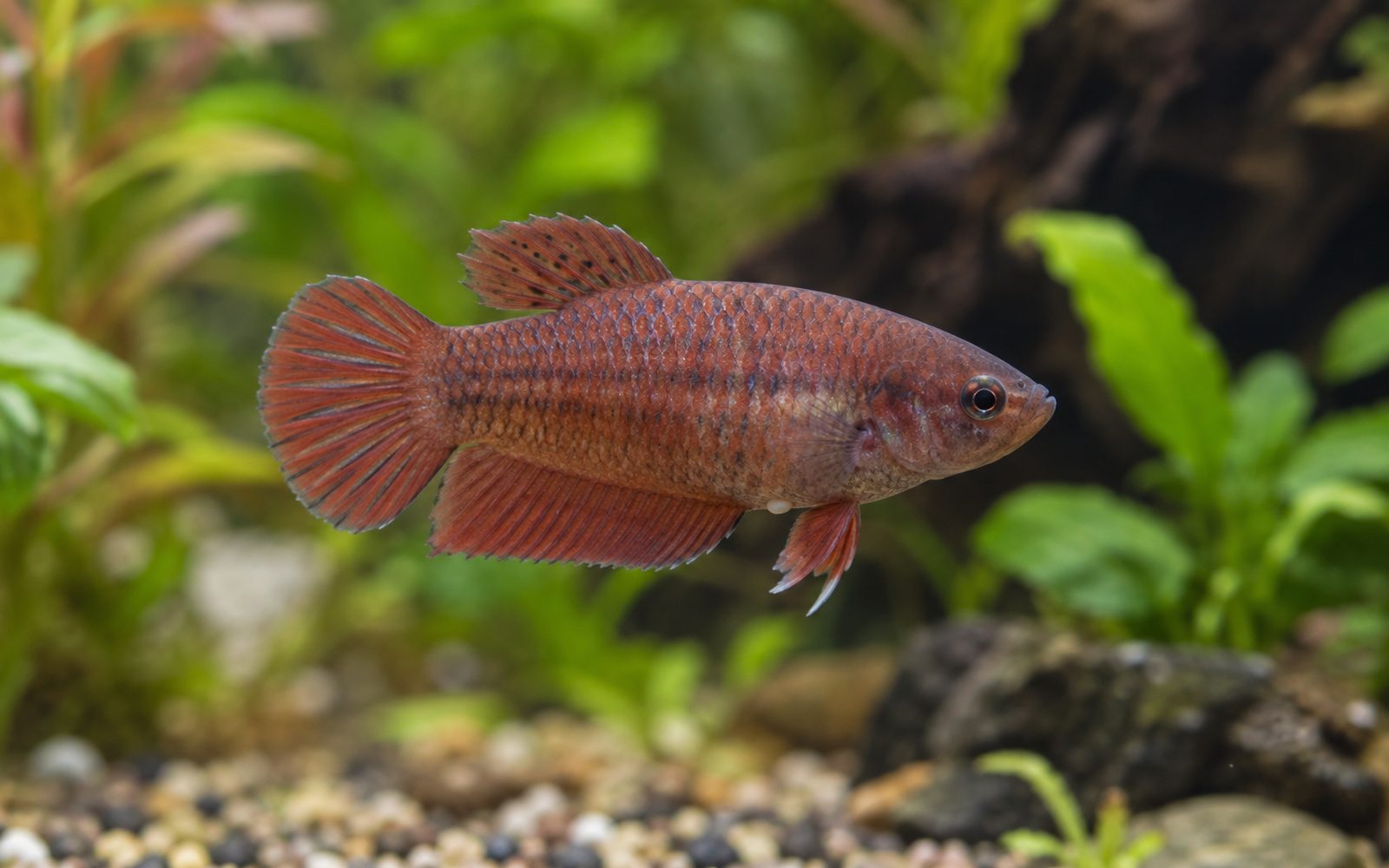
Males are long-finned and brightly colored; they flare their gill membranes when they see a rival. Females have shorter fins and are plumper, and a white egg spot is visible under the belly, in front of the vent. To tell plakat (short-finned) males from females, look for this spot and the longer pelvic fins.
Tank mates
This list is calculated automatically from the species profile and grows as new species are added to the catalog. Try it in the planner for a definite answer.
Usually compatible
 Emerald Betta
 Emerald Cory
 Porthole Catfish
 Keyhole Cichlid
 Firemouth Cichlid
 Cupid Cichlid
 Buffalohead Cichlid
 Discus
 Festivum
 Geophagus altifrons
Should not be kept together






Hobbyist notes
Things you won't find in books, learned by trial and error. The most helpful ones are on top.
Change history and contributors
- Page created · October 16, 2026