
Water parameters
Overview
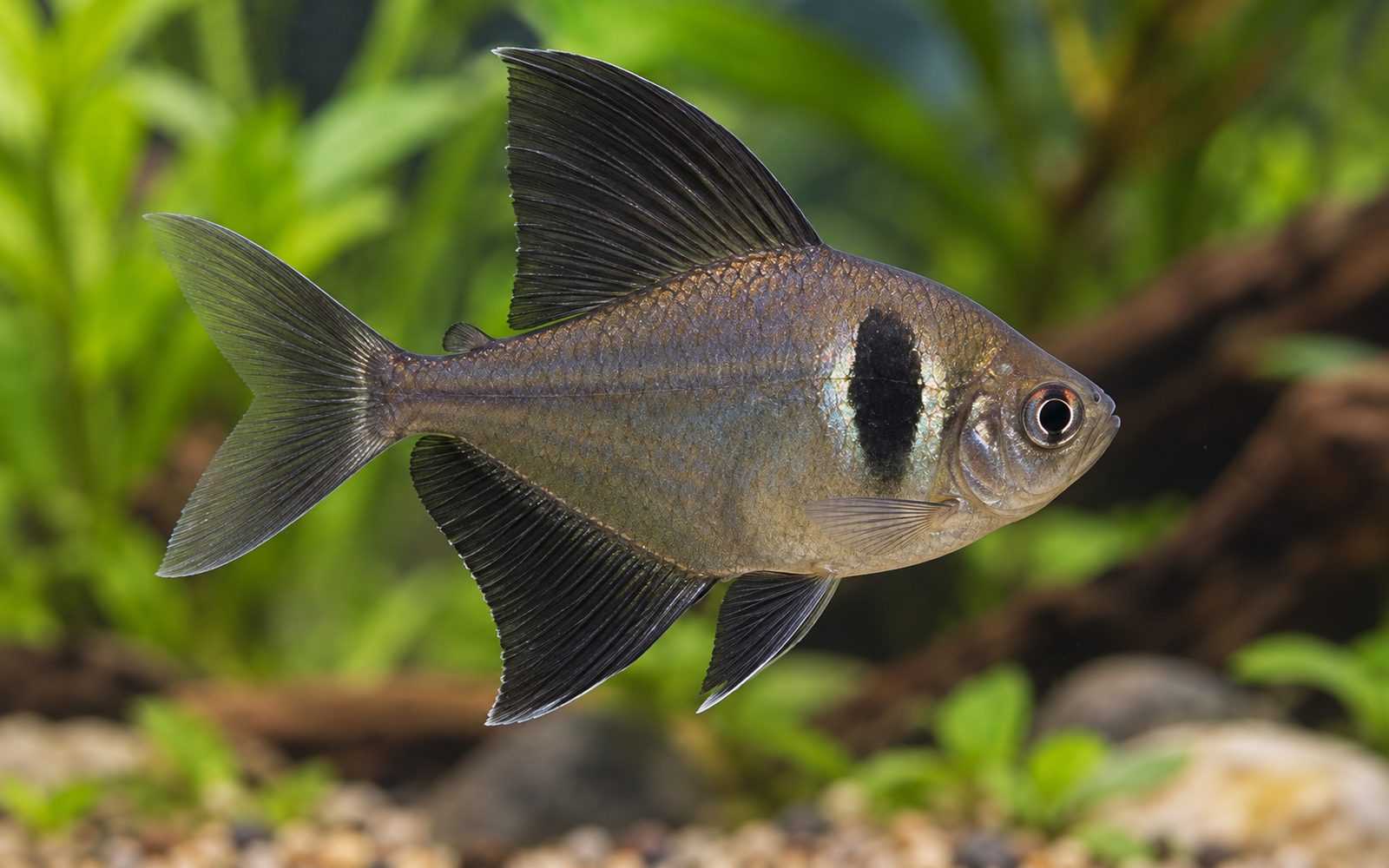
The black phantom tetra is recognized by its semi-transparent smoky gray body and the large, vertical black blotch behind the gills, surrounded by a thin silvery halo. Males have a large, sail-like dorsal fin that, together with the anal fin, is deep black. Females have shorter fins, and their pelvic, anal and adipose fins are reddish. This clear difference makes it one of the few tetras whose sexes are easy to tell apart.
It is calm and hardy; farm-bred fish adapt to a wide range of water parameters. It is a good mid-sized tetra for planted community tanks.
Natural Habitat
It lives in the still backwaters, swamps and floodplains of the Guaporé and Paraguay river systems in Brazil and Bolivia. These waters are densely vegetated, soft and slightly acidic; they expand and shrink with the seasonal floods.
Tank Setup
- Volume: at least 60 liters for a group of 6–10; a length of 60 cm or more.
- Water: 23–27°C, pH 6–7.5, soft to moderately hard water.
- Decor: Dense plants, roots and light softened by floating plants. Leave open spots where the males can display.
- Maintenance: 25% water change weekly; gentle to moderate flow.
Diet
Omnivorous. Flakes and small granules should be the staple; frozen or live bloodworms, brine shrimp, daphnia and cyclops should be added several times a week. Males fed a varied diet with live food show a deeper black and a livelier display.
Behavior and Compatibility
Peaceful and does not bother other fish. Males set up small territories and display to each other by spreading their fins; these "mock fights" almost never result in injury and are one of the most enjoyable behaviors of the species to watch. It usually leaves adult shrimp alone.
Good companions: other peaceful tetras, rasboras, corydoras, otocinclus, dwarf cichlids (apistogramma, rams), dwarf gouramis.
Avoid: large fish that can fit it in their mouths, fin nippers such as serpae tetras, aggressive cichlids.
Group and Colony Structure
It forms a loose group of at least 6, ideally 10 individuals. Unlike many other tetras, it does not swim in a tight school; individuals roam scattered and come together when threatened. Having more than one male is beneficial because it brings out the displays; a balanced or female-heavy ratio works well.
Breeding
An egg scatterer. Prepare a separate tank with soft (below GH 6), slightly acidic water, dim light and fine-leaved plants or a spawning mop. The parents should be removed after spawning, otherwise they eat the eggs. The fry become free-swimming within a few days and are fed infusoria, then newly hatched brine shrimp.
Health and Common Problems
- General: A hardy species; most problems come from poor water quality.
- White spot (ich): seen after transport and with sudden temperature changes; quarantine is recommended.
- Fading: the black color fades in a stressful or overly bright environment; floating plants and a larger group help.
Sexing
Easy to sex. Males have a much longer, sail-shaped dorsal fin, and their dorsal, anal and pelvic fins are black. Females have a short dorsal fin, red to orange tinted pelvic, anal and adipose fins, and a slightly fuller body.
Tank mates
This list is calculated automatically from the species profile and grows as new species are added to the catalog. Try it in the planner for a definite answer.
Usually compatible
 Flame Tetra
 Blackfin Corydoras
 Polystictus Corydoras
 Emerald Cory
 Emerald Dwarf Rasbora
 Porthole Catfish
 Keyhole Cichlid
 Cupid Cichlid
 Geophagus altifrons
 Geophagus surinamensis
Should not be kept together







Hobbyist notes
Things you won't find in books, learned by trial and error. The most helpful ones are on top.
Change history and contributors
- Page created · October 16, 2026