
Water parameters
Overview
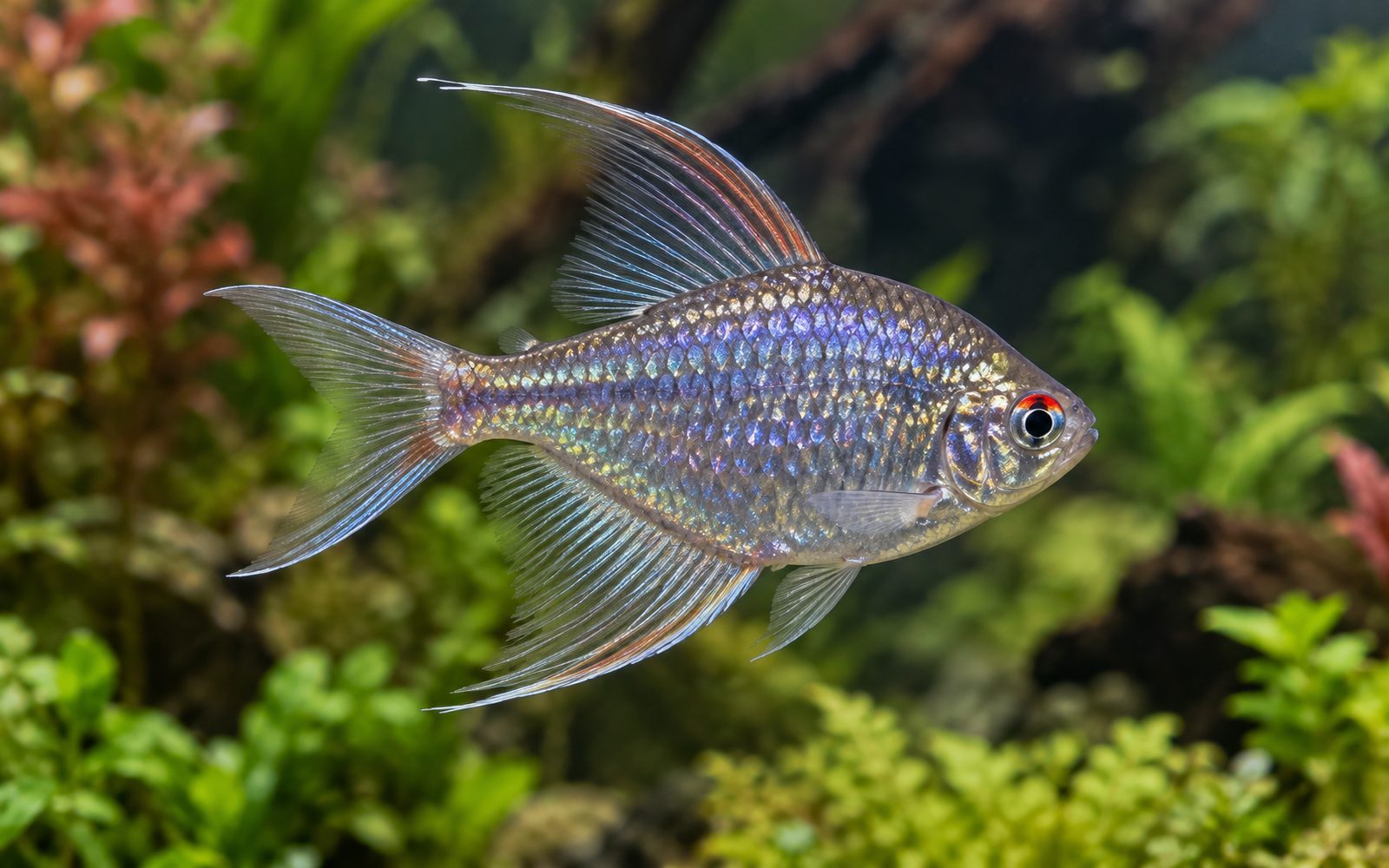
The diamond tetra is recognized by the large scales covering its body, which reflect light and sparkle like diamonds. It is deep-bodied with silvery-purple tones, and the upper part of the eye is red. As males mature, their dorsal and anal fins lengthen and ripple like a veil. Juveniles look plain in the store; the real sparkle appears as the fish mature.
Its natural habitat, Lake Valencia, has been affected by pollution and changes in water level; the fish sold in the trade are largely farm-bred. It is a hardy and calm species.
Natural Habitat
It lives in planted shoreline areas of Lake Valencia in northern Venezuela and the streams that flow into the lake.
Tank Setup
- Volume: at least 100 liters for a group of 6–10; 80 cm of length.
- Water: 24–27°C, pH 6–7.5, soft to moderately hard water.
- Light: the sparkle of the scales shows best under light coming from the side or above; partial shade can be provided with floating plants.
- Decor: planted edges and a large open swimming area.
- Maintenance: a 25% water change every week; moderate flow is tolerated.
Diet
Omnivorous. Alongside flakes and granules, give frozen brine shrimp, bloodworms and daphnia. It also accepts foods containing spirulina and the occasional blanched vegetable. Some individuals may pick at soft plant shoots.
Behavior and Compatibility
A peaceful, calm species. Males put on harmless displays with each other. It is reported to nip fins occasionally when kept with long-finned species; a large group reduces this risk.
Good companions: medium-sized tetras, corydoras, plecos, gouramis, peaceful cichlids, rasboras.
Avoid: large predators, aggressive cichlids, fin-nipping species (the males' long fins become a target).
Group and Colony Structure
A group of at least 6, ideally 10 is recommended. In a large group, the glittering scales create a very striking sight when the fish move together. The sex ratio is not critical. Building the school at the same time from fish of similar size makes it easier for them to get along; having several males brings out the display behavior.
Breeding
It is an egg scatterer. A separate tank is prepared with soft, slightly acidic water and fine-leaved plants; the female releases her eggs among the plants. The parents are removed after spawning. The fry are fed infusoria and newly hatched brine shrimp.
Health and Common Problems
- White spot (ich): may appear after transport.
- Fin damage: the males' long fins get damaged in poor water quality and with unsuitable tankmates.
- General: it is hardy and rarely falls ill in a mature aquarium.
- Quarantine: keeping newcomers separate for 2 weeks protects the whole school.
Sexing
Males have longer, wavier dorsal and anal fins, and their color and sparkle are more intense. Females have shorter fins and plumper bodies.
Tank mates
This list is calculated automatically from the species profile and grows as new species are added to the catalog. Try it in the planner for a definite answer.
Usually compatible
 Flame Tetra
 Blackfin Corydoras
 Polystictus Corydoras
 Emerald Cory
 Porthole Catfish
 Keyhole Cichlid
 Cupid Cichlid
 Geophagus altifrons
 Geophagus surinamensis
 Cryptocoryne Parva
Should not be kept together






Hobbyist notes
Things you won't find in books, learned by trial and error. The most helpful ones are on top.
Change history and contributors
- Page created · October 16, 2026