
Water parameters
Overview
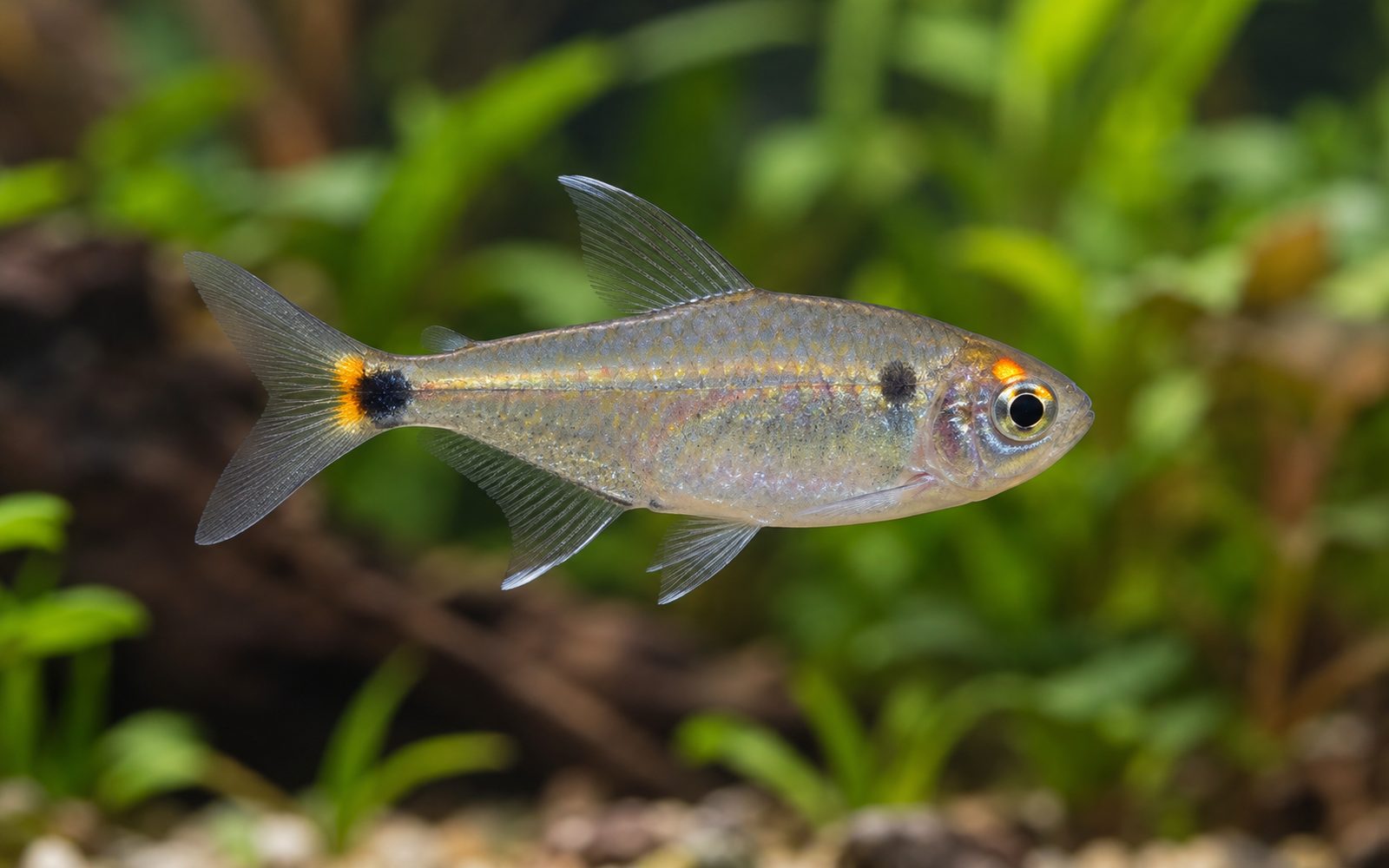
Thanks to the gold-orange spots above its eye and at the base of its tail, which glow as they catch the light, the head and tail light tetra is likened to a car's headlights and taillights. Right behind the bright spot at the tail base is a small black spot, and there is a faint dark spot on the shoulder. The body is silvery and semi-transparent.
It is very hardy, adapts to a wide range of water values, and farm-bred fish are easy to find. This makes it one of the best tetras for beginners.
Natural Habitat
It lives in the Amazon basin and the coastal rivers of the Guianas to the north, in slow-flowing streams, floodplains and the planted shores of lakes. It is found in both clear and tannin-stained waters. This wide distribution also explains why the species adapts easily to different water conditions in the aquarium.
Tank Setup
- Volume: at least 60 liters for a school of 8–12.
- Water: 23–27°C, pH 6–7.5, soft to moderately hard water.
- Decor: planted edges and a dark substrate; it helps if some of the light reaches the fish so the spots glow.
- Maintenance: a 25% water change every week; moderate flow is tolerated.
Diet
Omnivorous and not fussy. Make flakes and small granules the staple and vary it with frozen brine shrimp, bloodworms and daphnia. Feed 1–2 meals a day, only as much as is eaten within a few minutes. Skipping food one day a week eases digestion.
Behavior and Compatibility
Peaceful and active. Mild chasing occurs within the school, but it does not harm other species. It leaves adult shrimp alone but may eat their young.
Good companions: other tetras, rasboras, danios, corydoras, small livebearers, dwarf gouramis, peaceful dwarf cichlids.
Avoid: large fish that could fit it in their mouths and aggressive cichlids.
Group and Colony Structure
At least 8, ideally 12 or more individuals are recommended. In a large school, the bright spots moving together create an eye-catching sight in the aquarium. When kept in small numbers it becomes shy. The sex ratio does not matter. Completing the school in one go, or in two batches a short time apart, helps newcomers join the group.
Breeding
It is an egg scatterer and breeds easily in the aquarium. A separate tank is prepared with soft, slightly acidic water and fine-leaved plants or a spawning mop. The parents are removed after spawning. The eggs hatch in 1–2 days; a few days later the fry become free-swimming and start feeding on infusoria.
Health and Common Problems
- Hardiness: it is resistant to disease.
- White spot (ich): may appear after sudden temperature changes.
- Quarantine: keeping new fish separate protects the school.
Sexing
Males have a whitish line on the anal fin and slimmer bodies. Females are larger with a plumper belly.
Tank mates
This list is calculated automatically from the species profile and grows as new species are added to the catalog. Try it in the planner for a definite answer.
Usually compatible
 Flame Tetra
 Blackfin Corydoras
 Polystictus Corydoras
 Emerald Cory
 Emerald Dwarf Rasbora
 Porthole Catfish
 Keyhole Cichlid
 Cupid Cichlid
 Geophagus altifrons
 Geophagus surinamensis
Should not be kept together







Hobbyist notes
Things you won't find in books, learned by trial and error. The most helpful ones are on top.
Change history and contributors
- Page created · October 16, 2026