
Water parameters
Overview
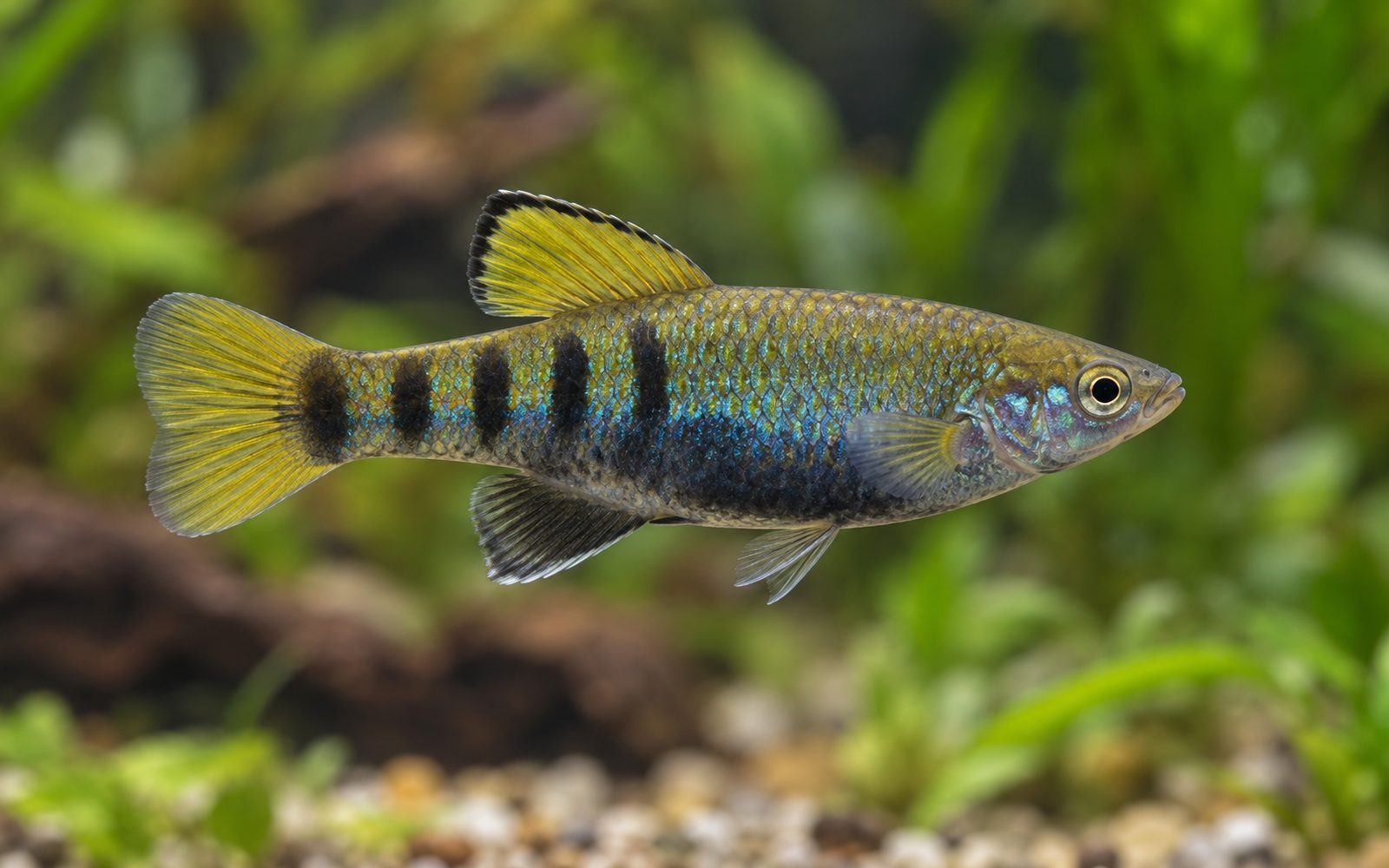
With metallic scales that turn from blue to green depending on the light, the blackbelly limia is one of the most eye-catching small livebearers. The males have a few distinct black vertical bars on the rear half of the body and a black edge on a yellow background on the dorsal fin. The broad black spot on the lower part of the females' belly is the source of the species' scientific name ("black belly").
It is as hardy as the platy and guppy but is seen less often in stores. Its habit of grazing algae, calm nature and small size make it a good fit for shrimp and planted aquariums.
Natural Habitat
In the wild it lives in the streams, spring pools, ditches and coastal wetlands of Jamaica. These waters are warm, hard and alkaline; minerals from the limestone bedrock keep the hardness high. The fish graze in shallow, planted shore areas.
Tank Setup
- Volume: 54 liters and a 60 cm tank length for a small group.
- Water: 24–27°C, pH 7–8, moderately hard to hard water.
- Layout: plenty of plants, stones that grow algae and floating plants. Good lighting brings out the blue shimmer.
- Maintenance: a 25% water change every week; nitrate buildup fades the colors.
Diet
Omnivorous and fond of plant foods. Spirulina flakes and micro granules, algae tablets and blanched vegetables should be the staple. It is supplemented with frozen brine shrimp, daphnia and cyclops a few times a week. It picks at fine algae in the aquarium all day long.
Behavior and Compatibility
Peaceful and active. Males display to each other by spreading their fins and frequently follow the females, but they do not cause injuries. It is not skittish; in a large group it livens up the middle zone of the aquarium.
Good companions: platies, Endler's livebearers, humpbacked limias (accepting the risk of hybridization), small rainbowfish suited to hard water, corydoras, otocinclus, shrimp, nerite snails.
Avoid: species that need soft, acidic water, fin-nipping barbs, large and aggressive fish.
Group and Colony Structure
2–3 females per male is recommended. 2 males and 4–5 females make a balanced group in 54 liters. It can hybridize with other Limia species; those who want to preserve a pure line keep the species separate. The population grows quickly, and surplus fry need to be rehomed.
Breeding
A livebearer. Gestation lasts about 4 weeks; the female gives birth to 10–40 fry. The fry eat finely crushed food and newly hatched brine shrimp from day one. Adults may eat the fry; clumps of moss and dense plants provide hiding places for the fry.
Health and Common Problems
Hardy. Columnaris and "shimmying" can appear in soft water; fin rot and white spot occur in poor water. A lack of plant foods can lead to digestive problems. Quarantine new fish for 2 weeks.
Sexing
Males are smaller, more brightly blue–green and have a gonopodium. Females are larger and plumper, with a fan-shaped anal fin, and carry a large black spot on the lower part of the belly.
Tank mates
This list is calculated automatically from the species profile and grows as new species are added to the catalog. Try it in the planner for a definite answer.
Usually compatible
 Flame Tetra
 Blackfin Corydoras
 Polystictus Corydoras
 Emerald Cory
 Emerald Dwarf Rasbora
 Porthole Catfish
 Keyhole Cichlid
 Cryptocoryne Parva
 Gold Spot Pleco (L001)
 Guppy
Guppy
Should not be kept together






Hobbyist notes
Things you won't find in books, learned by trial and error. The most helpful ones are on top.
Change history and contributors
- Page created · October 16, 2026