
Water parameters
Overview
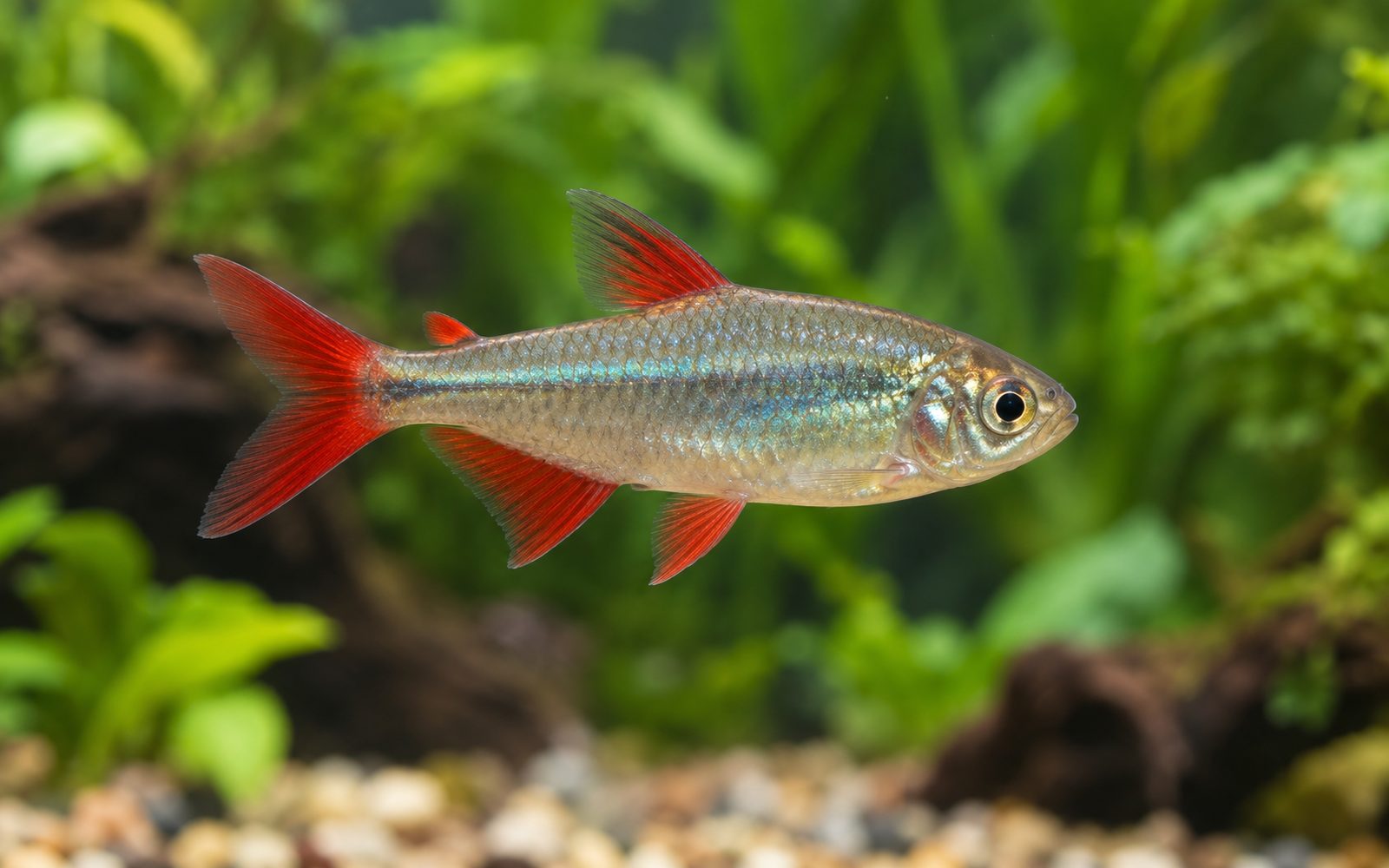
The bloodfin tetra stands out for the contrast between its slim, silvery body with a faint blue-green sheen and its blood-red tail, anal and pelvic fins. It is a fast species that is constantly on the move; it swims in a school in the upper layer of the aquarium.
Because it comes from a subtropical region, it adapts to a wide temperature range, is long-lived and is resistant to disease. It is an inexpensive, easy-to-find species suitable for beginners.
Natural Habitat
It lives in slow-flowing tributaries, ponds and planted shoreline areas of the Paraná River basin in Argentina and Paraguay. Seasonal temperature differences are marked in the region.
Tank Setup
- Volume: at least 60 liters for a school of 8–12; a long tank (60 cm or more) suits its fast swimming.
- Water: 20–26°C; pH 6–8, soft to hard water.
- Lid: it is very prone to jumping; a tight-fitting lid is essential.
- Decor: plants along the edges and a large open area in the upper layer; it enjoys moderate flow.
Diet
Omnivorous. It eagerly takes flakes at the surface; vary it with small granules, frozen brine shrimp, daphnia and bloodworms. 1–2 meals a day is enough. Because it snatches food very quickly, make sure the slow and bottom-feeding species in the tank also get enough food.
Behavior and Compatibility
Peaceful but very active. It constantly chases within the school; when the group is small it may nip the fins of slow, long-finned species. Because of its speed it outcompetes slow species at feeding time.
Good companions: danios, rasboras, other active tetras, corydoras, robust livebearers such as platies and mollies.
Avoid: long-finned, slow species such as bettas, fancy guppies and angelfish; large predators.
Group and Colony Structure
At least 8, ideally 12 or more individuals are recommended. A large school both moves more naturally and keeps the chasing within itself. The sex ratio does not matter. A large school making fast laps together in the upper layer is the most enjoyable sight this species offers in the aquarium.
Breeding
It is an egg scatterer that breeds easily. A separate tank is prepared with shallow water and fine-leaved plants or a spawning grid; because the parents eat the eggs, they are removed after spawning. The eggs hatch in 1–2 days, and a few days later the fry start feeding on infusoria.
Health and Common Problems
- Jumping: the most common cause of losses in tanks without a lid.
- Hardiness: it is resistant to disease; in good conditions it lives for many years.
- White spot (ich): may appear after sudden temperature changes.
Sexing
Males have a more intense red in their fins and small hooks on the anal fin; because of these hooks they can get caught in nets. Females are paler and plumper.
Tank mates
This list is calculated automatically from the species profile and grows as new species are added to the catalog. Try it in the planner for a definite answer.
Usually compatible
 Flame Tetra
 Blackfin Corydoras
 Polystictus Corydoras
 Emerald Cory
 Emerald Dwarf Rasbora
 Porthole Catfish
 Keyhole Cichlid
 Cupid Cichlid
 Geophagus altifrons
 Geophagus surinamensis
Should not be kept together







Hobbyist notes
Things you won't find in books, learned by trial and error. The most helpful ones are on top.
Change history and contributors
- Page created · October 16, 2026