
Water parameters
Overview
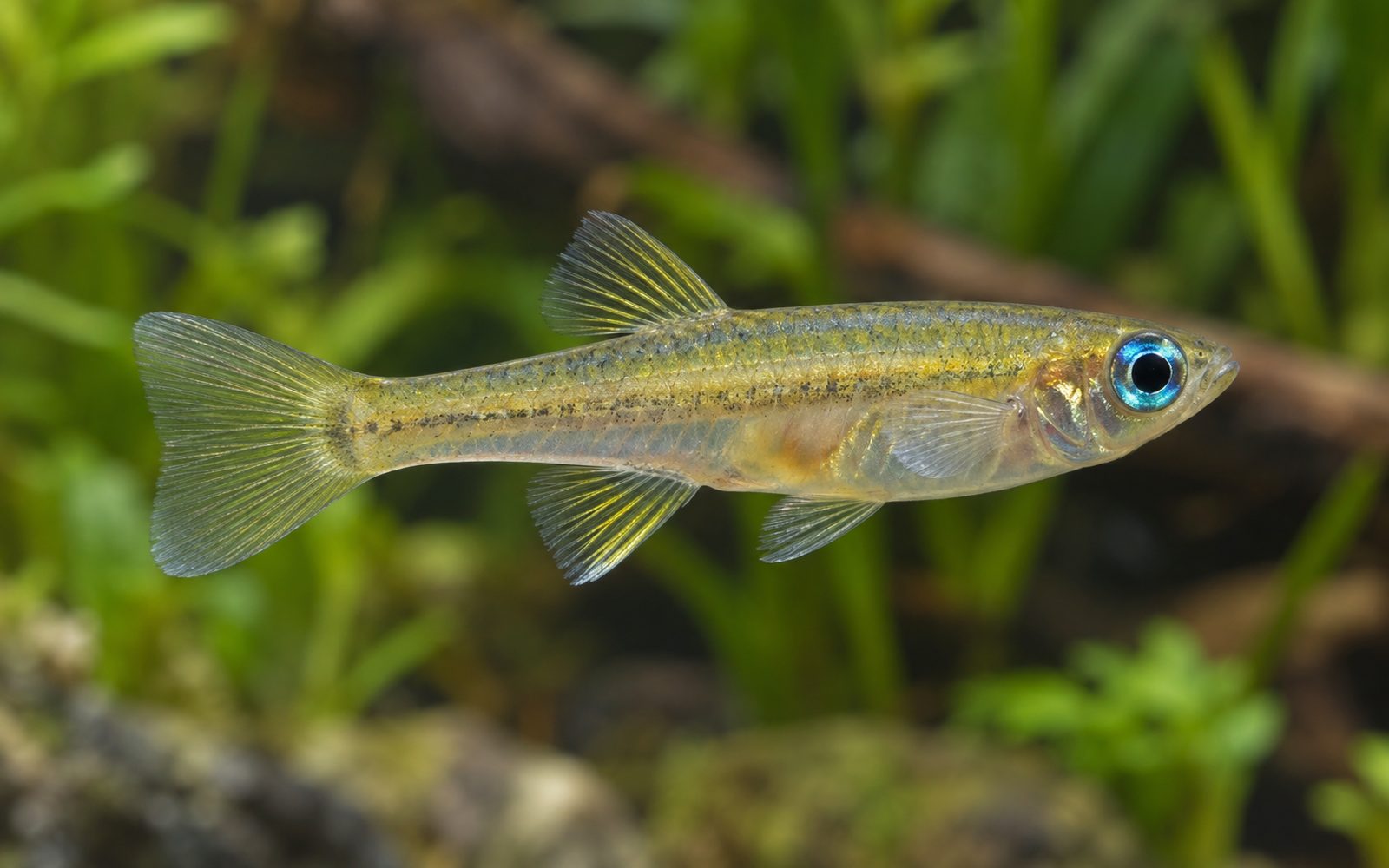
The blue-eyed livebearer is a species that looks plain at first glance, but the bright turquoise ring in its eyes is very eye-catching when it catches the light. Its body is slender, elongated and semi-transparent; its fins are colorless or slightly yellowish. Both males and females have the same blue eyes.
Unlike other livebearers, it swims together as a school in the upper half of the aquarium. It is not as tolerant of all conditions as a platy or guppy; it needs clean water high in oxygen. Under the right conditions it is a lively, long-lived community fish.
Natural Habitat
It lives in clear, flowing streams in the Coatzacoalcos River basin in southern Mexico. The fish move around in groups near the surface in shore areas where the current slows, picking up insects that fall into the water. These waters are rich in oxygen and moderately hard.
Tank Setup
- Volume: at least 80 liters and an 80 cm tank length for a group of 8–10.
- Water: 23–26°C, pH 7–8, moderate hardness. Oxygen is important; use a filter outlet that agitates the surface.
- Flow: gentle to moderate flow; the fish enjoy swimming against the current.
- Lid: it jumps when startled; a tight lid is essential.
- Layout: plants along the edges, a large open swimming area in the upper zone. Avoid floating plants that cover the surface completely.
Diet
Omnivorous; it takes food from the surface and midwater. Flakes and micro granules, frozen brine shrimp, mosquito larvae and daphnia. Live fruit flies and mosquito larvae are among its favorite foods. It rarely picks up food that sinks to the bottom.
Behavior and Compatibility
Peaceful and skittish. It feels safe in a group; when kept singly or in pairs it hides. Males court females and chase each other briefly among themselves.
Good companions: rasboras, small tetras, rainbowfish, platies, corydoras, otocinclus, shrimp.
Avoid: dominant, fast surface species, large and aggressive fish, fin-nipping species.
Group and Colony Structure
It is kept as a school: at least 6, ideally 10 or more individuals, about 2 females per male. In a large group the fish swim more boldly and the blue eyes look more pronounced. Fish kept in small numbers remain skittish and are more prone to crashing into the glass.
Breeding
A livebearer. Gestation lasts about 4–5 weeks; compared with other livebearers the female gives birth to a small number (usually 10–20) of large fry. The fry eat newly hatched brine shrimp and finely crushed food from day one. Adults may eat the fry; dense plants near the surface or a separate grow-out aquarium reduce losses.
Health and Common Problems
Sensitive to poor water quality and low oxygen; the first signs are fading color and clamped fins. Crashing into the glass and jumping when startled are common causes of loss. Quarantine new fish for 2 weeks.
Sexing
Males are smaller and slimmer, and their anal fin has been modified into a gonopodium. Females are larger and plumper, with a fan-shaped anal fin. The blue eyes are the same in both sexes.
Tank mates
This list is calculated automatically from the species profile and grows as new species are added to the catalog. Try it in the planner for a definite answer.
Usually compatible
 Flame Tetra
 Blackfin Corydoras
 Polystictus Corydoras
 Emerald Cory
 Emerald Dwarf Rasbora
 Porthole Catfish
 Keyhole Cichlid
 Cryptocoryne Parva
 Gold Spot Pleco (L001)
 African Glass Catfish
Should not be kept together






Hobbyist notes
Things you won't find in books, learned by trial and error. The most helpful ones are on top.
Change history and contributors
- Page created · October 16, 2026