
Water parameters
Overview
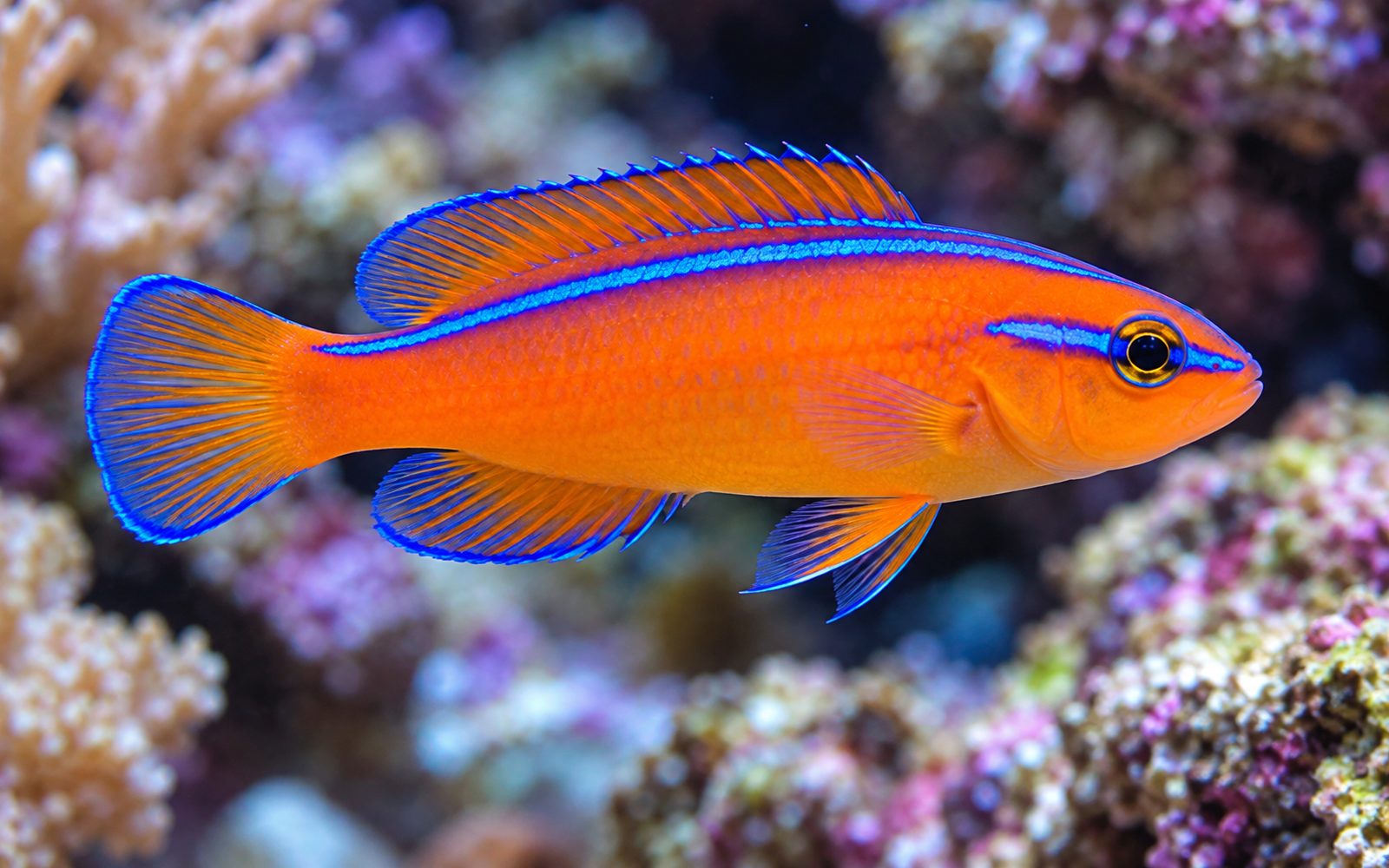
The exquisite fairy wrasse is one of the most widely distributed species of the genus Cirrhilabrus. Depending on the region, the males' bodies range between green, olive and red tones; neon blue lines run along the head and body. The large oval black spot on the upper part of the caudal peduncle is present in both sexes and is the most reliable identifying mark. During courtship or rival displays ("flashing") males spread their fins and their colors brighten within a few seconds.
Indian Ocean and Pacific individuals differ markedly in color and may be sold as separate forms in the trade; scientists have noted that the Western and Central Pacific form may be a separate species. Individuals are wild-collected.
Natural Habitat
It lives in areas with current, over rubble and low reef patches, along reef edges at 6–40 meters. It collects zooplankton by hovering above the bottom in groups of mixed sexes.
Tank Setup
- Volume: at least 250 liters and 120 cm of length for a single male or a small harem.
- Water: salinity 1.023–1.026 specific gravity, pH 8.1–8.4, temperature 24–27°C. Moderate flow and good oxygenation.
- Decor: open swimming space above, rock crevices below to shelter in. At night it sleeps among the rocks in a mucus cocoon it spins around itself.
- Lid: fairy wrasses are among the reef fish that jump most often; a lid or mesh is essential.
- Reef compatibility: reef safe; it does not touch corals, shrimp or snails.
Diet
Carnivorous; a plankton picker. Offer frozen mysis, enriched brine shrimp, copepods, fish roe and small marine fish granules. Feed small amounts at least 2–3 times a day.
Behavior and Compatibility
Peaceful and active; it does not harm its tankmates. Males display at and chase males of their own species and similarly colored Cirrhilabrus males. It can be kept with wrasses of a different genus (e.g. flasher wrasses).
Good companions: clownfish, anthias, flasher wrasses, dwarf angelfish, tangs, gobies, cardinalfish, cleaner shrimp.
Avoid: lionfish, groupers, large aggressive dottybacks, a second male of the same species.
Group and Colony Structure
Lives in a harem arrangement: one male and 2–3 females. All individuals start out as females; if there is no male, the dominant female turns into a male. A single male also lives comfortably on its own. A male kept with females shows its colors more often.
Breeding
A species that starts out as female. In the late afternoon the male performs a flashing display for the females, and the pair rises into the water column to release pelagic eggs. Fry are not raised in home aquariums.
Health and Common Problems
- Jumping: the most common cause of losses.
- Marine ich and velvet: quarantine is recommended.
- Underfeeding: individuals fed infrequently waste away and lose color.
Sexing
Clear: males are larger, more colorful and have blue lines; their fins are showier. Females are small, reddish-brown and plain.
Tank mates
This list is calculated automatically from the species profile and grows as new species are added to the catalog. Try it in the planner for a definite answer.
Should not be kept together




Hobbyist notes
Things you won't find in books, learned by trial and error. The most helpful ones are on top.
Change history and contributors
- Page created · October 16, 2026