
Water parameters
Overview
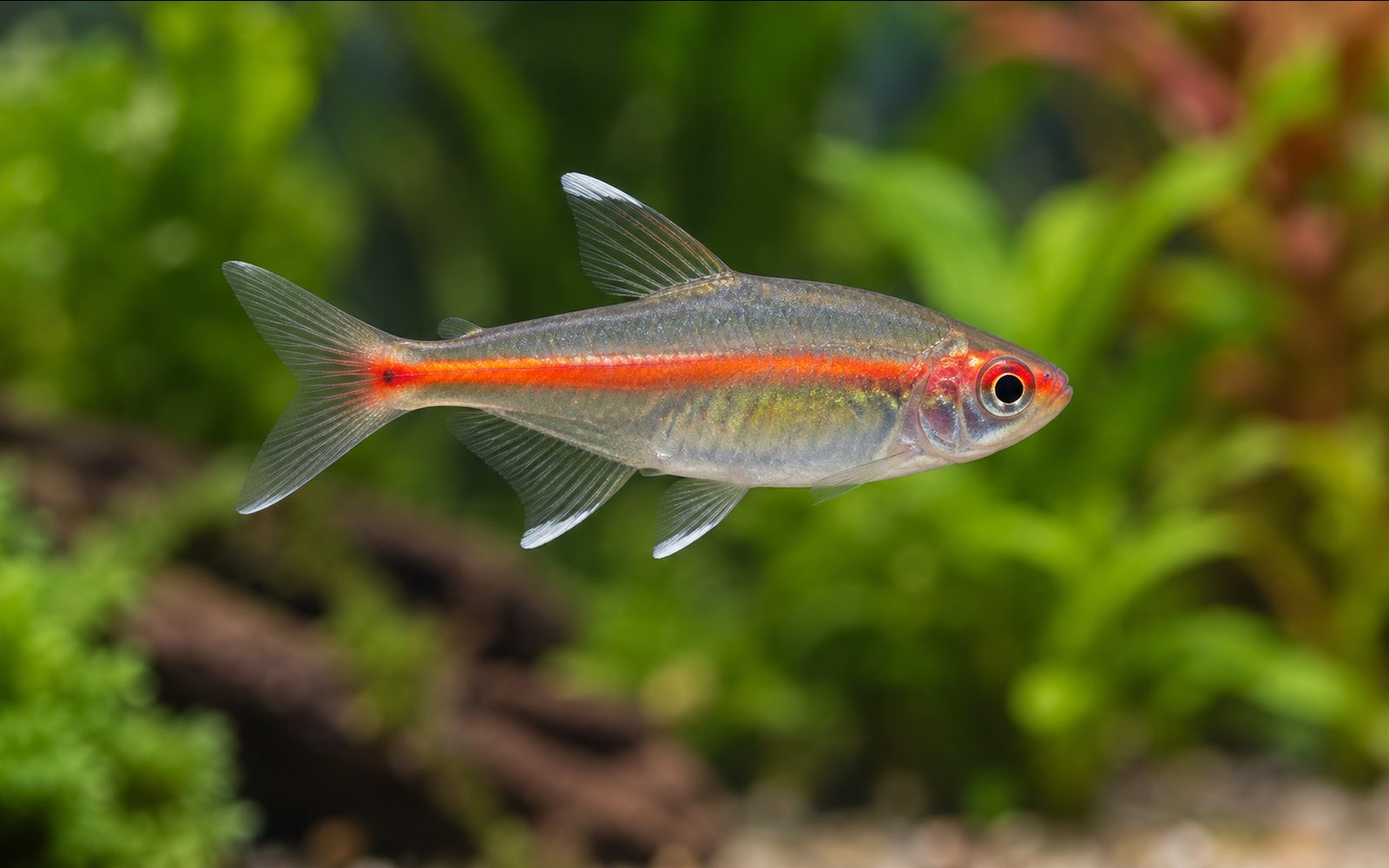
The glowlight tetra is recognized by the bright orange-red line running through the middle of its semi-transparent, light-colored body, from the snout to the base of the tail. In a dark setting this line really does look as if it is giving off light. The tips of the dorsal, anal and pelvic fins are white, and the upper part of the eye is red.
It is a hardy, peaceful and easy-care species. The fish sold in the trade are largely farm-bred. Because it is somewhat sturdier than the neon tetra, it is often recommended for beginners.
Color and Fin Varieties
- Albino (albino glowlight tetra): a form with a whitish-pink body and red eyes; the orange line remains but looks paler because the base color is light.
Natural Habitat
It lives in slow-flowing, shaded forest streams of the Essequibo River basin in Guyana. The water is soft, acidic and lightly stained with tannins.
Tank Setup
- Volume: at least 54–60 liters for a school of 10–15.
- Water: 24–27°C, pH 6–7.5, soft to moderately hard water.
- Decor: a dark substrate, dense plants and light softened by floating plants make the orange line stand out.
- Maintenance: a 20–25% water change every week; gentle flow.
Diet
Omnivorous. Make small granules and fine flakes the staple and supplement with frozen brine shrimp, daphnia, cyclops and fine bloodworms. Its mouth is small, so keep the food fine.
Behavior and Compatibility
Very peaceful and bothers no other species. In a large school it swims together in the middle layer of the aquarium. It leaves adult shrimp alone.
Good companions: neon, cardinal and other small tetras, rasboras, corydoras, otocinclus, dwarf gouramis, dwarf cichlids, shrimp.
Avoid: large fish that could fit it in their mouths (including adult angelfish), active fin-nipping species, aggressive cichlids.
Group and Colony Structure
At least 8, ideally 15 or more individuals are recommended. Large schools both increase the fish's sense of security and create a strong visual effect as the orange lines move together. The sex ratio does not matter. Fish kept in small numbers retreat among the plants and their colors fade.
Breeding
It can be bred in the aquarium. A separate tank is prepared with soft, acidic water (around pH 6), dim light and fine-leaved plants. The pair can be seen rolling over on their sides together while spawning; the eggs are released among the plants. The parents are removed after spawning; the fry become free-swimming within a few days and are fed infusoria.
Health and Common Problems
- White spot (ich): may appear after transport and when the temperature drops.
- Neon tetra disease: this parasitic disease seen in tetras can also affect glowlight tetras; fish that lose color and separate from the school should be removed immediately.
- General: it rarely falls ill in mature, clean water.
Sexing
Females are larger with a plumper belly. Males are slimmer, and their lines may look slightly brighter.
Tank mates
This list is calculated automatically from the species profile and grows as new species are added to the catalog. Try it in the planner for a definite answer.
Usually compatible
 Flame Tetra
 Blackfin Corydoras
 Polystictus Corydoras
 Emerald Cory
 Porthole Catfish
 Keyhole Cichlid
 Cupid Cichlid
 Geophagus altifrons
 Geophagus surinamensis
 Cryptocoryne Parva
Should not be kept together







Hobbyist notes
Things you won't find in books, learned by trial and error. The most helpful ones are on top.
Change history and contributors
- Page created · October 16, 2026