
Water parameters
Overview
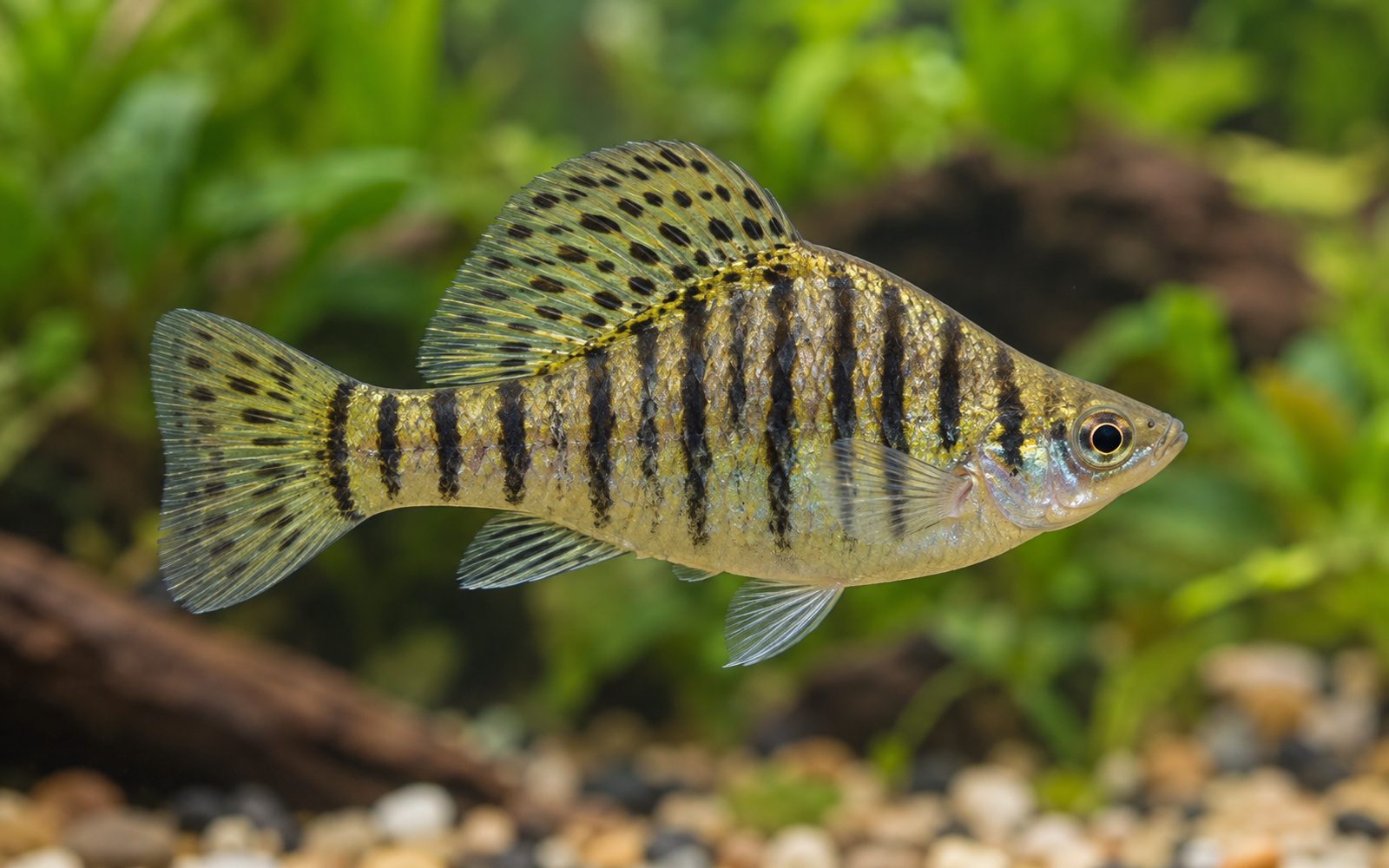
The humpbacked limia is one of the best-known species in the aquarium of the genus Limia, endemic to the Caribbean islands. Its silvery–yellowish body is covered with thin black vertical bars from behind the head to the caudal peduncle. As males age, a distinct hump forms behind the head, the dorsal fin grows larger and the body deepens; the species' name comes from this appearance.
It is as hardy and docile as a platy, but is found in stores less often. Thanks to its habit of grazing algae, it helps keep decor and plant leaves clean of fine algae.
Natural Habitat
In the wild it lives in Lake Miragoâne in southwestern Haiti and the waters connected to it. This habitat is warm, hard and planted; the fish graze on algae-covered surfaces in shallow areas near the shore. Being endemic to a narrow area makes the species vulnerable in the wild.
Tank Setup
- Volume: 60 liters and a 60 cm tank length for a small group.
- Water: 24–27°C, pH 7–8, moderately hard to hard water. Tap water is suitable in most regions.
- Layout: plenty of light, stones and roots that can grow algae, dense plants along the edges.
- Maintenance: a 25% water change every week.
Diet
Omnivorous and fond of plant foods. Spirulina flakes, algae tablets, blanched spinach and zucchini should be the staple. Frozen brine shrimp, daphnia and small bloodworms are given a few times a week. It picks at fine algae on the decor all day long.
Behavior and Compatibility
Peaceful and active. Males display to each other by spreading their fins, but serious fights are rare. Although they chase females, they are not as persistent as mollies or swordtails.
Good companions: platies, mollies, other limias (accepting the risk of hybridization), rainbowfish suited to hard water, corydoras, otocinclus, shrimp.
Avoid: species that need soft, acidic water, large and aggressive cichlids, fin-nipping barbs.
Group and Colony Structure
It is kept in a harem arrangement: at least 2 females per male. 2 males and 4 females are suitable in 60 liters. With more than one male the displays increase, and the humpbacked, high-finned males become more pronounced. It can hybridize with other Limia species; it should be kept separate for a pure line.
Breeding
A livebearer. Gestation lasts about 4 weeks; the female gives birth to 10–50 fry. The fry are fed crushed flakes and newly hatched brine shrimp from day one. Adults may eat the fry; with dense or floating plants some of the fry survive on their own.
Health and Common Problems
Hardy. Columnaris and fin rot can appear in soft water and poor water quality. A diet lacking plant foods leads to digestive problems. Quarantine new fish for 2 weeks.
Sexing
The males' anal fin has been modified into a gonopodium; mature males develop a humped back and a large dorsal fin. Females are larger with a full belly, a straight back and a fan-shaped anal fin.
Tank mates
This list is calculated automatically from the species profile and grows as new species are added to the catalog. Try it in the planner for a definite answer.
Usually compatible
 Flame Tetra
 Blackfin Corydoras
 Polystictus Corydoras
 Emerald Cory
 Emerald Dwarf Rasbora
 Porthole Catfish
 Keyhole Cichlid
 Cryptocoryne Parva
 Gold Spot Pleco (L001)
 African Glass Catfish
Should not be kept together






Hobbyist notes
Things you won't find in books, learned by trial and error. The most helpful ones are on top.
Change history and contributors
- Page created · October 16, 2026