
Water parameters
Overview
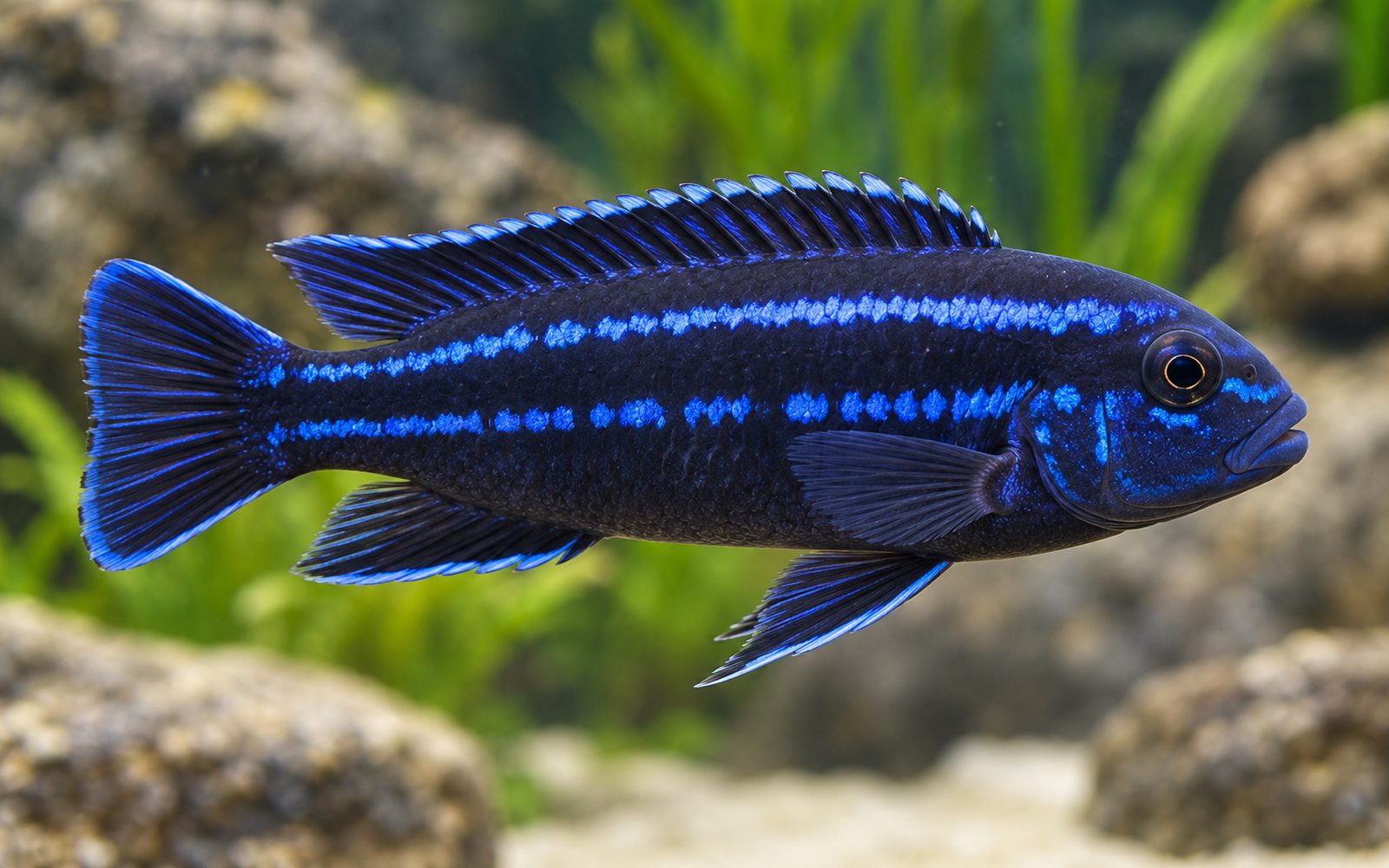
The johanni is one of the most striking examples of color difference between the sexes in Malawi aquariums. All fry are born orange-yellow; females keep this color, while within a few months males turn into a fish with bright blue horizontal stripes on a dark navy background. A harem of a blue male and orange females creates a pleasing color contrast in the aquarium.
As a typical member of the genus Melanochromis, its males are territorial and especially aggressive toward striped fish that resemble them. In a properly set-up mbuna aquarium it is hardy and long-lived.
Natural Habitat
It lives along the southeastern shores of Lake Malawi, in rocky areas mixed with sand. It feeds on the algae layer on the rocks and the small invertebrates within it. The water is hard, alkaline and clear.
Tank Setup
- Volume: at least 250 liters and 120 cm in length for a harem and a few other mbuna species.
- Rockwork: Rock piles with many caves that break lines of sight.
- Water: Hard and alkaline (pH 7.8–8.5); aragonite substrate or Malawi salt.
- Maintenance: Strong filtration, weekly 30–50% water changes.
Diet
Omnivorous. A spirulina-based mbuna food should be the staple; brine shrimp, mysis or cyclops can be added a few times a week. Bloodworms and foods containing mammalian meat should be avoided; they increase the risk of Malawi bloat.
Behavior and Compatibility
The male claims a cave and constantly chases blue-striped fish, especially other Melanochromis species. The orange females are generally calm. Aggression decreases when it is kept with species that are clearly different in color and pattern.
Good companions: yellow lab, red zebra, cobalt blue zebra, rusty cichlid, Synodontis catfish suited to hard water.
Avoid: striped Melanochromis species such as auratus, chipokae and maingano (fighting and hybridization), very calm mbuna, haps, community fish, shrimp and snails.
Group and Colony Structure
- Harem: 1 male and 3–4 females; a single male is preferred.
- Starting with juveniles: In a group bought as orange juveniles, the surplus males are removed when they begin to turn blue.
- Crowded community: Keeping it somewhat crowded, together with harems of other mbuna species and strong filtration, spreads out aggression.
Breeding
A mouthbrooder that breeds easily in the aquarium. The male courts in front of a cave; the female picks up the eggs in her mouth and they are fertilized via the egg spots on the male's anal fin. The female carries 10–25 eggs for about 3 weeks. The fry are orange.
Health and Common Problems
- Malawi bloat: wrong food and stress.
- Fight wounds: torn fins and scale loss in females when there are too few females.
- A hiding fish: a second male kept under pressure cannot change color and weakens.
Sexing
Sexing is easy in mature fish: males are dark navy to black with bright blue stripes, females are orange-yellow. Because all juveniles are orange, males only become apparent within a few months, when they start turning blue. Males have prominent egg spots on the anal fin.
Tank mates
This list is calculated automatically from the species profile and grows as new species are added to the catalog. Try it in the planner for a definite answer.
Usually compatible
 Banded Jewel Cichlid
 Demasoni Cichlid
 Jack Dempsey
 Red Devil Cichlid
 Convict Cichlid
 Pundamilia nyererei
 Pundamilia pundamilia
 Zebra Obliquidens
 Anubias Angustifolia
 Anubias Barteri
Should not be kept together








Hobbyist notes
Things you won't find in books, learned by trial and error. The most helpful ones are on top.
Change history and contributors
- Page created · October 16, 2026