
Water parameters
Overview
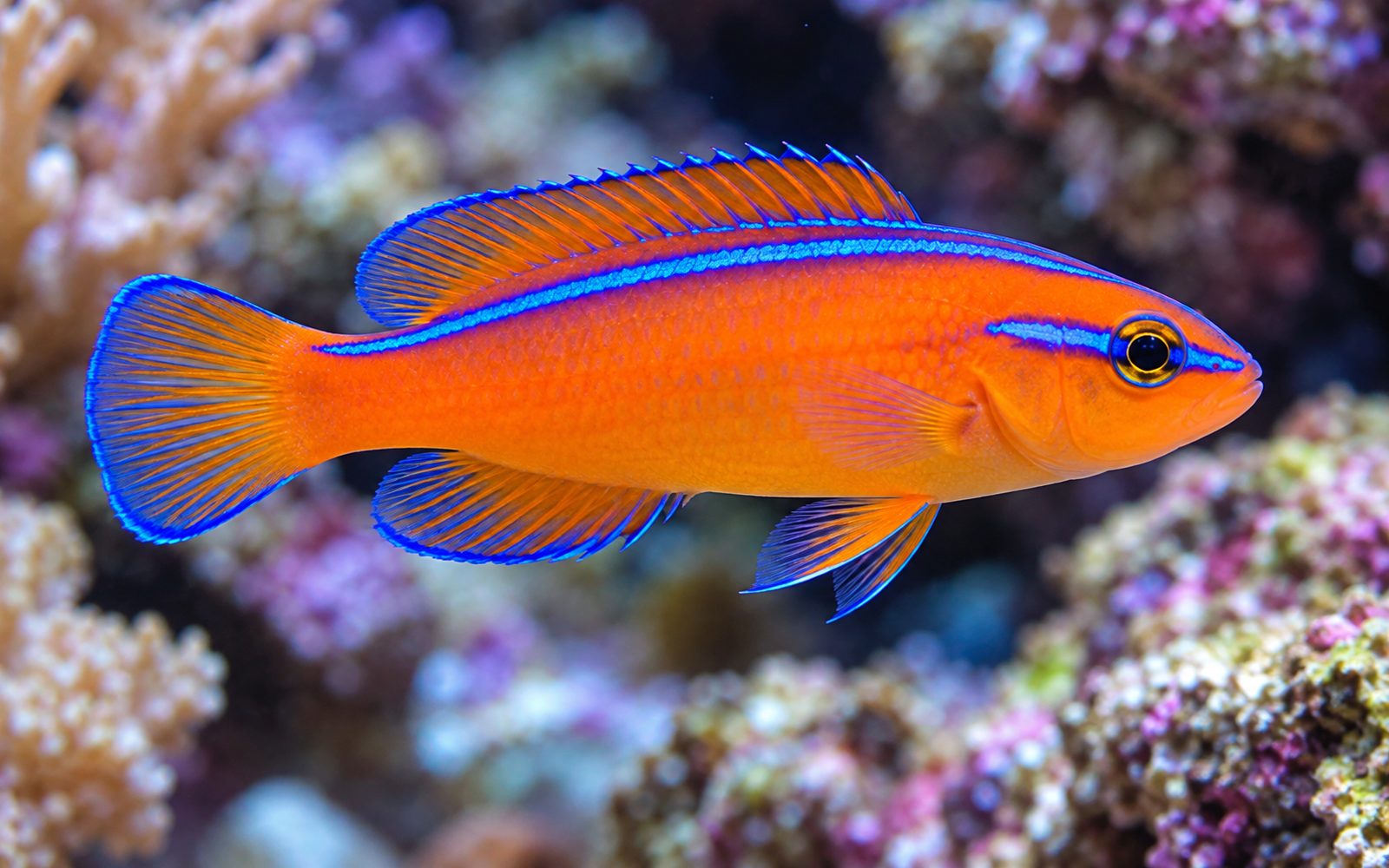
The melanurus wrasse is one of the Halichoeres wrasses most often kept in reef aquariums. Its slender, cigar-shaped body is covered with horizontal orange and blue–green stripes; it takes its name from the black spot at the base of the tail fin ("melanurus": black tail). Females and juveniles also have one or two black eyespots on the dorsal fin; in males these disappear and the colors are more vivid.
Aquarists love it not only for its color but also because it is useful: it constantly patrols the rocks, hunting flatworms (planaria), parasitic snails that harm corals (Pyramidellidae) and small bristle worms. Individuals are collected from the wild, but they are robust and switch quickly to prepared foods.
Natural Habitat
It lives on shallow coral reefs and rocky shores of the Indo-Pacific, usually in water shallower than 15 meters. Near sand and rubble areas, it picks small worms, copepods and isopods from rock surfaces.
Tank Setup
- Volume: at least 200 liters and 90 cm in length.
- Sand bed: it buries itself in the sand at night and when frightened; a fine-grained sand bed at least 5 cm deep is essential.
- Water: salinity 1.023–1.026 specific gravity, pH 8.1–8.4, temperature 24–27°C.
- Lid: it may leap out of the water when startled; a lid or mesh cover is recommended.
- Reef compatibility: reef safe. It leaves corals and tridacna clams alone; it lives without problems alongside large cleaner shrimp. It may eat very small shrimp juveniles and tiny invertebrates.
Diet
Carnivorous. Offer frozen mysis, brine shrimp, copepods, chopped seafood and small marine fish granules. Feed small amounts 2–3 times a day; in a mature aquarium the small creatures on the rocks also contribute to its diet.
Behavior and Compatibility
Active and curious; it spends all day moving among the rocks, picking at them. It is peaceful, but can be grumpy toward its own species and similarly shaped Halichoeres species. It is normal for it not to come out of the sand for a day or two after it is first added to the aquarium.
Good companions: clownfish, tangs, dwarf angelfish, anthias, fairy wrasses, gobies, cardinalfish, cleaner shrimp.
Avoid: lionfish and groupers that could eat it, large aggressive wrasses, a second male of the same species.
Group and Colony Structure
Keeping it singly is the easiest route. In a large aquarium one male and one or two females can be kept together; two males will fight. It is a female-first species; the dominant female can change into a male.
Breeding
During the breeding season it forms pairs and releases pelagic eggs in the water column. Fry are not raised in home aquariums.
Health and Common Problems
- Lack of a sand bed: a fish that cannot find sand to bury itself in becomes stressed, and abrasion wounds and loss of appetite are seen.
- Marine white spot and velvet: quarantine is recommended; put a container filled with sand in the quarantine tank.
- Jumping: the most common cause of losses in an uncovered aquarium.
Sexing
Males are more vividly colored and have no eyespot on the dorsal fin. Females have one or two black eyespots on the dorsal fin.
Tank mates
This list is calculated automatically from the species profile and grows as new species are added to the catalog. Try it in the planner for a definite answer.
Should not be kept together




Hobbyist notes
Things you won't find in books, learned by trial and error. The most helpful ones are on top.
Change history and contributors
- Page created · October 16, 2026