
Water parameters
Overview
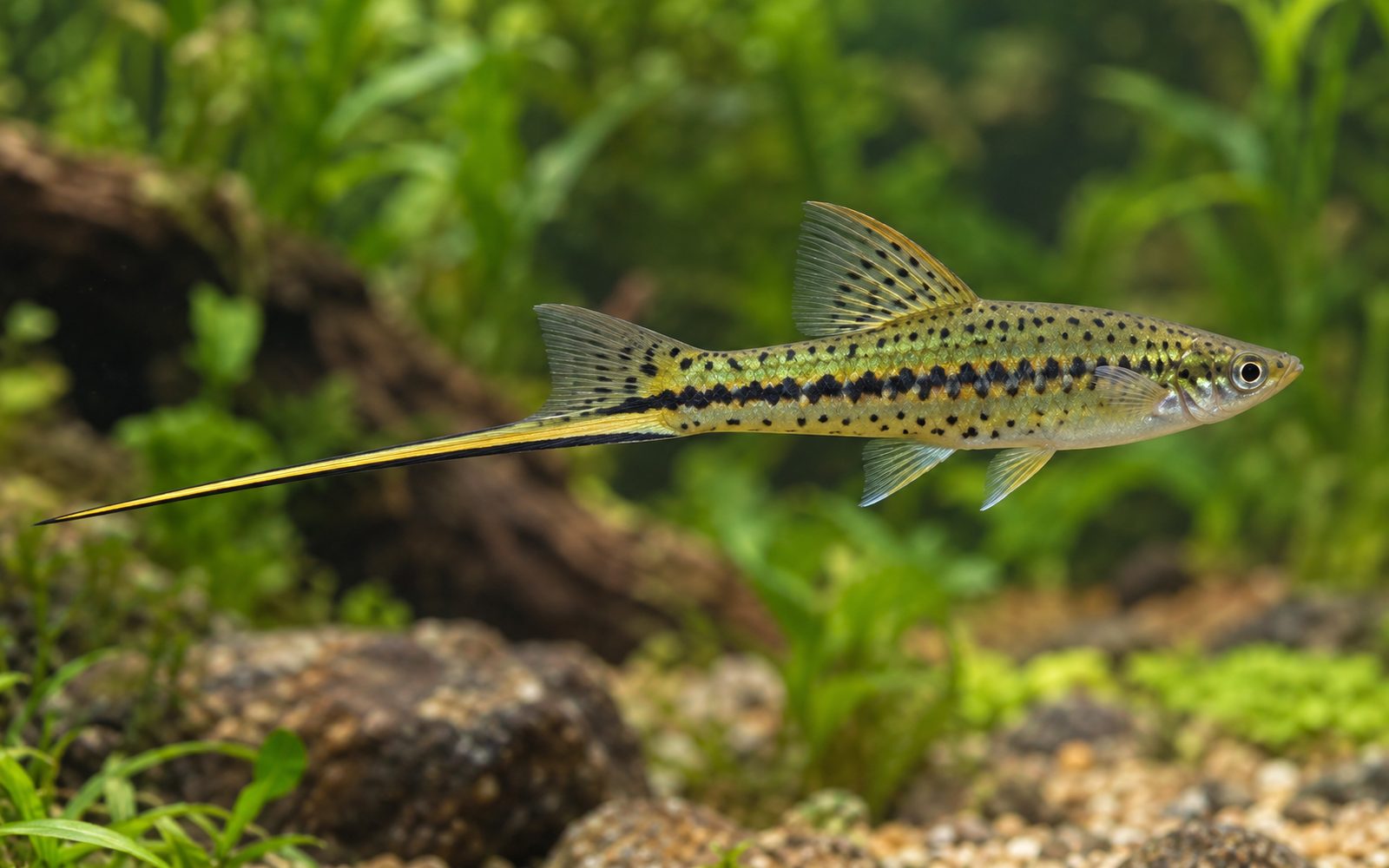
The Montezuma swordtail is a smaller-bodied but much longer-sworded relative of the swordtail (X. hellerii) common in stores. The thin sword that extends from the lower edge of mature males' tails approaches or exceeds the body length under good conditions. The body is olive–green, with a dark zigzag stripe and small black spots patterning the sides.
This species is not a store fish bred in color varieties, but a specialist species kept for its wild appearance. Breeders usually take care to preserve the lineage of a specific river population.
Natural Habitat
It lives in the headwaters and mountain streams of the Pánuco River basin in northeastern Mexico. The water is clear, rich in oxygen, moderately hard and relatively cool. The fish move around in shore areas where the current slows and among clumps of plants.
Tank Setup
- Volume: at least 100 liters and an 80–100 cm tank length for a small group.
- Water: 21–24°C is ideal; keeping it constantly above 26°C shortens its lifespan. pH 7–8, moderately hard to hard water.
- Flow: gentle to moderate flow and high oxygen.
- Lid: it jumps; a tight lid is needed.
- Layout: plants and stones along the edges, plenty of swimming space in the middle. Avoid sharp decor so the sword is not damaged.
Diet
Omnivorous. Quality flakes and granules, spirulina food and, a few times a week, frozen or live daphnia, brine shrimp, mosquito larvae and bloodworms. It also grazes soft algae.
Behavior and Compatibility
Peaceful toward other species. Males challenge each other by showing off their swords and fins; in a small aquarium the dominant male can wear out the others. Females are calm.
Good companions: platies and variatus platies (accepting the risk of hybridization), zebra danios, peaceful fish suited to cool water, corydoras, shrimp.
Avoid: the common swordtail (hybridization), fin-nipping barbs, large and aggressive species.
Group and Colony Structure
2–3 females per male is recommended. A group with a single male is calm; two or more males should only be kept in a large, divided aquarium. To preserve the pure line it should not be kept in the same aquarium as other Xiphophorus species.
Breeding
A livebearer. Gestation lasts about 4–5 weeks; the female gives birth to 10–40 fry. The fry eat crushed flakes and newly hatched brine shrimp from day one. In males the sword develops late and takes months to reach full length. Adults may eat the fry; dense plants reduce losses.
Health and Common Problems
Hardy in clean, cool water. In warm, oxygen-poor water lethargy and susceptibility to disease increase. The sword can tear because of fighting or decor; in clean water it heals over time.
Sexing
Males have a long sword on the tail and a gonopodium. Females are slightly larger and deeper-bodied, with a rounded tail and a fan-shaped anal fin.
Tank mates
This list is calculated automatically from the species profile and grows as new species are added to the catalog. Try it in the planner for a definite answer.
Usually compatible
 Flame Tetra
 Blackfin Corydoras
 Polystictus Corydoras
 Emerald Cory
 Emerald Dwarf Rasbora
 Porthole Catfish
 Keyhole Cichlid
 Cryptocoryne Parva
 Guppy
Guppy
 European Bitterling
Should not be kept together






Hobbyist notes
Things you won't find in books, learned by trial and error. The most helpful ones are on top.
Change history and contributors
- Page created · October 16, 2026