
Water parameters
Overview
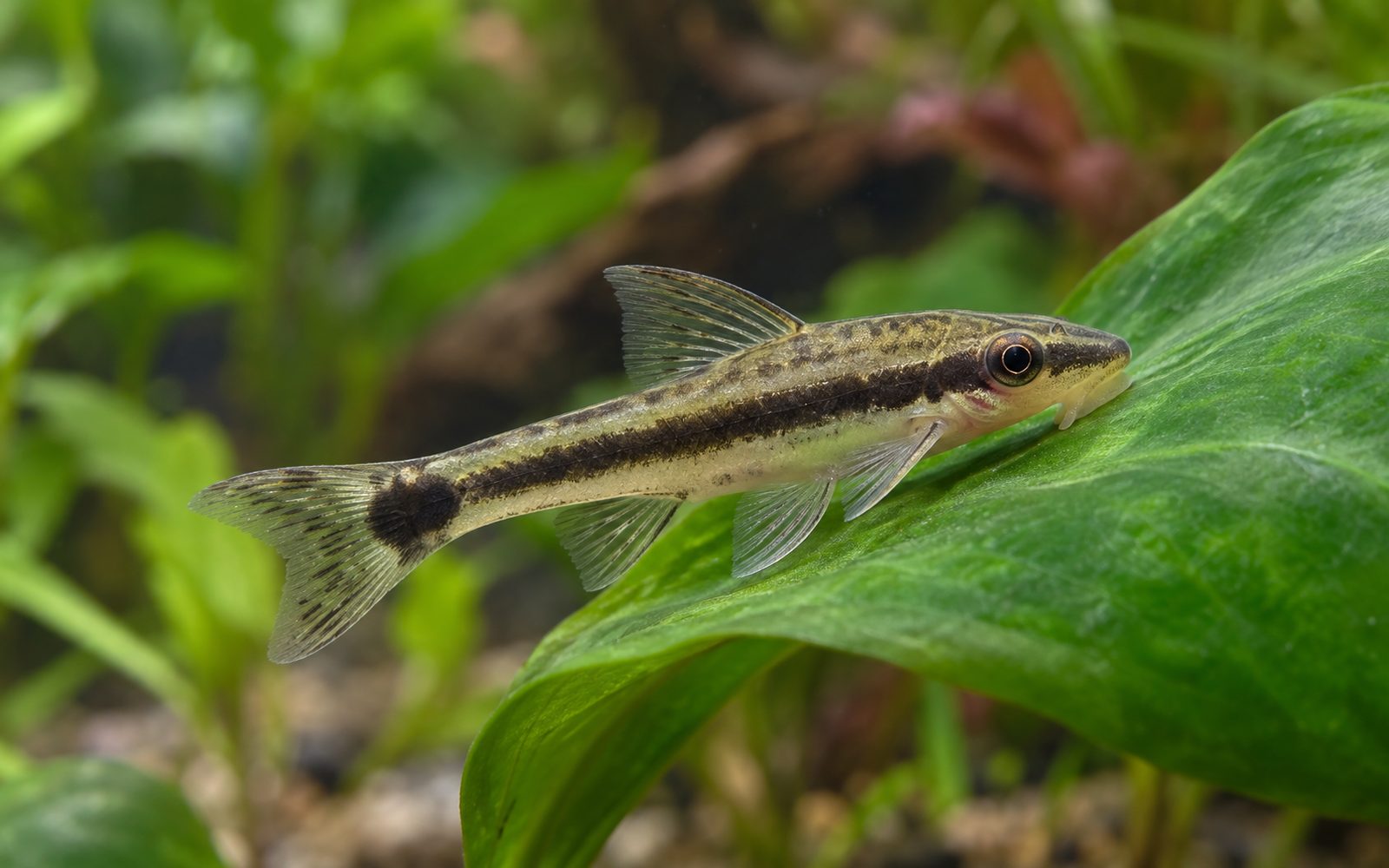
The otocinclus is a small armored catfish that uses its sucker mouth to graze the biofilm and fine green algae on leaf, glass and stone surfaces. It is one of the most popular "cleanup crew" members in planted aquariums because it does not harm plants and stays small. In stores several similar species (O. vittatus, O. affinis, O. macrospilus) are sold under the same name.
The reason its difficulty is "moderate" is not its care, but the fact that most fish sold are wild-caught and starving. The first weeks are critical.
Natural Habitat
It lives in large groups in the clear, slow- to moderately flowing streams of South America, on plants along the banks and overhanging grasses.
Tank Setup
- Volume: at least 60 liters for a group of 6.
- Maturity: an aquarium at least 2–3 months old, with biofilm and algae on its surfaces. In a newly set-up, "spotless" aquarium it starves to death.
- Plants: broad-leaved plants (Anubias, Amazon sword) provide grazing surfaces.
- Water: clean, well-oxygenated water. Sensitive to nitrate.
Diet
Natural biofilm is its main food. Since the algae in the aquarium will not be enough, always supplement:
- Blanched zucchini, cucumber or spinach (can stay in the tank overnight)
- Spirulina tablets
- Biofilm/algae foods made for otocinclus
An oto with a sunken belly is starving; check the belly line of new arrivals.
Behavior and Compatibility
Extremely peaceful and timid; it harms no fish or shrimp. It feels safe in a group: it should be kept with at least 6 individuals.
Good companions: Neons and other small tetras, rasboras, corydoras, shrimp, bettas.
Avoid: Large, aggressive cichlids, goldfish (temperature and competition), fish fast and greedy enough to keep otos away from food.
Group and Colony Structure
In the wild otocinclus live in large schools; in the aquarium at least 6 individuals are recommended. Otos kept in a group are bolder and graze openly on surfaces; one or two otos often hide and have trouble feeding.
Group size is determined by the amount of biofilm and algae in the aquarium. A large group of otos quickly uses up the natural food, so supplementary vegetables and tablets are essential.
Breeding
It occasionally breeds in the aquarium. The female sticks a few eggs one by one onto the surfaces of leaves and glass. The fry are very small and need plenty of biofilm; in a mature, planted aquarium fry may appear on their own.
Health and Common Problems
- Starvation: the most common cause of losses; feed new otos in a densely planted, mature quarantine tank.
- Bacterial infection: occurs in the first weeks due to the stress of capture and shipping.
- Sensitive to medications and copper.
Sexing
Viewed from above, females are wider and larger. Males are smaller and slimmer; the genital papilla is more prominent in males.
Tank mates
This list is calculated automatically from the species profile and grows as new species are added to the catalog. Try it in the planner for a definite answer.
Usually compatible
 Flame Tetra
 Blackfin Corydoras
 Polystictus Corydoras
 Emerald Cory
 Emerald Dwarf Rasbora
 Porthole Catfish
 Keyhole Cichlid
 Geophagus surinamensis
 Cryptocoryne Parva
 Gold Spot Pleco (L001)
Should not be kept together







Hobbyist notes
Things you won't find in books, learned by trial and error. The most helpful ones are on top.
Change history and contributors
- Page created · October 16, 2026