
Water parameters
Overview
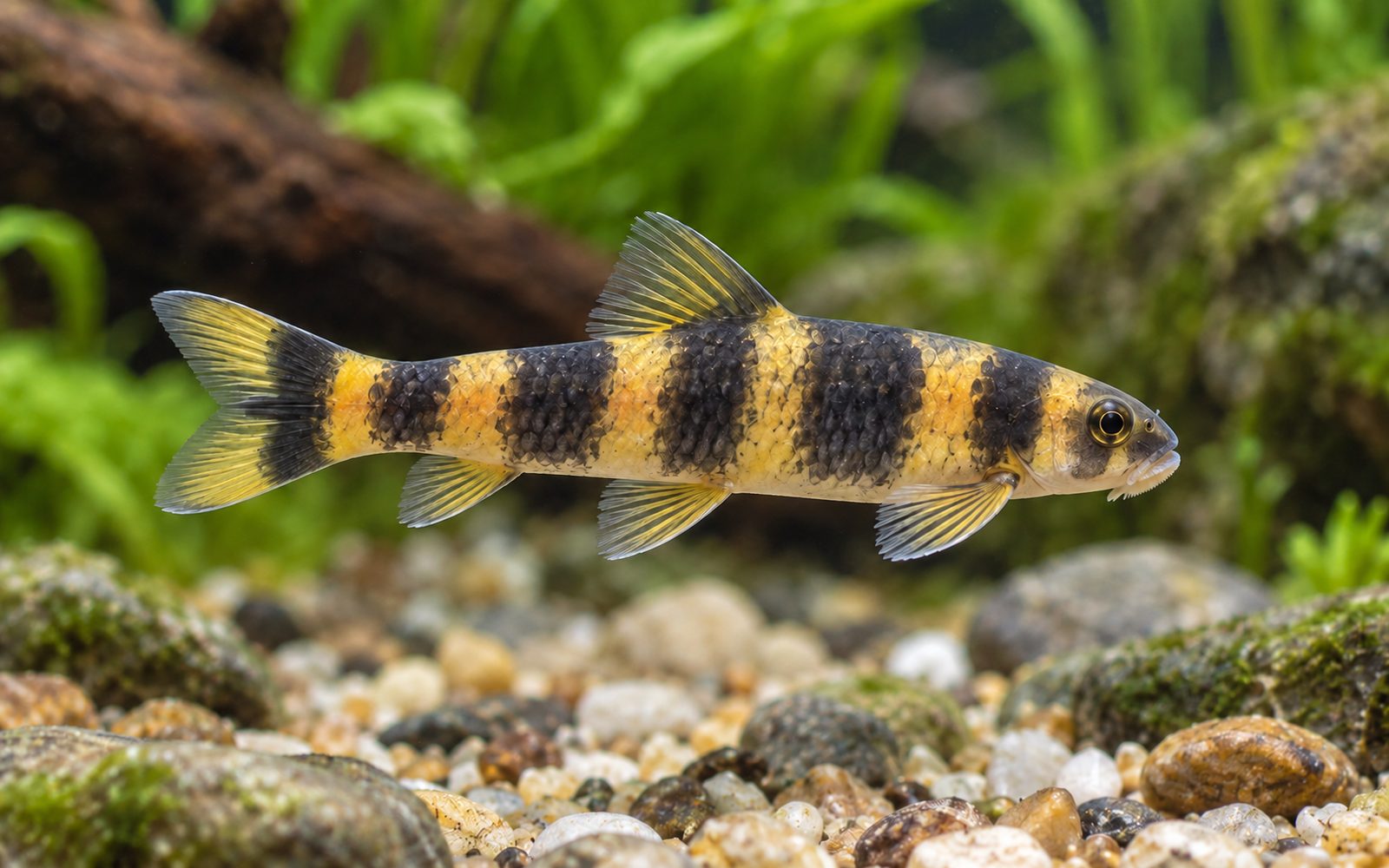
The panda garra is a small Garra species endemic to western Myanmar. Its body is patterned with yellow-orange and dark gray to black bands; the shade of its color changes with its mood and surroundings. It was described scientifically in the 2000s and quickly became widespread in the hobby.
Its small size, its grazing on algae and biofilm and its compatibility with dwarf shrimp make it very well suited to rocky tanks with flow.
Natural Habitat
It lives in clear, fast-flowing, oxygen-rich streams running down from the Rakhine Yoma (Arakan) mountains in western Myanmar. The bottom consists of rocks, gravel and sand; the fish graze the biofilm on rock surfaces.
Tank Setup
- Volume: at least 100 liters and 80 cm for a single fish; 120 cm or more for a group of 5 or more.
- Water: 22–25°C; clean, oxygenated water and noticeable flow. A wavemaker or a strong filter outlet is helpful.
- Decor: rounded stones, gravel and sand substrate, roots; sight barriers that separate territories.
- Lid: it can climb the glass; a tight-fitting lid is needed.
Diet
Omnivorous. In the wild it feeds on the biofilm of algae, diatoms and small invertebrates that coats rock surfaces. In the aquarium, offer sinking tablets and granules, spirulina, blanched vegetables, frozen brine shrimp and bloodworms. Do not over-clean the rocks and back glass, so that it keeps a grazing area.
Behavior and Compatibility
Peaceful toward other species; it leaves adult dwarf shrimp alone. It has territorial squabbles with its own kind: it spreads its fins and the fish chase each other, but injuries usually do not occur. It spends the day moving around grazing on rocks.
Good companions: small to medium fish that like flow: danios and devarios, white cloud mountain minnows, rasboras, flow-loving loaches, dwarf shrimp.
Avoid: territorial bottom fish (red-tailed black shark and rainbow shark, Chinese algae eater), large and aggressive fish.
Group and Colony Structure
It can be kept alone, or a group of 5 or more can be formed in a large tank. In a group of 2–3, fighting concentrates on the weakest fish; in a larger group it is spread out. Plenty of rocks and sight barriers are essential for a group.
Breeding
Breeding in home aquariums is rarely reported. It is an egg-scattering species and provides no parental care.
Health and Common Problems
Hardy. It becomes stressed in low-oxygen, warm water; in summer, when the room heats up, an air stone or filter outlet that ripples the surface helps. White spot may occur. Quarantine new arrivals; in a bare quarantine tank with few surfaces to graze, do not neglect feeding tablet food, otherwise it quickly loses condition.
Sexing
Hard to tell apart externally. Mature females have a fuller belly; in males, breeding tubercles may appear around the snout during the breeding season.
Tank mates
This list is calculated automatically from the species profile and grows as new species are added to the catalog. Try it in the planner for a definite answer.
Usually compatible
 Flame Tetra
 Blackfin Corydoras
 Polystictus Corydoras
 Emerald Betta
 Emerald Cory
 Emerald Dwarf Rasbora
 Porthole Catfish
 Keyhole Cichlid
 Geophagus surinamensis
 Cryptocoryne Parva
Should not be kept together






Hobbyist notes
Things you won't find in books, learned by trial and error. The most helpful ones are on top.
Change history and contributors
- Page created · October 16, 2026