
Water parameters
Overview
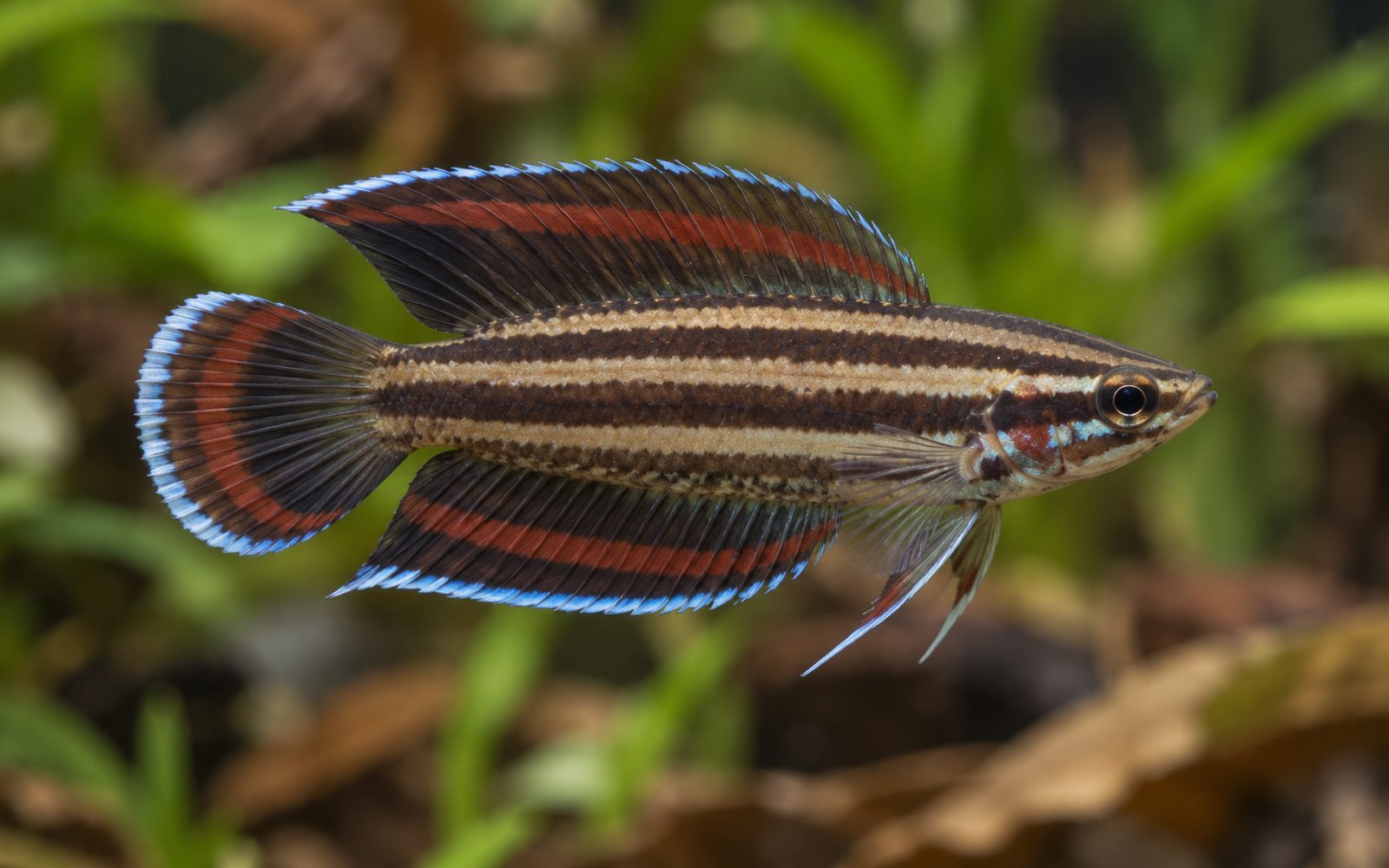
The genus Parosphromenus includes small labyrinth fish of 3–4 cm known in the hobby as "licorice gouramis." Parosphromenus deissneri was the first species of the genus to be described. Its body is striped with light and dark brown horizontal stripes; during courtship males darken and spread their dorsal, anal and caudal fins, showing a reddish band and a bright blue-white edge.
The true P. deissneri is found only on Bangka Island. A large share of the fish sold under this name in the trade are actually other Parosphromenus species; choosing fish with a stated origin and collection locality is important both for correct identification and to keep the species from being mixed. Its peat swamp habitat is rapidly disappearing.
Natural Habitat
It lives in shallow, shaded streams and pools in the peat swamp forests of Bangka Island. The water is dark tea-colored from tannins, the pH is often below 5 and the hardness is close to zero. The bottom is covered with a thick layer of leaves.
Tank Setup
- Volume: at least 20 liters for a pair; a species tank is best.
- Water: 24–27°C, pH 4–6, GH 0–4. Very soft water prepared with reverse osmosis or rainwater is needed.
- Setup: a thick layer of dried leaves, roots, dim light and small caves as nest sites (a film canister, a small upturned flowerpot, a piece of bamboo).
- Flow: almost none; a small air-driven sponge filter is ideal.
- Maintenance: small water changes with matching values; avoid sudden rises in pH.
Diet
A carnivore that feeds on tiny organisms and often refuses dry food. Live brine shrimp nauplii, cyclops, daphnia, microworms and grindal worms are the staple foods; it may accept small frozen foods over time. Feed small amounts 1–2 times a day.
Behavior and Compatibility
Very calm and timid; it spends most of its time among leaves and caves, near the bottom. Males display to each other, but serious fighting is rare. It goes hungry next to fast, greedy tankmates, so keeping it in a species tank is recommended.
Good companions: only its own species; in large species tanks, very small, calm peat-water fish (Boraras species) or pencilfish.
Avoid: fast schooling fish, gouramis and bettas, large and greedy bottom dwellers, other Parosphromenus species (they can hybridize).
Group and Colony Structure
It is best kept as a pair. In larger species tanks, several pairs can live together; each male should be given a cave of his own. Do not keep different Parosphromenus species, or fish from different collection localities, in the same aquarium.
Breeding
The male builds a small bubble nest on the ceiling of a cave. The pair spawns inside the cave, turning upside down; the female releases a small number of eggs at a time (usually a few dozen). The male places the eggs in the nest and guards them until the fry are free-swimming. The fry are very small; they start on infusoria and paramecium, then eat brine shrimp nauplii. Flawless water quality and very low pH are essential for success.
Health and Common Problems
It is very prone to bacterial infections in hard, neutral or dirty water; low pH has a protective effect by reducing the bacterial load. Velvet can also occur. Observe new fish in a separate tank, and make water changes small and frequent.
Sexing
During courtship males darken and a reddish band and bright blue-white edges appear on their fins; their fins are larger. Females are light brown and striped, their fins are colorless or very pale, and their bodies are slightly fuller.
Tank mates
This list is calculated automatically from the species profile and grows as new species are added to the catalog. Try it in the planner for a definite answer.
Usually compatible
 Keyhole Cichlid
 Cupid Cichlid
 Geophagus altifrons
 Geophagus surinamensis
 Adolfo's Cory
 Flame Moss
 Golden Pencilfish
Gold Tetra
Golden Pencilfish
Gold Tetra
 Ammannia Gracilis
Axelrodi Rasbora
Ammannia Gracilis
Axelrodi Rasbora
Should not be kept together







Hobbyist notes
Things you won't find in books, learned by trial and error. The most helpful ones are on top.
Change history and contributors
- Page created · October 16, 2026