
Water parameters
Overview
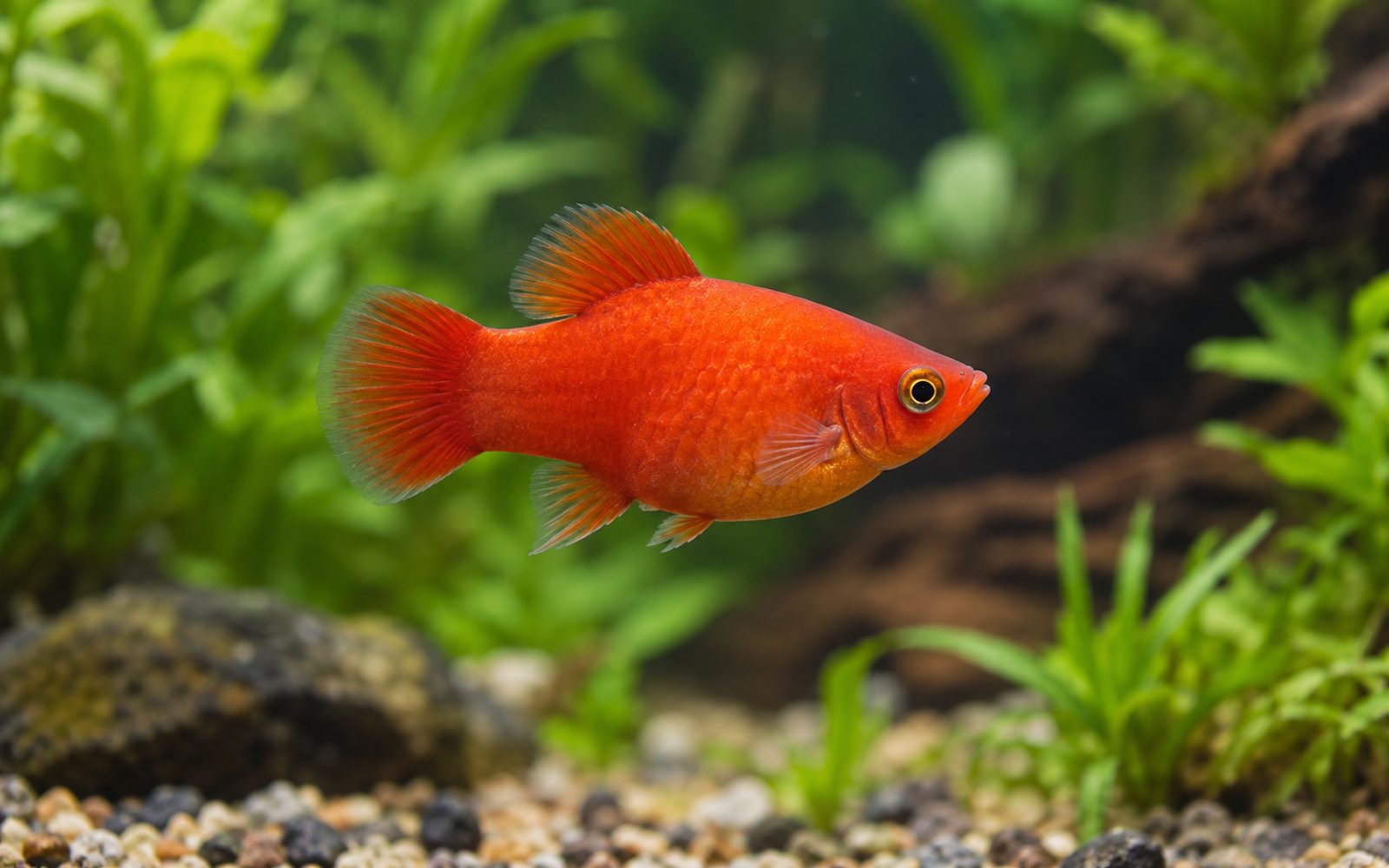
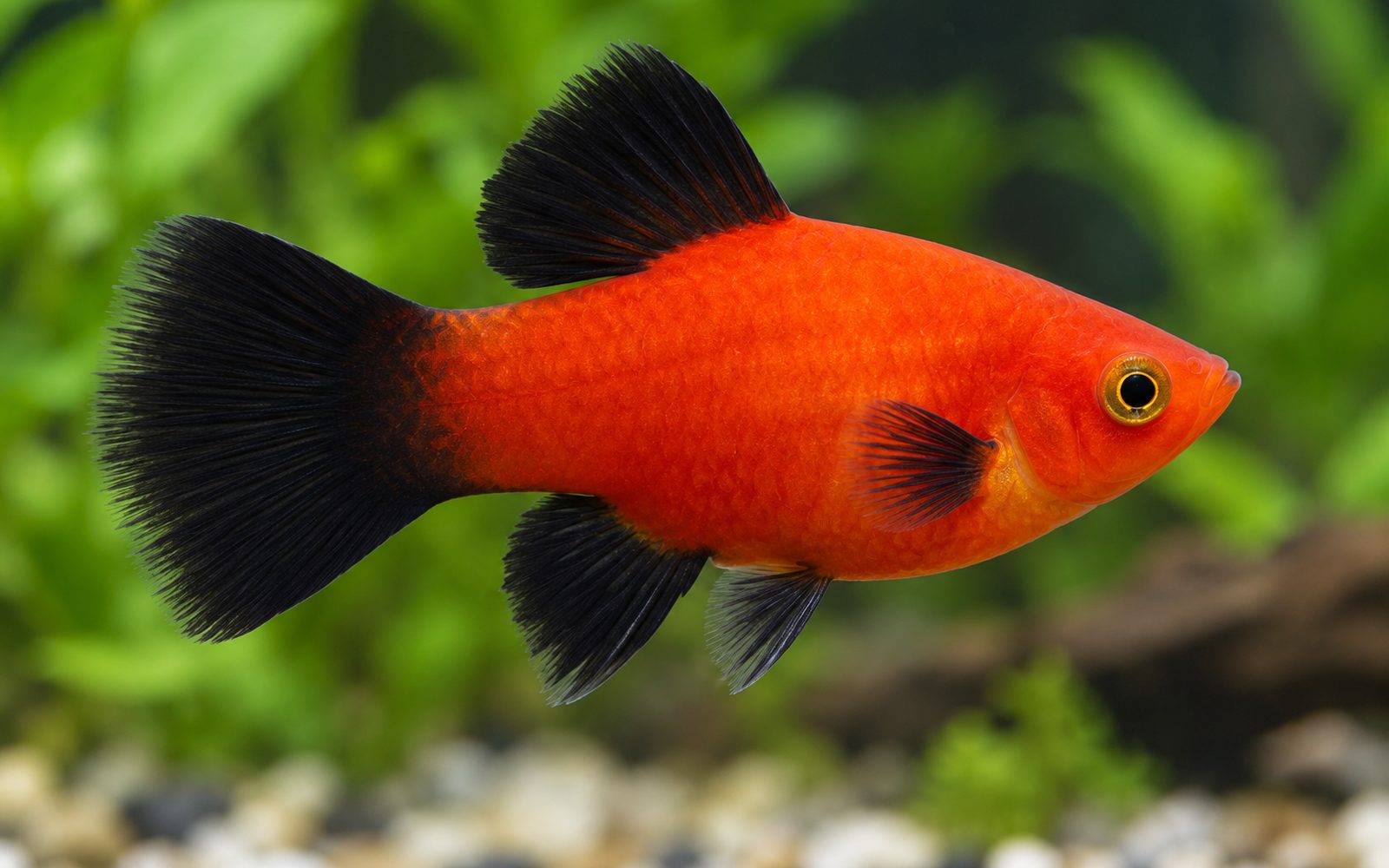
The platy is a common livebearer with many color varieties, such as red, yellow, blue, "sunset" and the black-tailed "wag". Its body is short and deep and its fins are short, which makes it less delicate than the guppy. Its ability to tolerate water close to room temperature is another advantage.
Color and Fin Varieties
The varieties have not been described yet. Be the first to write it.
Natural Habitat
In the wild it lives in warm, planted, slow-flowing streams, ditches and marshes in Central America. The water is moderately hard to hard and slightly alkaline.
Tank Setup
- Volume: 50 liters for a small group, 80 liters for a more comfortable, larger group.
- Water: 22–25°C, pH 7–8, moderately hard to hard water. Tap water is suitable in most regions.
- Plants: dense plants provide both hiding places for fry and grazing surfaces.
Diet
Omnivorous. Flakes or micro granules, spirulina food, blanched vegetables and brine shrimp or daphnia a few times a week. It also likes to graze algae.
Behavior and Compatibility
The most peaceful of the livebearers. Although males chase females, they are not as persistent as molly or swordtail males. Still, 2 females per male is recommended.
Good companions: guppies, mollies, swordtails, corydoras, zebra danios, otocinclus, shrimp.
Avoid: large and aggressive cichlids, sensitive species that need soft, acidic water.
Group and Colony Structure
The platy is the most docile of the livebearers, but at least 2 females per male is still recommended. 2 males and 4 females in 60 liters is a comfortable start.
Different platy colors live together in the same group without problems. Platies and swordtails kept in the same aquarium can hybridize; those who want to preserve a color line keep the species separate. Being a livebearer, the population grows quickly; regularly rehoming fry or a calm companion species that thins out the fry keeps the colony in balance.
Breeding
Gestation lasts about 4 weeks, and the female gives birth to 20–80 fry. Platies and swordtails hybridize easily; many "platy" color varieties are the product of this hybridization. Adults eat the fry, but in a densely planted aquarium some always survive.
Health and Common Problems
Generally hardy. Tail rot and white spot can appear in poor water, and columnaris in soft water. Females that constantly give birth become exhausted; limiting the number of males gives the females a break.
Sexing
The males' anal fin has been modified into a thin, rod-shaped gonopodium. Females are larger, with a rounded belly and a fan-shaped anal fin.
Tank mates
This list is calculated automatically from the species profile and grows as new species are added to the catalog. Try it in the planner for a definite answer.
Usually compatible
 Flame Tetra
 Blackfin Corydoras
 Polystictus Corydoras
 Emerald Cory
 Emerald Dwarf Rasbora
 Porthole Catfish
 Keyhole Cichlid
 Cryptocoryne Parva
 Gold Spot Pleco (L001)
 European Bitterling
Should not be kept together






Hobbyist notes
Things you won't find in books, learned by trial and error. The most helpful ones are on top.
Change history and contributors
- Page created · October 16, 2026