
Water parameters
Overview
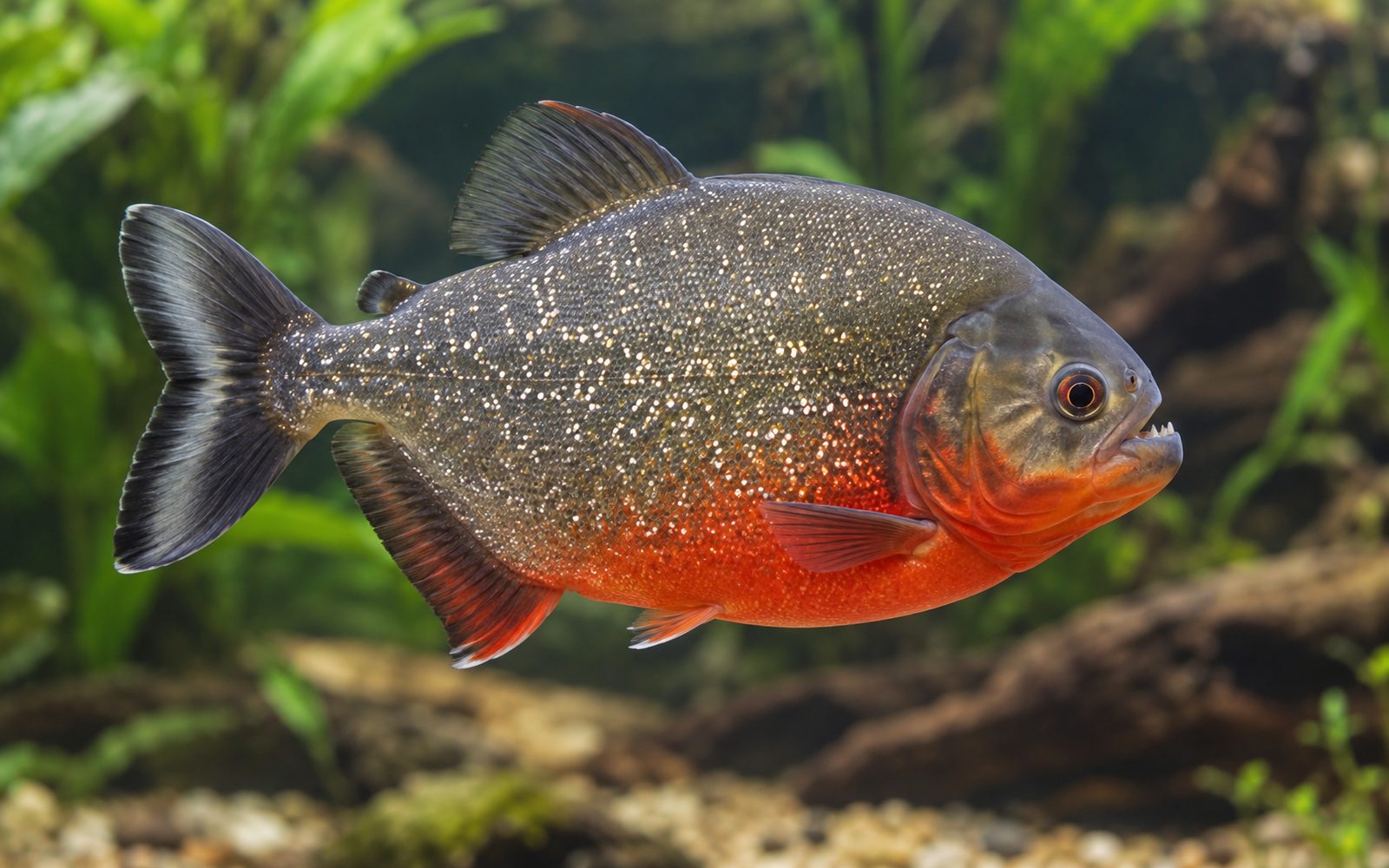
The red-bellied piranha is recognized by its silvery-gray body covered with shiny speckles and its red-orange throat and belly. It has powerful jaw muscles and triangular, razor-sharp teeth. Although its reputation is exaggerated, it is actually a skittish fish; in the wild it lives in schools and feeds on fish, insects, crustaceans and carrion.
In the aquarium it reaches 25–30 cm and should only be kept in a large tank dedicated to its own species. In some countries and regions keeping it is banned or requires a permit; check local regulations before buying. Never release it into the wild under any circumstances.
Natural Habitat
It has a wide distribution in the Amazon, the Paraná-Paraguay and the coastal rivers of the northeast, in slow-flowing tributaries, floodplain lakes and planted shoreline areas. In the dry season, when the waters recede, schools trapped in small lakes show the intense feeding behavior that gave the species its aggressive reputation.
Tank Setup
- Volume: at least 400 liters for a group of 4–6; a length of 150 cm or more.
- Water: 24–27°C, pH 6–7.5, soft to moderately hard water.
- Filter: a carnivorous diet produces heavy waste; strong filtration and a 30% water change every week are needed.
- Decor: roots, large stones and sturdy plants (Anubias, Java fern) provide hiding places. Because it is a skittish species, dim light and a quiet room should be preferred.
- Safety: during maintenance, make sure the fish are fed and calm before putting your hand in the water; use long-handled tools.
Diet
Carnivorous. Strips of white fish fillet, shrimp, mussels, frozen mysis shrimp and granules made for carnivorous fish are suitable. Live feeder fish are not recommended because of the risk of carrying disease. Mammal and poultry meat should not be given because they cause digestive and water quality problems. Remove leftover food promptly.
Behavior and Compatibility
A pecking order forms within the group; jostling and bite marks may be seen during feeding. It sees other fish as prey; species kept with it are usually eaten over time. When startled, the group flees together into a corner.
Good companions: the safest option is its own species only. Some keepers house large, armored plecos with them in very large tanks, but this also carries risk.
Avoid: almost all aquarium fish, shrimp and other invertebrates.
Group and Colony Structure
It should be kept in a group: at least 4, ideally 6 individuals. In groups of two or three, the dominant fish may constantly harass the others; fish kept alone are often extremely skittish. Buying all the fish at the same size and at the same time reduces fighting.
Breeding
It can be bred in the aquarium. The pair prepares a pit among the plants on the bottom; the female lays her eggs there and the eggs are guarded. During this period the parents become much more aggressive. The fry hatch within a few days and grow quickly; cannibalism among siblings is common.
Health and Common Problems
- Injuries: bite wounds and fin damage within the group are common; with good water quality they usually heal on their own.
- Poor water quality: leftover pieces of meat quickly raise the ammonia and nitrate load.
- White spot (ich): may appear after transport.
Sexing
Hard to tell apart from the outside. During breeding the color of both sexes darkens; the females' bellies fill out as they carry eggs.
Tank mates
This list is calculated automatically from the species profile and grows as new species are added to the catalog. Try it in the planner for a definite answer.
Usually compatible
 Banded Jewel Cichlid
 Spotted Tilapia
 Flowerhorn
 Jack Dempsey
 Jaguar Cichlid
 Red Devil Cichlid
 Red Terror Cichlid
 Convict Cichlid
 Cryptocoryne Parva
 Wolf Cichlid
Should not be kept together








Hobbyist notes
Things you won't find in books, learned by trial and error. The most helpful ones are on top.
Change history and contributors
- Page created · October 16, 2026