
Water parameters
Overview
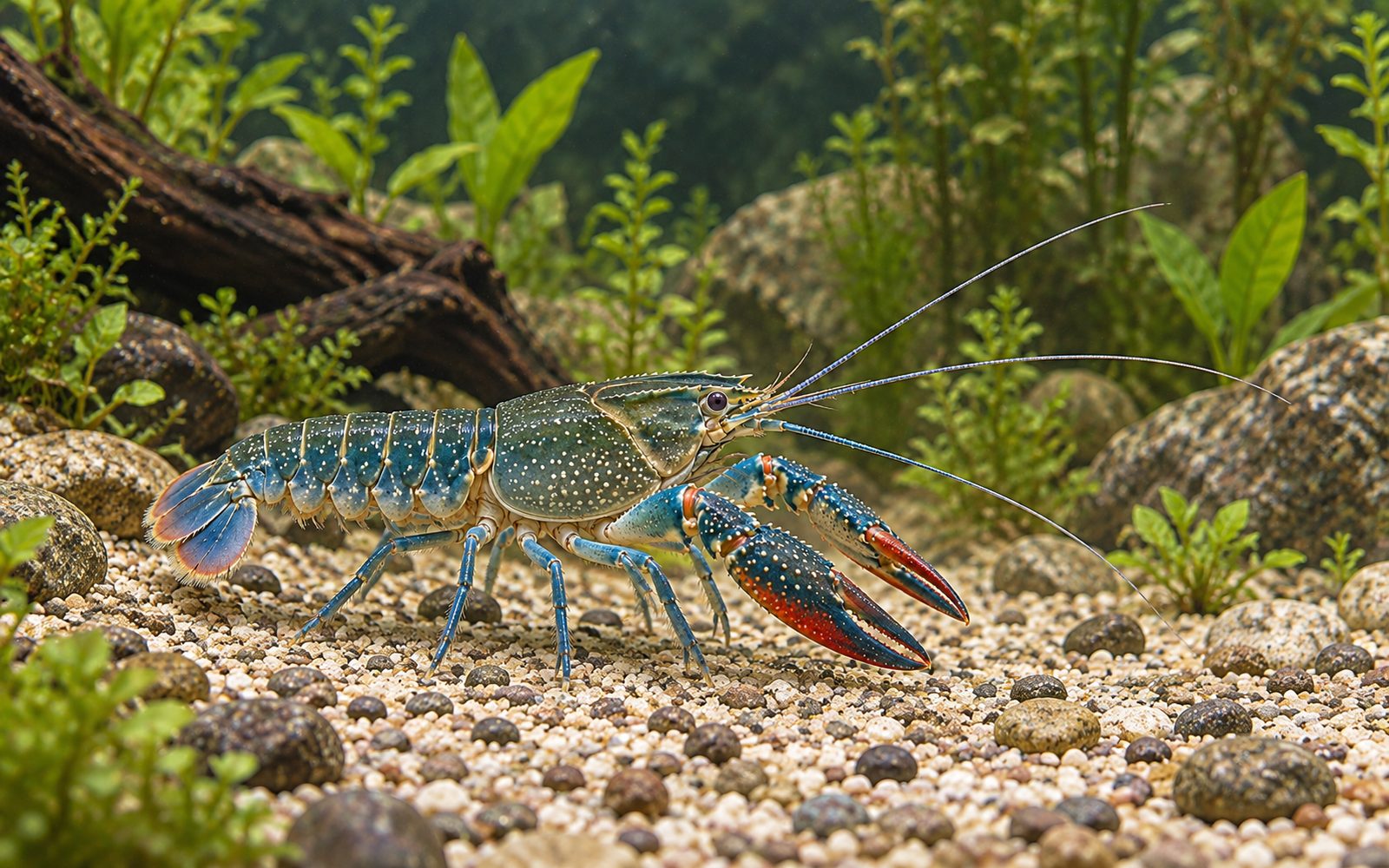
The red claw crayfish, native to Australia and New Guinea, is one of the largest crayfish kept in aquariums. It is named after the soft, bright red stripe on the outer edge of adult males' claws. Its body varies between blue-green and olive and is decorated with small cream spots; there are four distinct ridges on top of its head.
It likes warm water, grows fast and is hardy. However, because of its size and appetite it is not suitable for a community aquarium. It has been introduced to many parts of the world for aquaculture and has established invasive populations wherever it has escaped into the wild; in some countries keeping and trading it is restricted. Check the current regulations where you live and never release it into the wild.
Natural Habitat
It lives in the warm, slow-flowing rivers, still waters and wetlands of northern Australia and southern New Guinea. It tolerates turbid water and changing conditions.
Tank Setup
- Volume: 150 liters or more for a single adult, with a large floor area.
- Hiding places: A cave large enough to hold its whole body: a PVC pipe, a rock cave.
- Lid: A heavy lid without gaps is essential.
- Water: 24–28°C; moderately hard to hard, alkaline water. Calcium is important for the exoskeleton.
- Filter: A strong filter; a large crayfish produces a lot of waste. A 25–30% water change every week.
Diet
Omnivorous and greedy. Sinking crayfish and fish tablets, granules, blanched vegetables, dried leaves; fish, mussel or shrimp meat several times a week. Balanced feeding rather than excess protein supports exoskeleton health.
Behavior and Compatibility
Territorial, and it eats every animal it can catch. It cuts and uproots plants and rearranges the decor. It attacks members of its own species, especially those that are molting.
Good companions: It should be kept alone. Although some try it with fast, large fish in very large aquariums, the risk of losses is high.
Avoid: All small and bottom-dwelling fish, shrimp, snails, live plants, other crayfish.
Group and Colony Structure
It is kept alone. For breeding, partners are brought together only for mating and then separated.
Breeding
There is no larval stage. The female carries the eggs under her tail for several weeks; the young hatch as fully formed little crayfish and stay under the mother's tail for a while. Adults may eat the young; a separate grow-out aquarium is needed.
Health and Common Problems
- Failed molts: Calcium deficiency, low GH, sudden changes in parameters.
- Water quality: Buildup of ammonia and nitrate due to the heavy waste load.
- Shell spots: Bacterial or fungal shell diseases in poor water conditions.
Sexing
Adult males have a soft red stripe on the outer edge of their claws; females do not. Males' genital openings are at the base of the fifth pair of walking legs, females' at the base of the third pair.
Tank mates
This list is calculated automatically from the species profile and grows as new species are added to the catalog. Try it in the planner for a definite answer.
Usually compatible
 Banded Jewel Cichlid
 Spotted Tilapia
 Flowerhorn
 Jack Dempsey
 Jaguar Cichlid
 Red Devil Cichlid
 Red Terror Cichlid
 Convict Cichlid
 Cryptocoryne Parva
 Wolf Cichlid
Should not be kept together








Hobbyist notes
Things you won't find in books, learned by trial and error. The most helpful ones are on top.
Change history and contributors
- Page created · October 16, 2026