
Water parameters
Overview
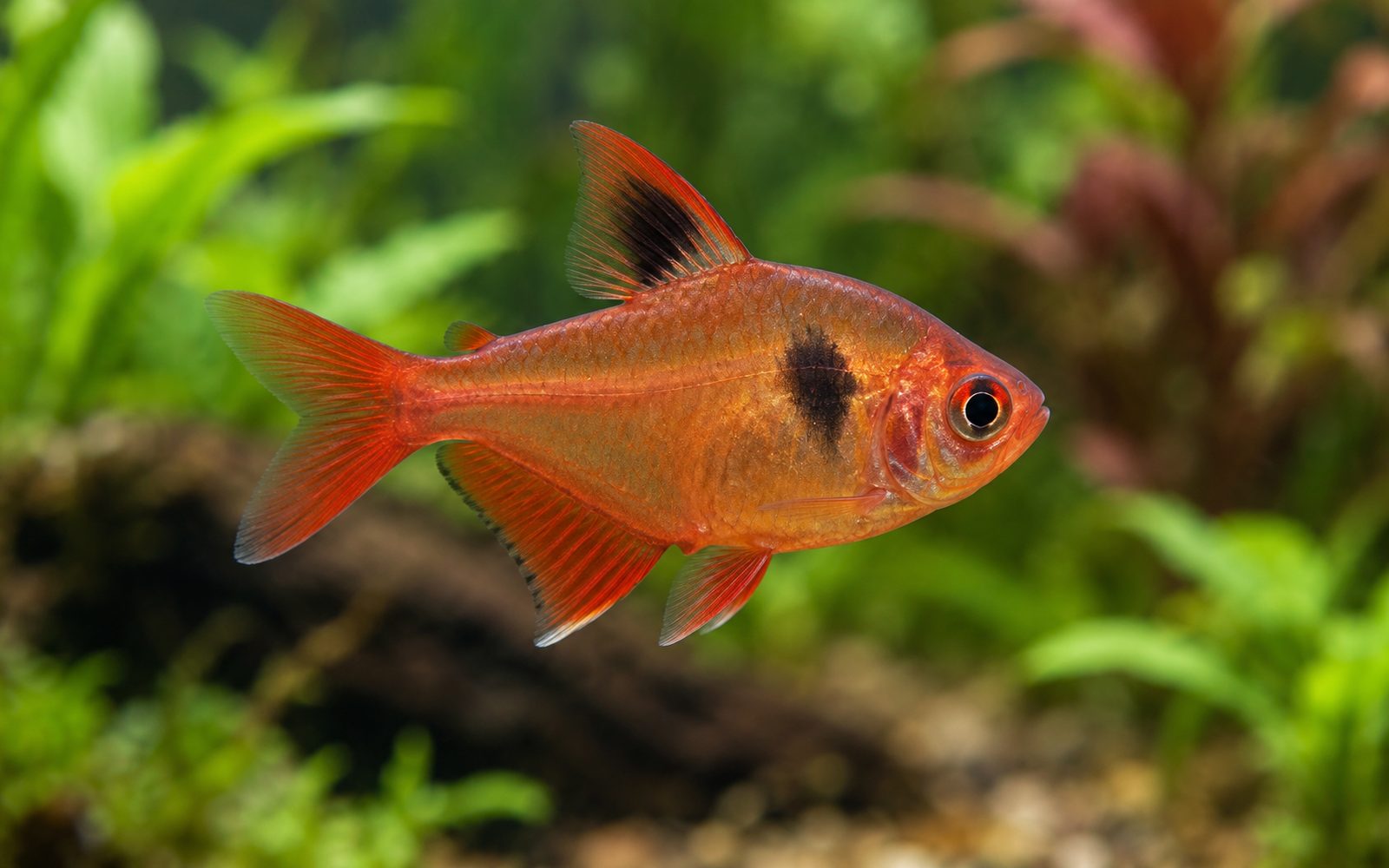
The red phantom tetra is recognized by its semi-transparent orange-red body and the black spot behind the gill cover. In build it resembles the black phantom tetra, but its whole body and fins are red-toned. It is commonly found in stores; the fish sold today are mostly farm-bred.
It is a calm, compatible and easy-care species. Its colors deepen noticeably in a mature, planted aquarium and under dim light; it prefers moderately warm water to very warm water.
Natural Habitat
It lives in slow-flowing tributaries full of plants and leaf litter in the Meta River system, part of the Orinoco basin in Colombia. These waters are soft, acidic and darkly stained by tannins.
Tank Setup
- Volume: at least 60 liters for a school of 8–12.
- Water: 22–25°C is ideal; pH 5.5–7.5, soft to moderately hard water.
- Decor: dark substrate, roots, leaf litter and floating plants. Planted edges provide hiding places.
- Maintenance: a 20–25% water change every week; gentle flow.
Diet
Omnivorous. Make small granules and flakes the staple and vary it with frozen brine shrimp, cyclops, daphnia and bloodworms. Foods containing carotenoids support the red color. Feed small amounts 1–2 times a day.
Behavior and Compatibility
Peaceful and somewhat shy. As in black phantoms, males put on harmless displays to each other by spreading their fins. It does not bother other species and leaves adult shrimp alone.
Good companions: small, peaceful tetras, rasboras, pencilfish, corydoras, otocinclus, dwarf cichlids, shrimp.
Avoid: large, predatory fish, active fin-nipping species, aggressive fish that chase constantly.
Group and Colony Structure
A group of at least 8, ideally 12 is recommended. In a larger group the fish become bolder and are seen more in the open. The sex ratio does not matter; having several males brings out the display behavior.
Breeding
It is an egg scatterer with no parental care. Breeding requires a separate tank with soft, acidic water (around pH 6), dim light and fine-leaved plants or a spawning mop. The parents are removed after spawning. The fry are small; in the first days they are given infusoria or liquid fry food, then newly hatched brine shrimp.
Health and Common Problems
- Water quality: nitrate buildup and an immature aquarium are the most common sources of problems.
- White spot (ich): common after transport; quarantine is recommended.
- Sudden changes: it is sensitive to rapid changes in pH and hardness; make water changes gradually.
Sexing
Males have a longer, red dorsal fin, and their fins are generally larger. Females have a short dorsal fin with a dark area and a light-colored tip; their bodies are plumper.
Tank mates
This list is calculated automatically from the species profile and grows as new species are added to the catalog. Try it in the planner for a definite answer.
Usually compatible
 Flame Tetra
 Blackfin Corydoras
 Polystictus Corydoras
 Emerald Cory
 Emerald Dwarf Rasbora
 Porthole Catfish
 Keyhole Cichlid
 Geophagus surinamensis
 Cryptocoryne Parva
 Gold Spot Pleco (L001)
Should not be kept together







Hobbyist notes
Things you won't find in books, learned by trial and error. The most helpful ones are on top.
Change history and contributors
- Page created · October 16, 2026