
Water parameters
Overview
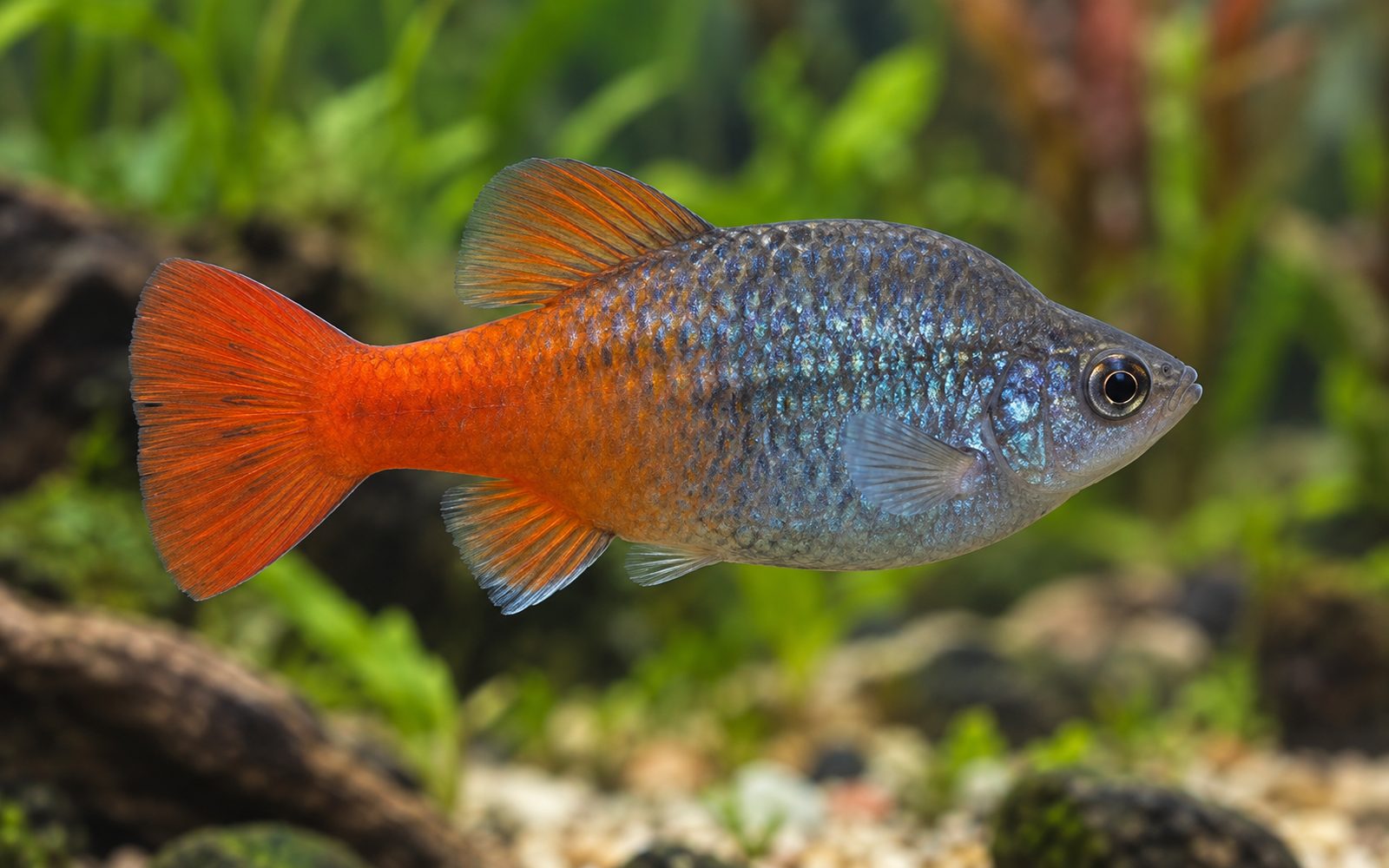
The red-tailed goodeid is, along with the butterfly goodeid, one of the best-known goodeids. Mature males have a distinct hump behind the head, a front body that shines bluish and an orange–red caudal peduncle; the color zones vary by population. Females are brownish, spotted and much plainer.
The boundaries of the species have been re-examined in recent years, and some populations have been described as separate species. For the conservation of the species, it is recommended not to mix lines from different localities in aquariums.
Natural Habitat
It lives in the Pacific-draining streams, spring pools and irrigation canals of western Mexico. These waters are clear, planted and moderately hard to hard; the temperature varies noticeably with the season.
Tank Setup
- Volume: at least 80 liters, preferably 100 liters, for a group of 6–8.
- Water: 20–24°C is ideal; it tolerates 18°C for short periods and can live in an unheated room. pH 7–8, moderately hard to hard water.
- Layout: planted edges, sight barriers made of roots and stones; open swimming space in the middle.
- Maintenance: a 25–30% water change every week.
Diet
Omnivorous with a hearty appetite. Flakes and granules, spirulina food, blanched vegetables and frozen or live bloodworms, brine shrimp and daphnia. It also grazes soft algae. Feeding small amounts frequently reduces the tendency to nip fins.
Behavior and Compatibility
Active and curious, but known for fin nipping; this behavior increases in small groups and in aquariums that are not well stocked. Males display to each other by showing off their humps and bright colors.
Good companions: swordtails, platies, butterfly goodeids, fast, short-finned barbs suited to hard water, Ancistrus plecos.
Avoid: guppies, bettas, angelfish and long-finned species; small, slow-swimming fish; shrimplets.
Group and Colony Structure
At least 5–6 individuals, 2 females per male is recommended. As the group gets larger, aggression per individual decreases. Keeping a single male with a single female leads to the female being chased constantly.
Breeding
A livebearer; the fry are nourished inside the mother through extensions called trophotaeniae. Gestation lasts about 7–8 weeks, and the female gives birth to around 10–40 large fry. The trophotaenia remnants on the fry's bellies disappear quickly. Adults chase the fry very little; in a densely planted aquarium the colony grows on its own.
Health and Common Problems
Hardy. Bite wounds are seen in newcomers and in groups that are overcrowded or, conversely, have too few individuals. The risk of columnaris increases in soft, dirty water. Quarantine new fish for 2 weeks.
Sexing
Mature males have a hump behind the head, a shiny bluish front body and a red caudal peduncle. The front rays of the males' anal fin are shortened and separated by a notch (andropodium). Females are plainer, spotted and have a full belly.
Tank mates
This list is calculated automatically from the species profile and grows as new species are added to the catalog. Try it in the planner for a definite answer.
Usually compatible
 Yellow Regal Peacock
Glass Tetra
Yellow Regal Peacock
Glass Tetra
 Emerald Betta
 Emerald Cory
 Porthole Catfish
 Keyhole Cichlid
 Firemouth Cichlid
 Buffalohead Cichlid
 Rainbow Cichlid
 Gymnogeophagus balzanii
Should not be kept together






Hobbyist notes
Things you won't find in books, learned by trial and error. The most helpful ones are on top.
Change history and contributors
- Page created · October 16, 2026