
Water parameters
Overview
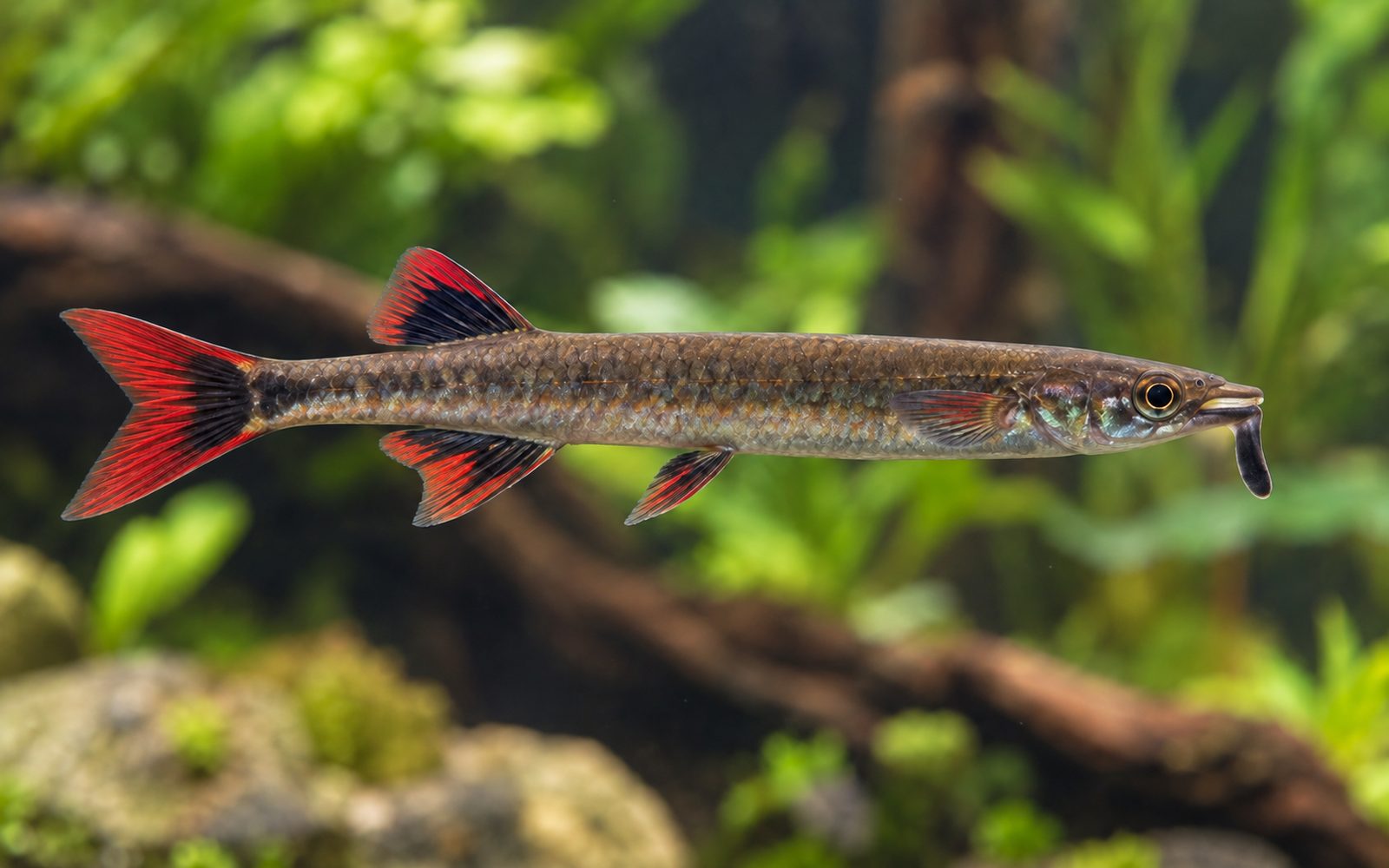
The Celebes halfbeak is a larger, stockier species than the common halfbeak (Dermogenys), with a shorter beak. Its body is gray–brown, and its fins are red and black in proportions that vary by population. The tip of the male's lower jaw ends in a fleshy, dark extension that hangs downward; this "beard" is the species' best-known feature.
It is considered one of the hardiest halfbeaks in the aquarium, but it still needs clean, oxygen-rich water. It is less tied to the surface than Dermogenys; it also takes food from midwater and uses the upper half of the aquarium.
Natural Habitat
It lives only in southern Sulawesi, in clear, flowing streams that descend from limestone mountains. These waters are fairly cool, rich in oxygen and moderately hard. The fish gather under overhanging bankside vegetation, in pockets where the current slows.
Tank Setup
- Volume: at least 100 liters and an 80–100 cm tank length for a small group.
- Water: 22–25°C, pH 7–8, moderate hardness. Warm, oxygen-poor water quickly wears the species out.
- Flow: gentle to moderate flow and a filter outlet that agitates the surface are suitable.
- Lid: an excellent jumper; a tight lid is essential.
- Layout: plants along the edges, floating plants over part of the surface and open swimming space in the middle. Overhangs made with roots give males territories.
Diet
Carnivorous. It loves live or frozen foods such as mosquito larvae, bloodworms, brine shrimp, mysis and fruit flies. It learns to accept quality granules and flakes. It takes food from the surface and midwater, and mostly ignores what falls to the bottom. A varied diet is important for females to give birth to healthy fry.
Behavior and Compatibility
Peaceful toward other species but eats fry small enough to fit in its mouth. Males are territorial toward each other; they display by spreading their beards and fins and chase each other from time to time. It is not skittish, but it may hit the glass when startled by sudden movements.
Good companions: medium-sized rasboras, rainbowfish, peaceful barbs suited to hard water, corydoras, Ancistrus plecos.
Avoid: fin-nipping species, very small nano fish and shrimplets, aggressive cichlids.
Group and Colony Structure
2–3 females per male is suitable. One male and 3 females is a comfortable arrangement in 100 liters; more than one male can be kept in a larger aquarium, but each male should have a visually separated corner. Females live calmly in a group.
Breeding
A livebearer. Gestation is long (usually 6–8 weeks), and the female gives birth to around 10–20 large fry at a time. The fry are born about 1.5–2 cm long and immediately eat newly hatched brine shrimp, crushed bloodworms and fine food. The large size of the fry makes it harder for adults to eat them, but a separate grow-out aquarium reduces losses.
Health and Common Problems
Hardy in clean water. It quickly falls ill in warm, oxygen-poor water with high nitrate; breathing speeds up and the fish hangs at the surface. Fungus may develop on jaw and mouth injuries caused by collisions. Quarantine new fish for 2 weeks.
Sexing
Males are smaller; they have a fleshy beard hanging down from the tip of the lower jaw, and their anal fin has been modified into a mating organ (andropodium). Females are larger, plumper and plainer in color; they have no beard or only a very small one.
Tank mates
This list is calculated automatically from the species profile and grows as new species are added to the catalog. Try it in the planner for a definite answer.
Usually compatible
 Flame Tetra
 Blackfin Corydoras
 Polystictus Corydoras
 Emerald Betta
 Emerald Cory
 Emerald Dwarf Rasbora
 Porthole Catfish
 Keyhole Cichlid
 Cryptocoryne Parva
 Gold Spot Pleco (L001)
Should not be kept together






Hobbyist notes
Things you won't find in books, learned by trial and error. The most helpful ones are on top.
Change history and contributors
- Page created · October 16, 2026