
Water parameters
Overview
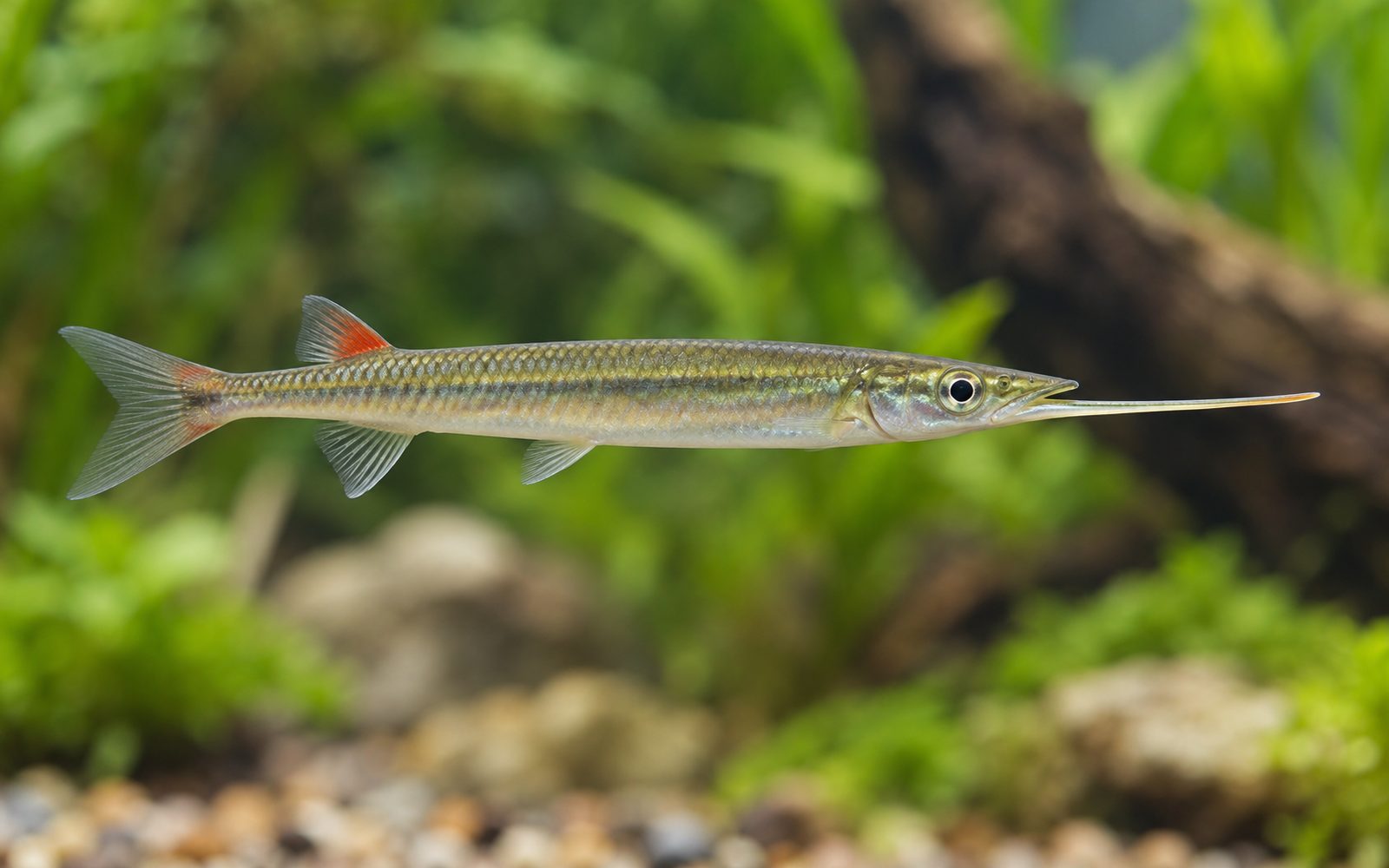
The halfbeak is a slender, pencil-shaped fish whose lower jaw is much longer than its upper jaw. This long lower jaw is fixed; the fish opens its mouth only by moving its upper jaw. It spends almost its entire life just below the water surface and hunts insects that fall into the water.
The word "wrestling" in its name comes from the behavior of the males: when two males meet, they lock their jaws together and push. This display is usually harmless, but if repeated often the tip of the jaw can be injured. It is a skittish fish; sudden light or movement can make it crash into the glass and lid and break its beak.
Natural Habitat
It lives in slow-flowing streams, canals, ditches, rice paddies and ponds in Southeast Asia; near the coast it also enters brackish water. It prefers calm waters with dense vegetation at the surface and grasses overhanging from the banks.
Tank Setup
- Volume: 60 liters and a 60 cm tank length for a small group; surface area matters more than depth.
- Lid: it jumps; the lid must close tightly, and a few centimeters of space should be left between the water surface and the lid.
- Water: 24–27°C, pH around 7, moderate hardness. 1–2 g of salt per liter is optional and increases hardiness.
- Layout: floating plants and stem plants reaching the surface provide both hiding places and visual barriers. Flow at the surface should be weak.
- Light: turning the aquarium light on while the room light is already on, rather than switching it on and off suddenly, reduces crashes caused by startling.
Diet
Carnivorous; it takes its food from the surface. Fruit flies, mosquito larvae, brine shrimp and small bloodworms are its favorite foods. It also eats floating flakes but shows little interest in food that sinks. A varied diet based mainly on live food reduces stillbirths in females.
Behavior and Compatibility
Peaceful toward other species and does not bother them. It frequently wrestles with males of its own species. If kept with fish that quickly snatch food at the surface, it may go hungry.
Good companions: rasboras, small tetras, corydoras, otocinclus, small loaches, shrimp.
Avoid: fast species that take food at the surface (hatchetfish, some gouramis), large fish and fin nippers, fry small enough to fit in its mouth.
Group and Colony Structure
2–3 females per male is recommended. One male and 3 females is a comfortable arrangement in 60 liters. More than one male should only be kept in a large aquarium divided by floating plants; otherwise the dominant male constantly chases the others. Females live together without problems.
Breeding
It reproduces by internal fertilization and is a livebearer. The gestation period varies between 3 and 8 weeks depending on temperature and diet; the female gives birth to 10–30 fry at a time. The fry are born about 1 cm long and immediately eat microworms, newly hatched brine shrimp and finely crushed food. Adults may hunt the fry; they can hide among floating plants or be moved to a separate aquarium. Stillbirths are common in underfed females.
Health and Common Problems
- Jaw injuries: caused by crashing into the glass and by wrestling; a broken beak does not grow back, but the fish usually keeps feeding.
- Stillbirth: mostly linked to a monotonous diet; give live and vitamin-enriched food.
- Fungus and columnaris: may start on injured jaws; clean water and a little salt support healing.
Sexing
Males are smaller, and the front rays of their anal fin have been shortened and curved into a mating organ (andropodium). Males usually have a red spot or coloration on the dorsal fin. Females are larger, plainer in color and have a normal anal fin.
Tank mates
This list is calculated automatically from the species profile and grows as new species are added to the catalog. Try it in the planner for a definite answer.
Usually compatible
 Flame Tetra
 Blackfin Corydoras
 Polystictus Corydoras
 Emerald Cory
 Porthole Catfish
 Keyhole Cichlid
 Cupid Cichlid
 Geophagus altifrons
 Geophagus surinamensis
 Cryptocoryne Parva
Should not be kept together






Hobbyist notes
Things you won't find in books, learned by trial and error. The most helpful ones are on top.
Change history and contributors
- Page created · October 16, 2026