
Water parameters
Overview
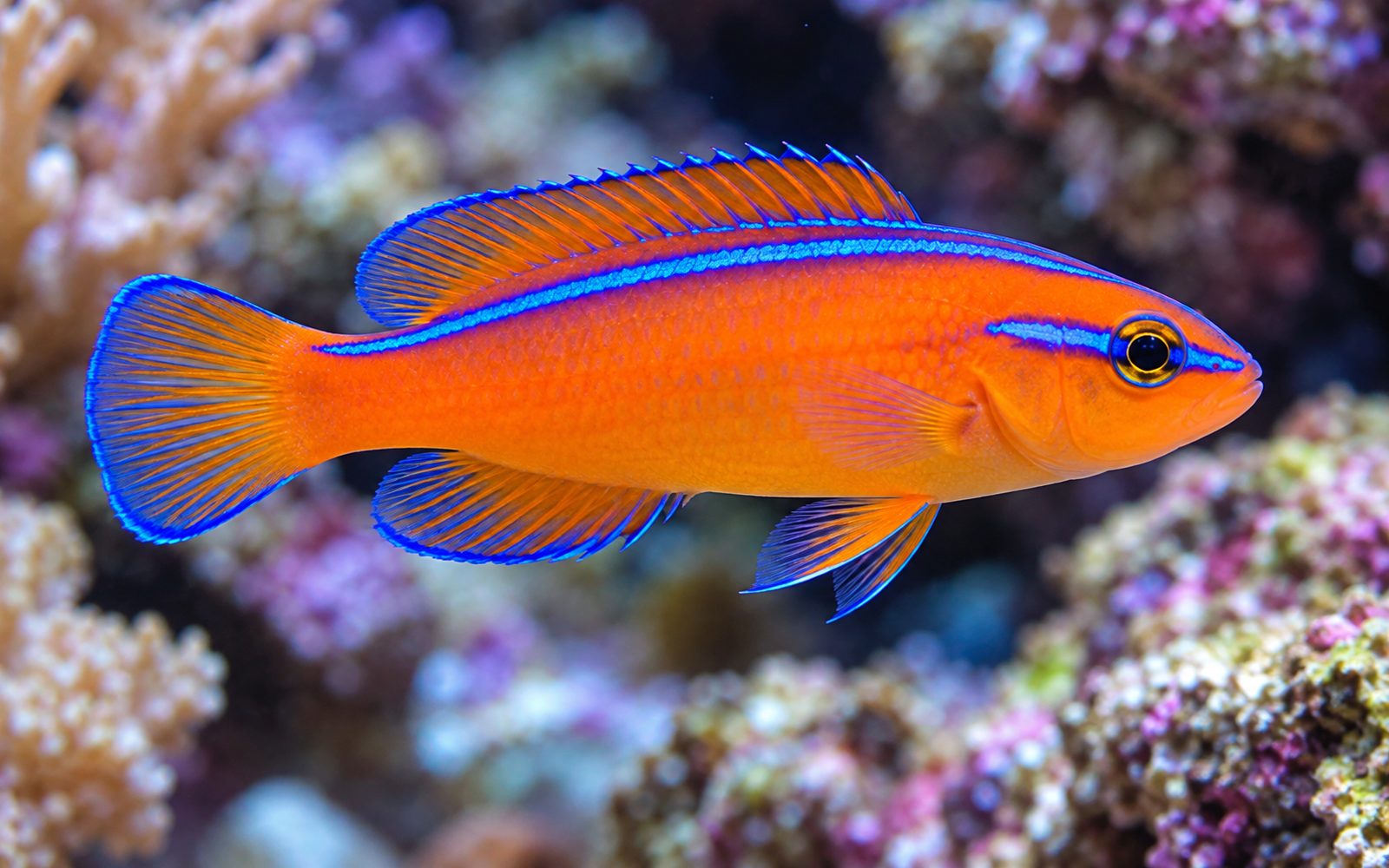
Scott's fairy wrasse is a large Cirrhilabrus species that lives on the outer reefs of the Pacific. The males' body is green at the rear, dark blue-green in the middle and bright blue-green on the head and front; the lower quarter of the body is light red, while the head and upper front part are finely speckled with black. During courtship, males rise a few meters off the bottom and put on a display with their fins fully spread. In the wild, small groups made up mostly of females and juveniles pick zooplankton just above the bottom. Specimens are wild-collected; color differences are seen depending on the region.
Tank Setup
- At least 300 liters and 120 cm in length for a small harem.
- Salinity specific gravity 1.023–1.026, pH 8.1–8.4, temperature 24–27°C; moderate flow.
- Rock crevices to sleep in at night; a lid against jumping is essential.
- Reef-safe: It leaves corals and invertebrates alone.
Diet
Carnivorous, picking plankton. Offer frozen mysis, brine shrimp, copepods and small granules in small amounts 2–3 times a day.
Behavior and Compatibility
Peaceful; males can be cantankerous towards males of their own kind and similarly colored Cirrhilabrus males. A male kept with females shows his colors more often.
Good companions: Anthias, flasher wrasses, dwarf angelfish, tangs, clownfish, gobies.
Avoid: Lionfish, groupers, large dottybacks, a second male of the same species.
A short profile for this species
The Scott's Fairy Wrasse page has the basics, but the sections below have not been written yet. If you keep this species, write a section from your own experience; it will be published under your name after editor approval.
Tank mates
This list is calculated automatically from the species profile and grows as new species are added to the catalog. Try it in the planner for a definite answer.
Should not be kept together





Hobbyist notes
Things you won't find in books, learned by trial and error. The most helpful ones are on top.
Change history and contributors
- Page created · October 16, 2026