
Water parameters
Overview
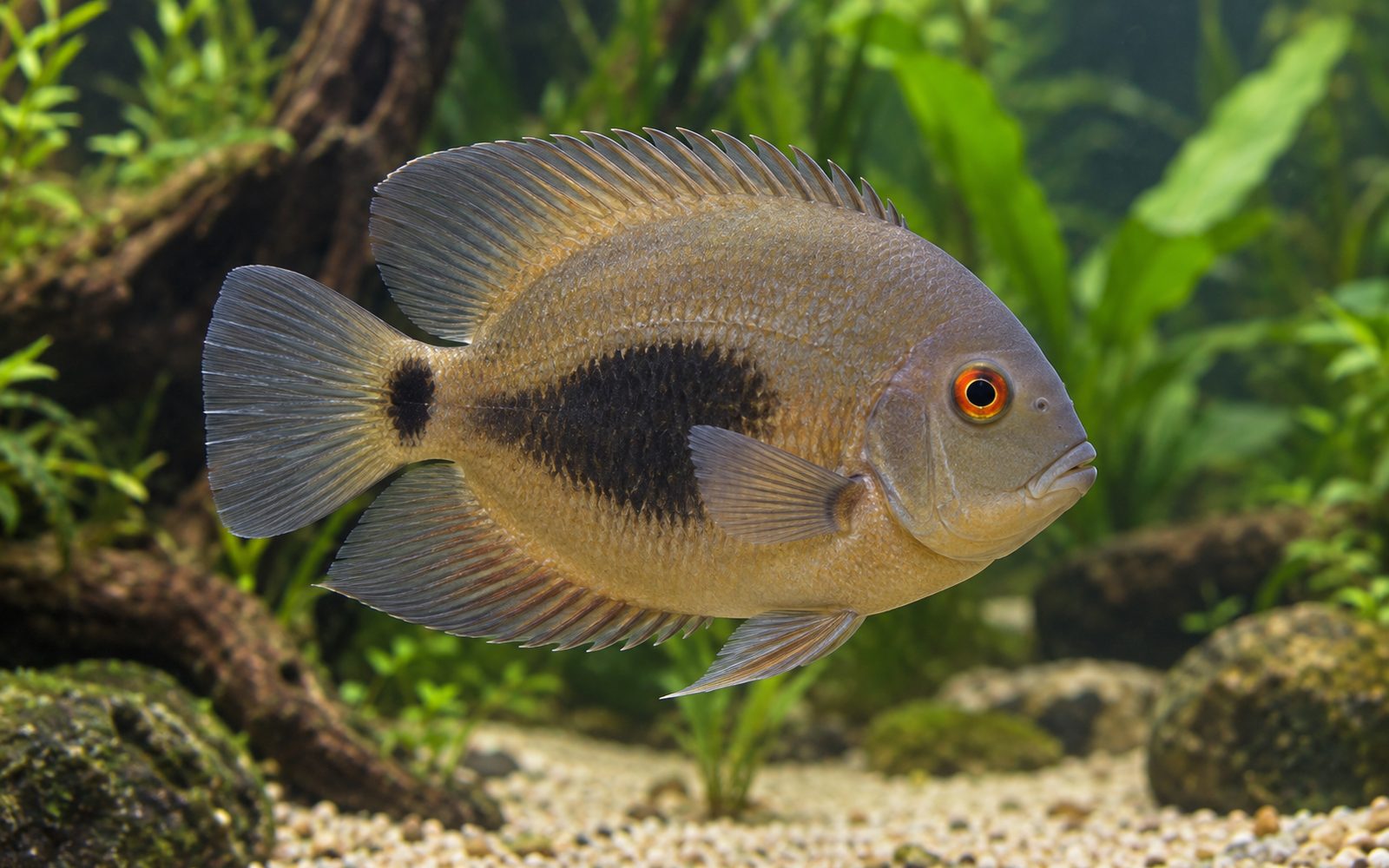
The uaru is a large Amazon cichlid with a round, flat, discus-like body. Adults have a large black blotch tapering downward in the middle of their gray–olive body; the English name "triangle cichlid" comes from this. Its eyes are orange–red. Juveniles look completely different: they carry scattered light spots on a brown background, and the transition to adult coloration takes several months.
Its temperament is calm for its large size, but it reaches 25–30 cm, is social and consumes plenty of plant food. The right environment is therefore a large Amazon setup without plants or with tough plants.
Natural Habitat
In Brazil it lives in the slow-flowing, often tannin-darkened waters of the Rio Negro and central Amazon, especially in flooded forests. In the rainy season it spreads into the forest and eats fallen fruit, seeds, leaves and insects.
Tank Setup
- Volume: at least 450 liters and 150–180 cm of length for a group of 3–5; depth 60 cm or more.
- Decor: large roots, round stones, sand substrate. Soft plants are eaten; even tough species such as Anubias and Java fern may be nibbled.
- Water: soft, acidic and very clean water; a 30–50% change weekly. It is sensitive to nitrate.
- Light: dim light and floating plants calm it.
Diet
An omnivore leaning toward plant matter. Use a cichlid granule containing spirulina or vegetables as the staple; offer blanched peas, spinach, zucchini, cucumber and lettuce. Add protein a few times a week with frozen bloodworms, mysis and shrimp. Digestive problems are seen in uarus fed only meaty foods.
Behavior and Compatibility
Social and relatively peaceful. A hierarchy forms within the group. During breeding the pair becomes noticeably territorial.
Good companions: severum, Geophagus species, festivum, angelfish, discus (in a very large tank), silver dollars, large tetras, plecos.
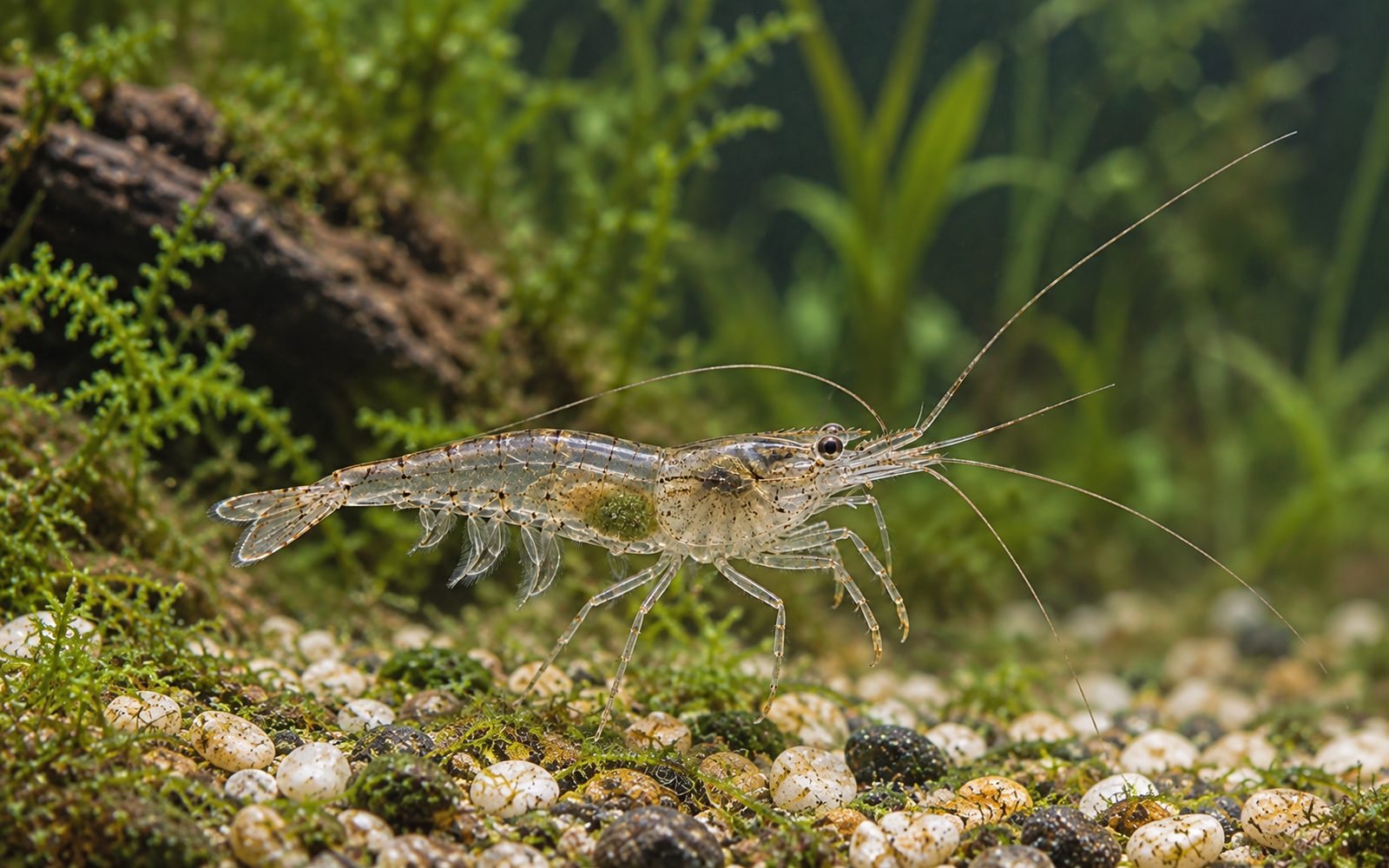
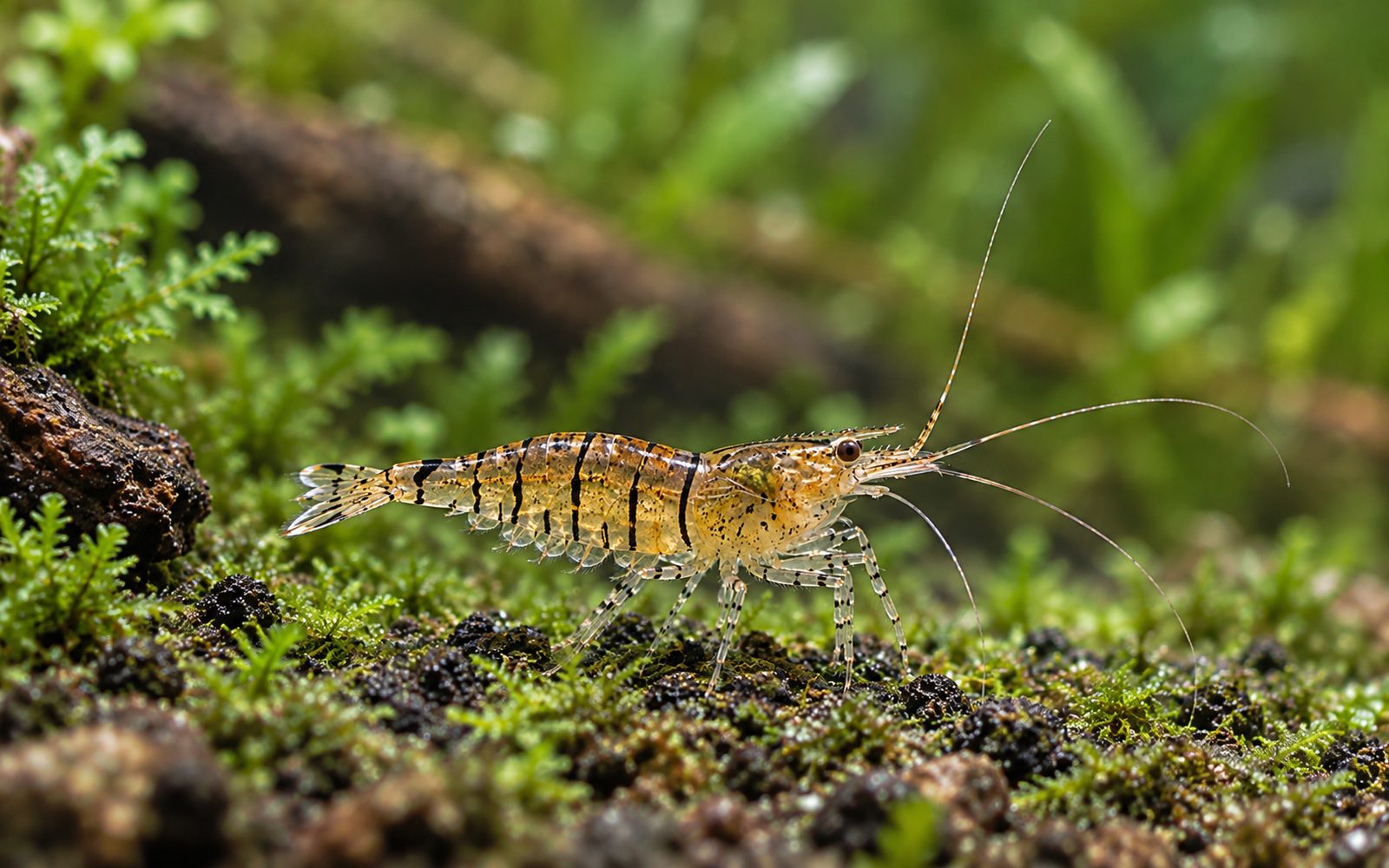
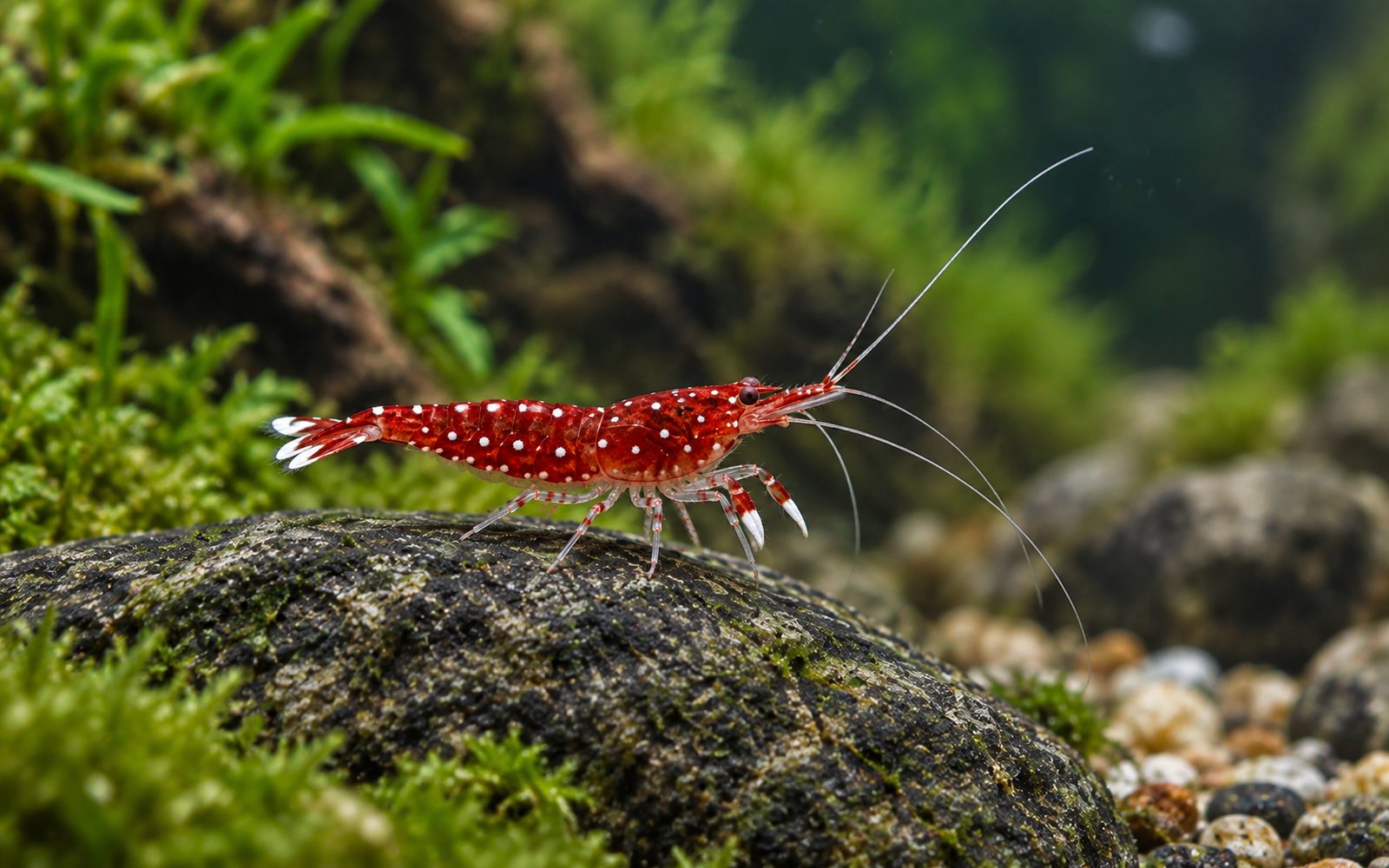
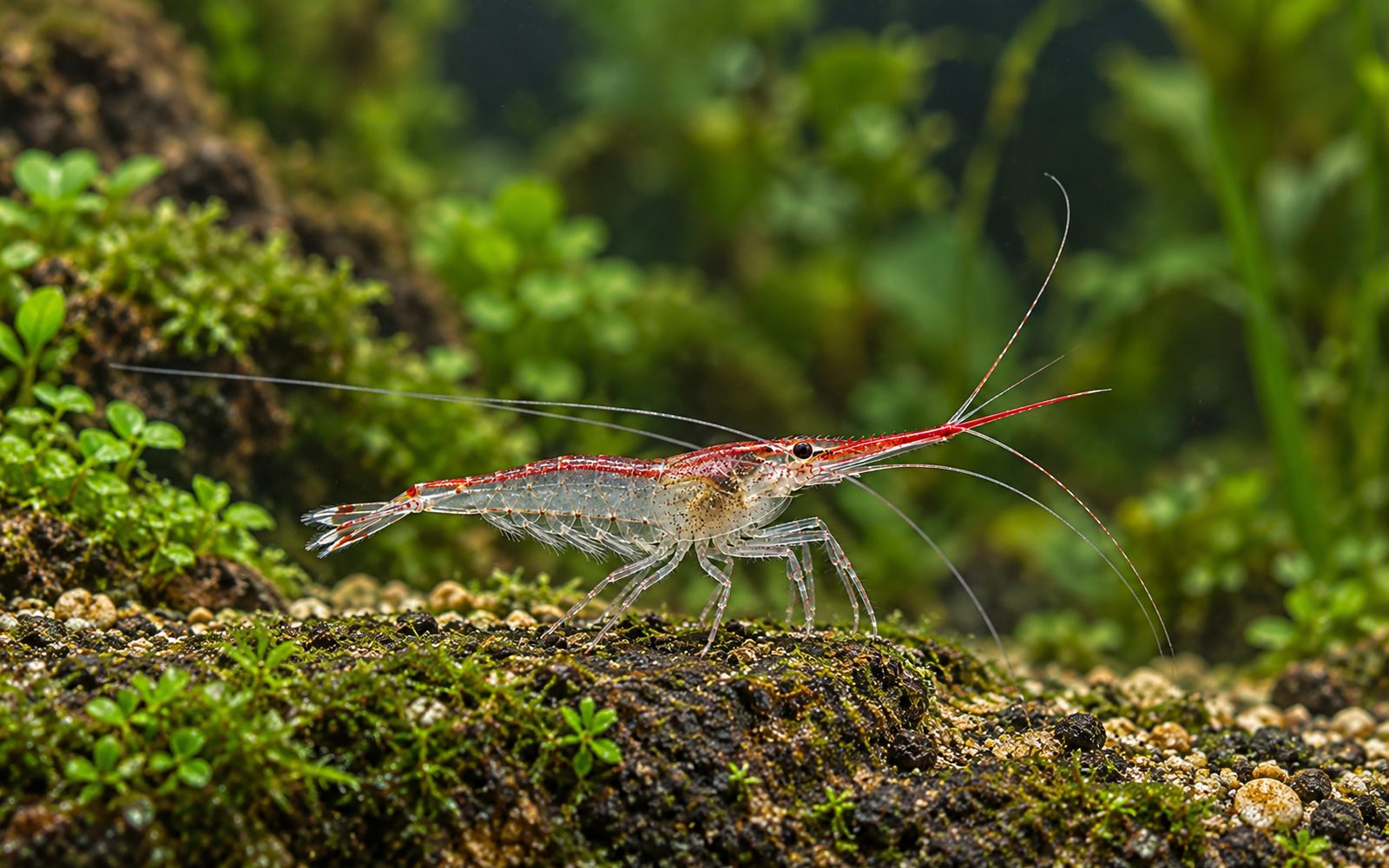
Avoid: aggressive Central American cichlids, very small tetras and shrimp, prized planted layouts.
Group and Colony Structure
A uaru kept alone becomes shy; a group of at least 3, preferably 5, is recommended. If juveniles are raised together, a pair emerges from among them; the pair may separate from the others during breeding.
Breeding
The pair lays a few hundred eggs on a flat stone or root. Both parents guard the eggs and fry. As with discus, uaru fry feed on the mucus on their parents' skin in the first weeks; baby brine shrimp are also given. Breeding in the aquarium requires soft, warm water.
Health and Common Problems
- Hole-in-the-head disease (HLLE): with poor water quality and a lack of plant food.
- Intestinal parasites: common in wild-caught fish; quarantine and, if necessary, veterinary treatment.
- Bloating: with a protein-heavy diet.
Sexing
Hard to tell apart externally. Males are usually slightly larger and their forehead may look steeper. Sexing is confirmed by the papilla during spawning.
Tank mates
This list is calculated automatically from the species profile and grows as new species are added to the catalog. Try it in the planner for a definite answer.
Usually compatible
 Emerald Betta
 Altum Angelfish
 Firemouth Cichlid
 Buffalohead Cichlid
 Chocolate Cichlid
 Festivum
 Geophagus altifrons
 Geophagus surinamensis
 Rainbow Cichlid
Should not be kept together


Hobbyist notes
Things you won't find in books, learned by trial and error. The most helpful ones are on top.
Change history and contributors
- Page created · October 16, 2026