
Water parameters
Overview
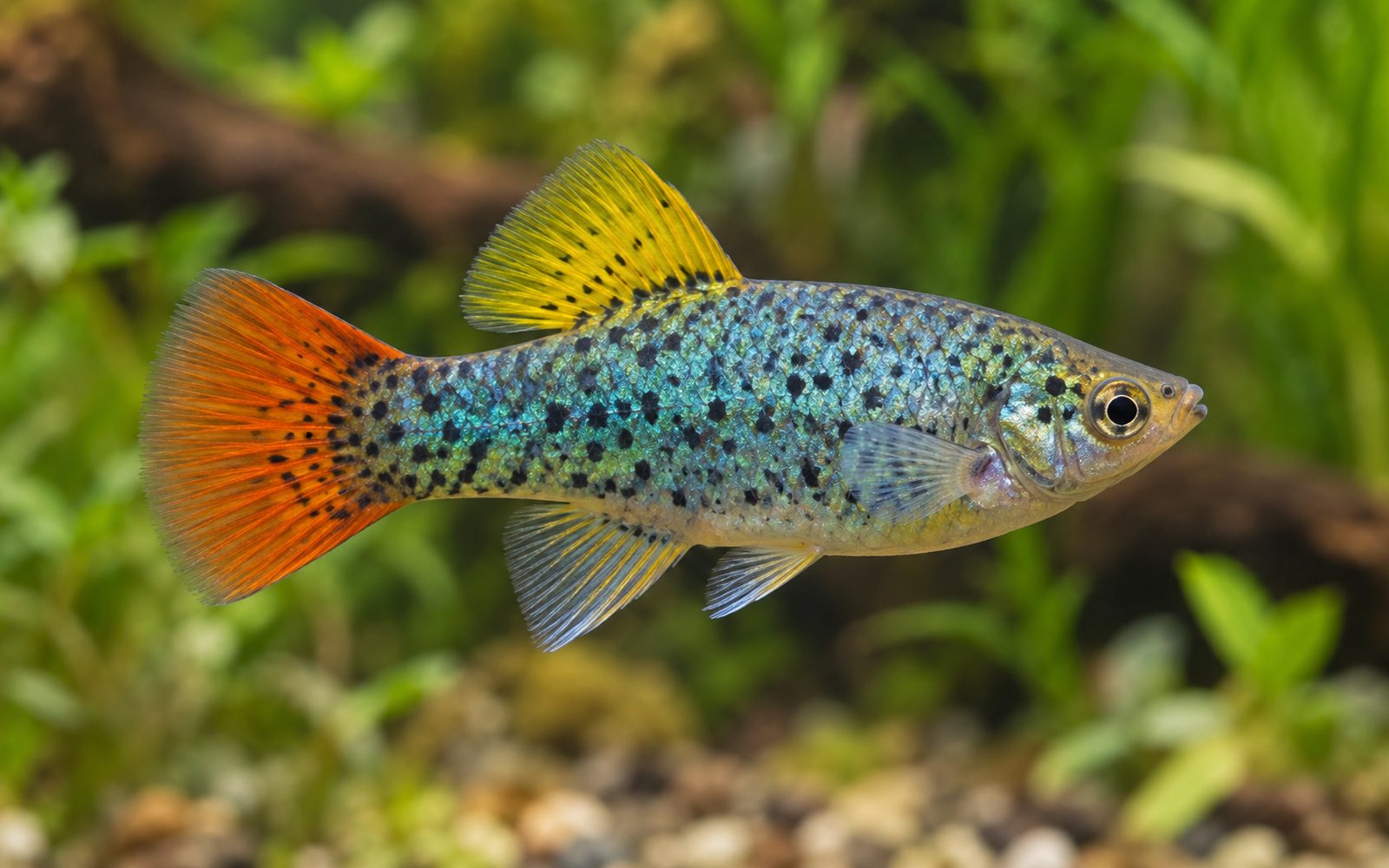
The variatus platy is very similar to the common platy (X. maculatus), but its body is slightly longer and slimmer. Wild males have a bluish–green body with black spots, a yellow dorsal fin and an orange–red tail; females are plain and olive-colored. In stores there are bred lines such as "marigold", "sunset", "hifin" (high dorsal fin) and "tuxedo".
One of its most striking traits is that males gain their color late: some males stay plain until they are 6–12 months old and then gradually color up. For this reason young males that look dull in the store can become much showier over time.
Natural Habitat
It lives in the Atlantic-draining streams, spring pools and planted canals of northeastern Mexico. Its range is subtropical; in winter the water temperature drops noticeably compared with that of its tropical relatives. The water is generally moderately hard to hard and slightly alkaline.
Tank Setup
- Volume: 60 liters for a small group, 100 liters or more for a larger group.
- Water: 20–24°C is ideal; it lives comfortably in unheated room-temperature aquariums. pH 7–8, moderately hard to hard water.
- Plants: dense plants, floating plants and decor that grows algae provide both hiding places for fry and grazing surfaces.
- Maintenance: a 25% water change every week; overly warm water (above 27°C) shortens its lifespan.
Diet
Omnivorous. Flakes or micro granules, spirulina food, blanched vegetables and, a few times a week, frozen or live brine shrimp, daphnia and mosquito larvae. It also grazes soft algae on the glass and plants.
Behavior and Compatibility
Peaceful and active. Males chase females but are generally not persistent; they put on brief displays among themselves. Because it tolerates cool water, it is a good choice alongside species kept in unheated aquariums.
Good companions: platies, swordtails, zebra danios, white cloud mountain minnows, corydoras, otocinclus, shrimp, snails.
Avoid: tropical species that need soft, acidic water, large and aggressive cichlids, fin-nipping barbs.
Group and Colony Structure
It is kept in a harem arrangement: at least 2 females per male. 2 males and 4 females in 60 liters is a balanced start. Different color lines live together but hybridize. It also hybridizes easily with platies and swordtails; those who want a pure line keep the species separate. Because the population will grow quickly, surplus fry need to be rehomed.
Breeding
A livebearer. Gestation lasts about 4 weeks; the female gives birth to 20–60 fry. Adults eat the fry, but in a densely planted aquarium some survive. The fry are fed crushed flakes and newly hatched brine shrimp from day one. In cool water growth and maturation slow down, which produces larger, healthier males.
Health and Common Problems
Hardy. Fin rot and white spot can appear in poor water, and columnaris in soft water. Fish kept above 27°C for long periods have shorter lifespans and faded colors. Limit the number of males so that females that give birth constantly are not worn out.
Sexing
The males' anal fin has been modified into a gonopodium; their colors are vivid and their bodies slimmer. Females are larger and plumper, with a fan-shaped anal fin. Because color comes late in males, sex is most reliably determined from the anal fin.
Tank mates
This list is calculated automatically from the species profile and grows as new species are added to the catalog. Try it in the planner for a definite answer.
Usually compatible
 Flame Tetra
 Blackfin Corydoras
 Polystictus Corydoras
 Emerald Cory
 Emerald Dwarf Rasbora
 Porthole Catfish
 Keyhole Cichlid
 Cryptocoryne Parva
 European Bitterling
 African Glass Catfish
Should not be kept together






Hobbyist notes
Things you won't find in books, learned by trial and error. The most helpful ones are on top.
Change history and contributors
- Page created · October 16, 2026