
Water parameters
Overview
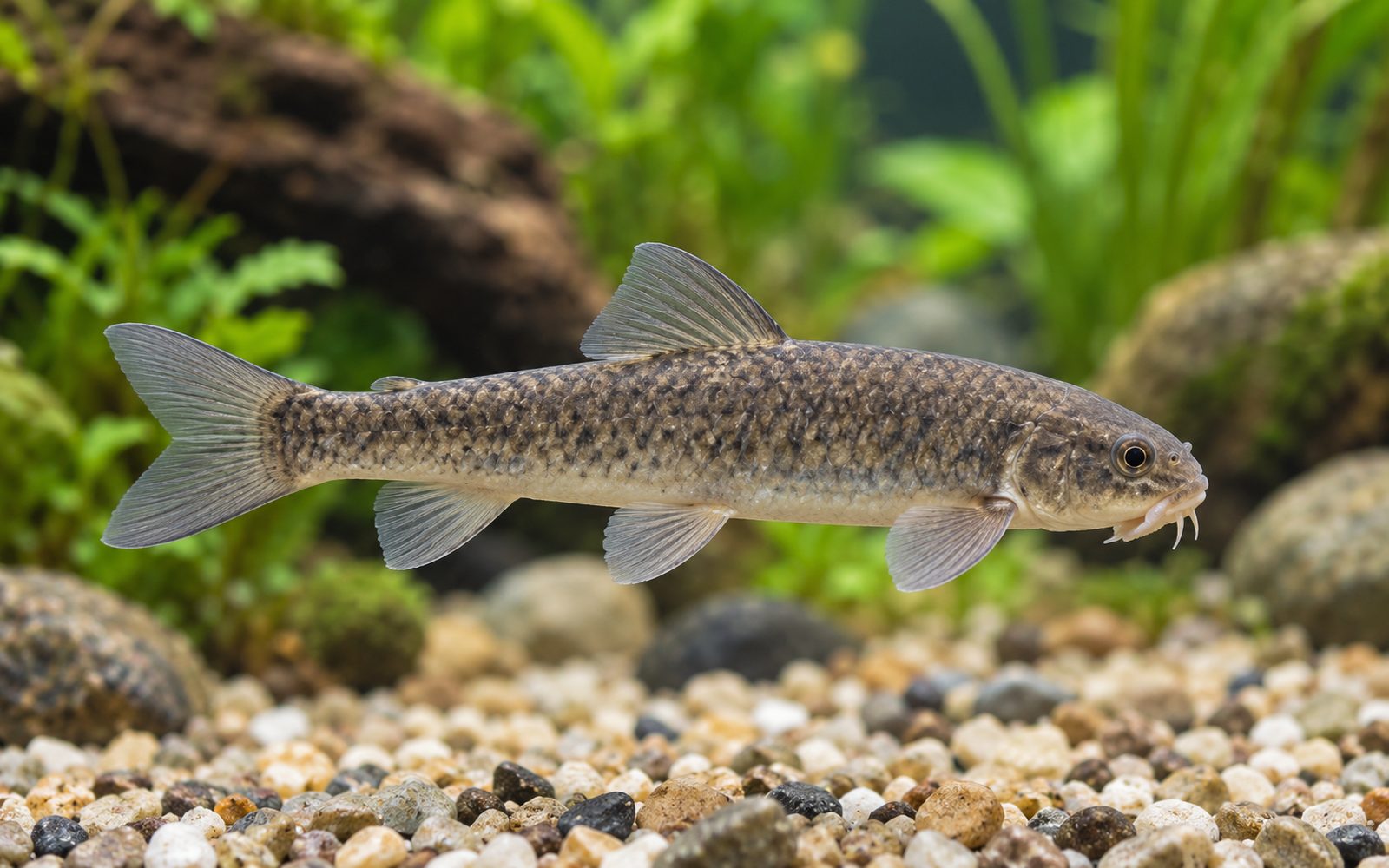
Garra rufa, the "doctor fish", is a small cyprinid that lives in the rivers of Western Asia, including Türkiye. The individuals that live in the hot spring water of the Kangal fish spring in Sivas and nibble human skin have made it world-famous. The round sucking disc under its mouth lets it scrape algae and biofilm off rocks.
It is a native species of Türkiye; fish should not be collected from the wild, and natural populations should be protected. Fish spa and "fish pedicure" uses are controversial in terms of hygiene and animal welfare; such use is not recommended in the aquarium.
Natural Habitat
It lives in the rivers of the Tigris–Euphrates and neighboring basins, over rocky and gravelly bottoms, in flowing, oxygen-rich waters. The population at Kangal has adapted to hot spring water of about 35°C; but in general the species is found in much cooler rivers.
Tank Setup
- Volume: at least 150 liters and 100 cm of length for a group of 5–8.
- Water: comfortable at 20–26°C; neutral to slightly alkaline, moderately hard water. It needs powerful filtration, high oxygen and noticeable current.
- Decor: round stones, gravel and sand substrate; flat stone surfaces serve as grazing areas.
- Lid: it can climb the glass and jump; a tight lid is required.
Diet
Omnivorous. It constantly grazes algae and biofilm; it is fed sinking tablets and granules, spirulina, blanched vegetables, frozen bloodworms and brine shrimp. In the aquarium it has no need for human skin; it stays healthy on a balanced diet.
Behavior and Compatibility
A bottom dweller that is constantly on the move, grazing rocks and glass. It has short territorial squabbles with its own kind but they do not harm each other. It is generally peaceful toward other fish; its constant activity may disturb calm and shy species.
Good companions: peaceful medium-sized fish that like current: danios and devarios, rosy barb, gold barb, current-loving loaches, Ancistrus.
Avoid: slow species that need warm, soft water, such as discus; very small and shy fish; aggressive cichlids.
Group and Colony Structure
Kept with at least 5, ideally 8 or more individuals. A hierarchy forms within the group; in a large group the squabbles do not concentrate on a single individual. A fish kept alone may become shy.
Breeding
Breeding in the home aquarium is rarely reported. It is an egg scatterer and provides no parental care; mature fish usually spawn in flowing, gravelly areas.
Health and Common Problems
Hardy. It becomes stressed with low oxygen and dirty water. White spot can appear. Fish taken from fish spas or from the wild may carry parasites; keep newcomers in quarantine.
Sexing
Females are larger with a plumper belly. During the breeding season, small white bumps (breeding tubercles) appear around the snout of males.
Tank mates
This list is calculated automatically from the species profile and grows as new species are added to the catalog. Try it in the planner for a definite answer.
Usually compatible
 Flame Tetra
 Yellow Regal Peacock
Glass Tetra
Yellow Regal Peacock
Glass Tetra
 Blackfin Corydoras
 Polystictus Corydoras
 Emerald Betta
 Emerald Cory
 Emerald Dwarf Rasbora
 Porthole Catfish
 Keyhole Cichlid
Should not be kept together






Hobbyist notes
Things you won't find in books, learned by trial and error. The most helpful ones are on top.
Change history and contributors
- Page created · October 16, 2026