
Water parameters
Overview
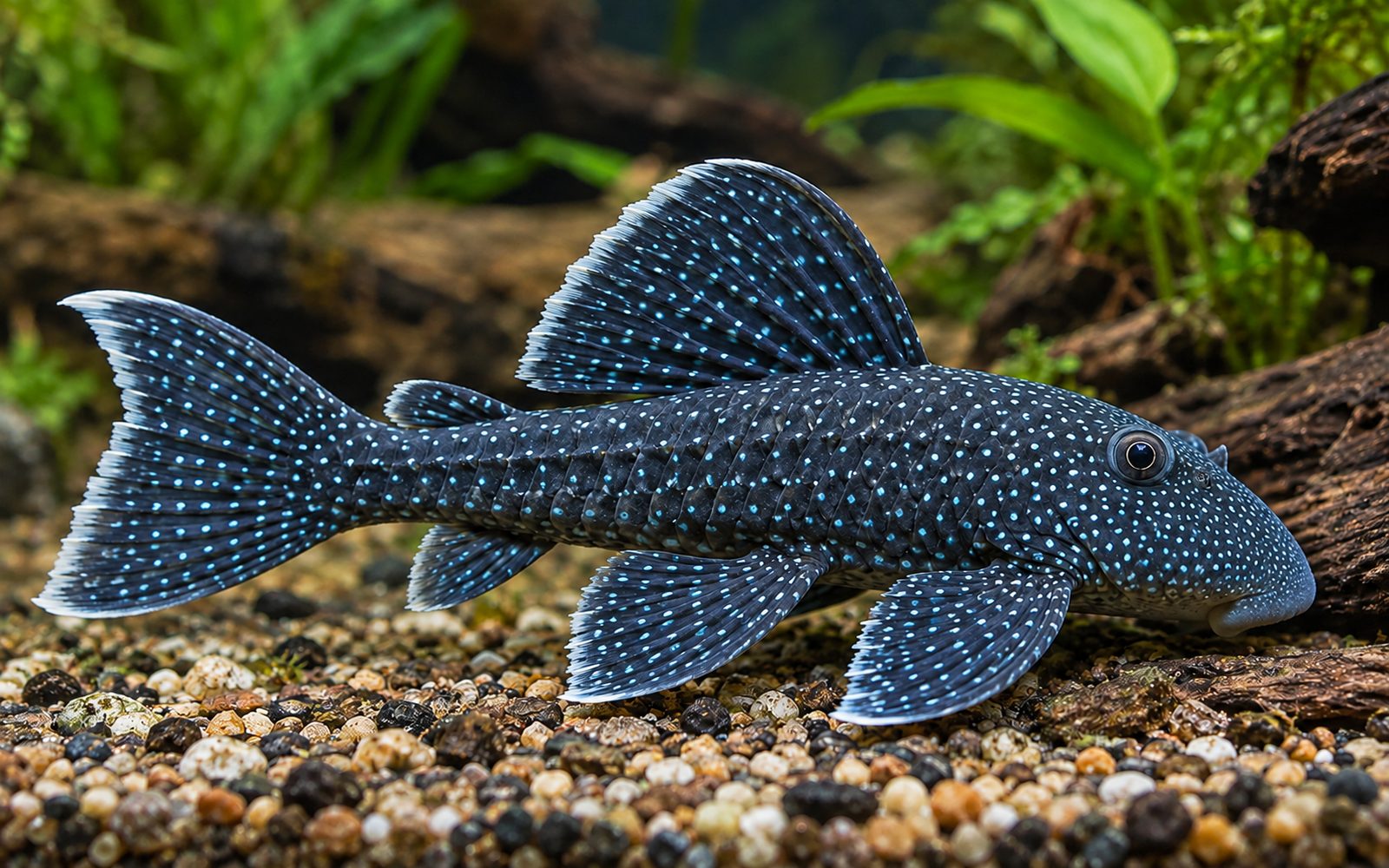
The blue phantom pleco is an Orinoco pleco that stands out with its dark blue-indigo body and the dense, light-colored spots on this background. It has not yet been scientifically described and is known by the number L128. It comes from the same river systems as the green phantom pleco (L200) and resembles it; however, its color is bluer and its spots are usually denser.
Adults reach 15–18 cm, and some individuals approach 20 cm. For this reason it is not suitable for small aquariums. Its color can darken and lighten depending on light, substrate color and mood.
Natural Habitat
It lives in the fast-flowing, rocky stretches of the Orinoco basin. The water is warm, oxygen-rich and soft. It hides in crevices between rocks and eats biofilm and small organisms on the surfaces.
Tank Setup
- Volume: At least 300 liters and 120 cm in length for one adult.
- Flow and oxygen: A powerful filter, a circulation pump and aeration.
- Decor: Flat stones, rock piles, large caves and roots.
- Water: 26–28°C, with a 30% water change every week.
- Substrate: Fine sand or rounded gravel; a dark substrate brings out the blue tone of the body more clearly.
Diet
Omnivorous. Vegetable-based and protein-rich sinking wafers, spirulina wafers, blanched zucchini and spinach, and frozen foods such as bloodworms, mysis and shrimp should be given in rotation. A diet based only on vegetables or only on meat is not recommended.
Behavior and Compatibility
It is peaceful toward other species. It behaves territorially toward its own kind and plecos of similar size over caves and food. It is nocturnal, but once settled it also comes out to feed during the day.
Good companions: Calm, medium-sized fish: large tetras, Geophagus species, rainbowfish, corydoras.
Avoid: Other large plecos (in a confined space), aggressive cichlids, very small aquariums.
Group and Colony Structure
In a home aquarium it is usually kept singly. More than one individual can only be attempted in a large footprint, with a separate cave for each.
Breeding
It breeds in caves; the male guards the eggs. Breeding in the aquarium has rarely been reported and requires a lot of space. In breeding attempts, each male should be given a separate cave sized to its body, and flow and oxygen should be kept high.
Health and Common Problems
Hardy. Low oxygen and dirty water lead to loss of appetite and bacterial problems. Fading color can be a sign of stress; check the water parameters and flow first. Newly arrived individuals should be observed in a separate tank for a few weeks to make sure they are feeding. It is sensitive to copper.
Sexing
Mature males have a wider head and longer pectoral fin spines and cheek odontodes. Females are plumper when viewed from above.
Tank mates
This list is calculated automatically from the species profile and grows as new species are added to the catalog. Try it in the planner for a definite answer.
Usually compatible
 Polystictus Corydoras
 Emerald Betta
 Emerald Cory
 Porthole Catfish
 Altum Angelfish
 Keyhole Cichlid
 Firemouth Cichlid
 Cupid Cichlid
 Buffalohead Cichlid
Should not be kept together




Hobbyist notes
Things you won't find in books, learned by trial and error. The most helpful ones are on top.
Change history and contributors
- Page created · October 16, 2026