
Water parameters
Overview
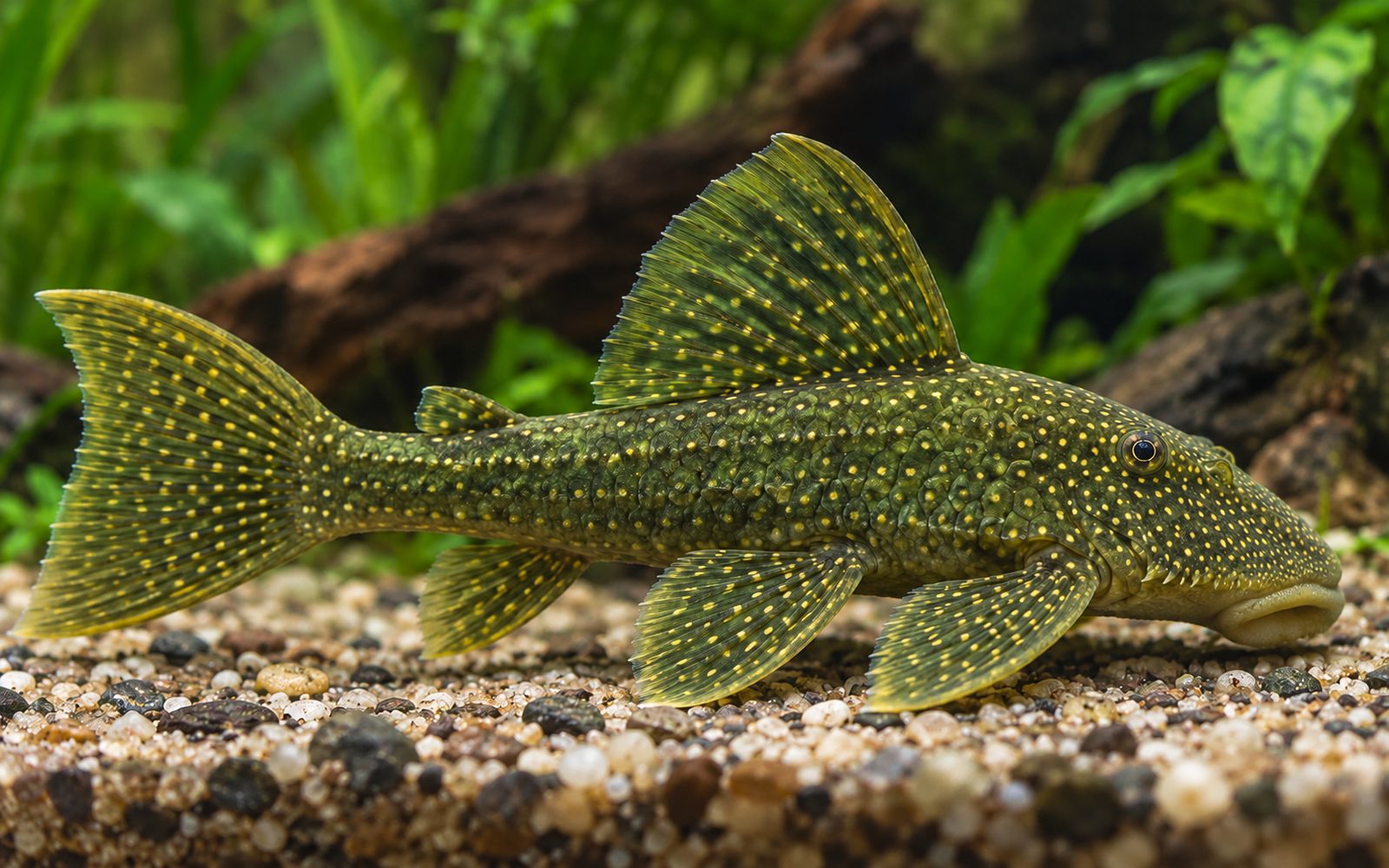
The green phantom pleco stands out for its green color, which is rare among plecos. The color deepens with age, but fades quickly under stress, low oxygen or unsuitable water parameters. It was scientifically described in 2005.
There is a second, almost identical-looking species sold under the same L200 number: Baryancistrus demantoides ("high-fin L200"). The easiest way to tell them apart is to check whether the dorsal fin is connected by a membrane to the small adipose fin behind it; in H. subviridis these two fins are separate.
Natural Habitat
It lives in warm, fast-flowing, rocky stretches of the upper Orinoco and its tributaries, spread over a wide area in the Colombia–Venezuela border region. The water is soft, slightly acidic and rich in oxygen. The layer of algae and biofilm on the rocks is its main food source.
Tank Setup
- Volume: at least 250 liters and 120 cm length for one adult.
- Flow: a strong filter and an additional powerhead; keep the surface moving to increase oxygen.
- Decor: flat stones, rock piles, caves and roots.
- Water: 27–29°C is ideal; soft, slightly acidic water preserves the color best. A 30% water change every week.
Diet
Mainly herbivorous. Make spirulina and algae-based sinking tablets, blanched zucchini, cucumber and spinach the staple. A small amount of mysis or bloodworms can be added 1–2 times a week. A diet too high in protein can lead to digestive problems.
Behavior and Compatibility
Peaceful toward other species; more active at night. It squabbles with its own kind and plecos of similar size over caves and food.
Good companions: Calm, medium-sized fish that like warm, soft water: large tetras, discus, cardinal tetras, corydoras.
Avoid: Keeping it in the same tank as Baryancistrus demantoides (risk of hybridization), territorial large plecos, aggressive cichlids.
Group and Colony Structure
In a home aquarium it is usually kept singly. Groups and breeding can only be attempted in a very large aquarium with a separate cave for each male; otherwise the males will fight.
Breeding
It breeds in caves; the male guards the eggs and fry. It has been bred in the aquarium, but not often, since it requires plenty of space and enough caves.
Health and Common Problems
Sensitive to oxygen and water quality. A color shift to gray or pale brown is a sign of stress; check oxygen, nitrate and temperature first. Starvation after shipping and bacterial infections can occur; nurse a new fish back to health in a calm quarantine tank with plenty of vegetables and tablets. Avoid copper-based medications.
Sexing
Mature males have broader heads and longer pectoral fin spines and cheek odontodes. Females are plumper when viewed from above.
Tank mates
This list is calculated automatically from the species profile and grows as new species are added to the catalog. Try it in the planner for a definite answer.
Usually compatible
 Polystictus Corydoras
 Emerald Betta
 Emerald Cory
 Porthole Catfish
 Altum Angelfish
 Keyhole Cichlid
 Firemouth Cichlid
 Cupid Cichlid
 Buffalohead Cichlid
Should not be kept together




Hobbyist notes
Things you won't find in books, learned by trial and error. The most helpful ones are on top.
Change history and contributors
- Page created · October 16, 2026