
Water parameters
Overview
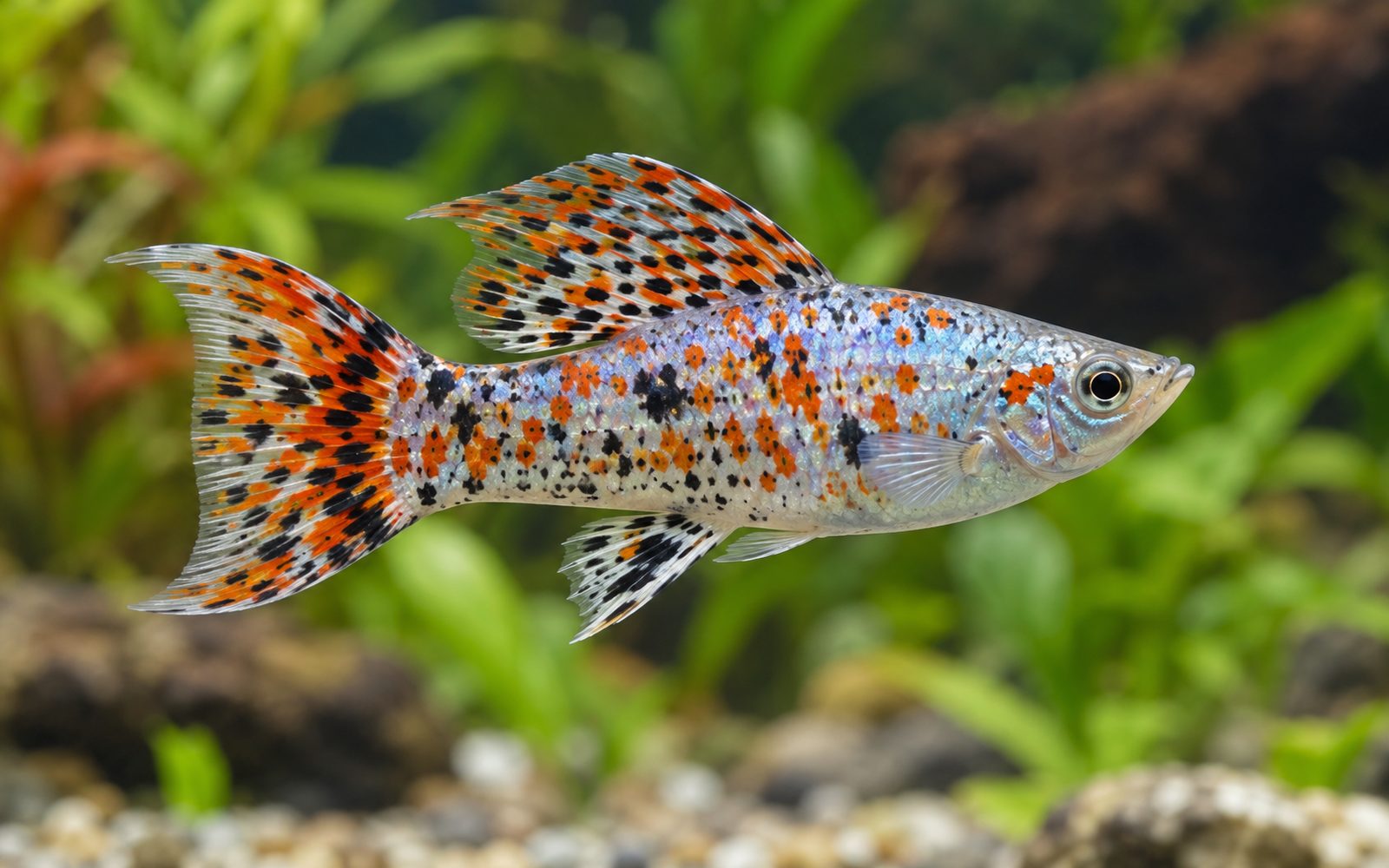
The liberty molly was long sold in the hobby as a local form of the common molly (P. sphenops); today it is recognized as a separate species, and its scientific name refers to El Salvador. The males' silvery–blue body is decorated with orange–red and black spots; their dorsal and tail fins carry orange, black and white color bands. Females are silvery and plain.
Unlike the color varieties of mollies in stores, it is not a bred form but a species kept in its wild colors. Although its colors are very vivid, the males' tough temperament makes it unsuitable for small aquariums.
Natural Habitat
It lives on the Pacific coast of Central America, especially in the coastal rivers and lagoons of El Salvador and in brackish waters that mix with the sea. These waters are warm, hard and sometimes slightly salty. The fish graze in shallow, sunlit, algae-covered shore areas.
Tank Setup
- Volume: at least 100 liters for one male and 3 females; 150 liters or more for more than one male.
- Water: 25–28°C, pH 7.5–8.5, hard water. 1–3 g of salt per liter is optional and increases hardiness.
- Layout: stones, roots and tough-leaved plants that create sight barriers; preventing the males from seeing each other constantly reduces aggression.
- Maintenance: a 25–30% water change every week.
Diet
A plant-leaning omnivore. Spirulina flakes, algae tablets and blanched vegetables should be the staple. Frozen brine shrimp and bloodworms are given a few times a week. It constantly grazes soft algae on the stones.
Behavior and Compatibility
Males are aggressive among themselves and can wear out a weaker male in a small aquarium. It may also act dominant toward other species and chases similar-looking mollies. Females are calmer.
Good companions: swordtails, large platies, rainbowfish suited to hard water, Ancistrus plecos, peaceful Central American species.
Avoid: other molly species (fighting and hybridization), small and shy fish, long-finned guppy forms, species that need soft water.
Group and Colony Structure
It is kept in a harem arrangement: 3 females per male is ideal. More than one male should only be kept in a large, divided aquarium with enough space for each male. As the number of females increases, the male's pressure does not concentrate on a single female.
Breeding
A livebearer. Gestation lasts about 4–5 weeks; the female gives birth to 10–40 fry. The fry are fed crushed flakes and spirulina powder from day one. Adults may eat the fry; dense plants or a separate grow-out aquarium reduce losses. Because it hybridizes easily with other mollies, the pure line should be kept separate.
Health and Common Problems
Hardy in hard, clean water. "Shimmying" and columnaris are seen in soft water, and fight wounds in crowded conditions. Fin rot may start in bite wounds; water quality must be improved and the males separated.
Sexing
Males are colorful, have a gonopodium and a tall, patterned dorsal fin. Females are larger, plain silvery in color and deep-bellied; their dorsal fins are small and colorless, and their anal fins are fan-shaped.
Tank mates
This list is calculated automatically from the species profile and grows as new species are added to the catalog. Try it in the planner for a definite answer.
Usually compatible
 Yellow Regal Peacock
 Firemouth Cichlid
 Rainbow Cichlid
 Red Hump Eartheater
 Egyptian Mouthbrooder
 Yellow Tail Acei
Amazon Molly
Yellow Tail Acei
Amazon Molly
 Butterfly Goodeid
American Flagfish
Anatolian Killifish
Butterfly Goodeid
American Flagfish
Anatolian Killifish
Should not be kept together





Hobbyist notes
Things you won't find in books, learned by trial and error. The most helpful ones are on top.
Change history and contributors
- Page created · October 16, 2026