
Water parameters
Overview
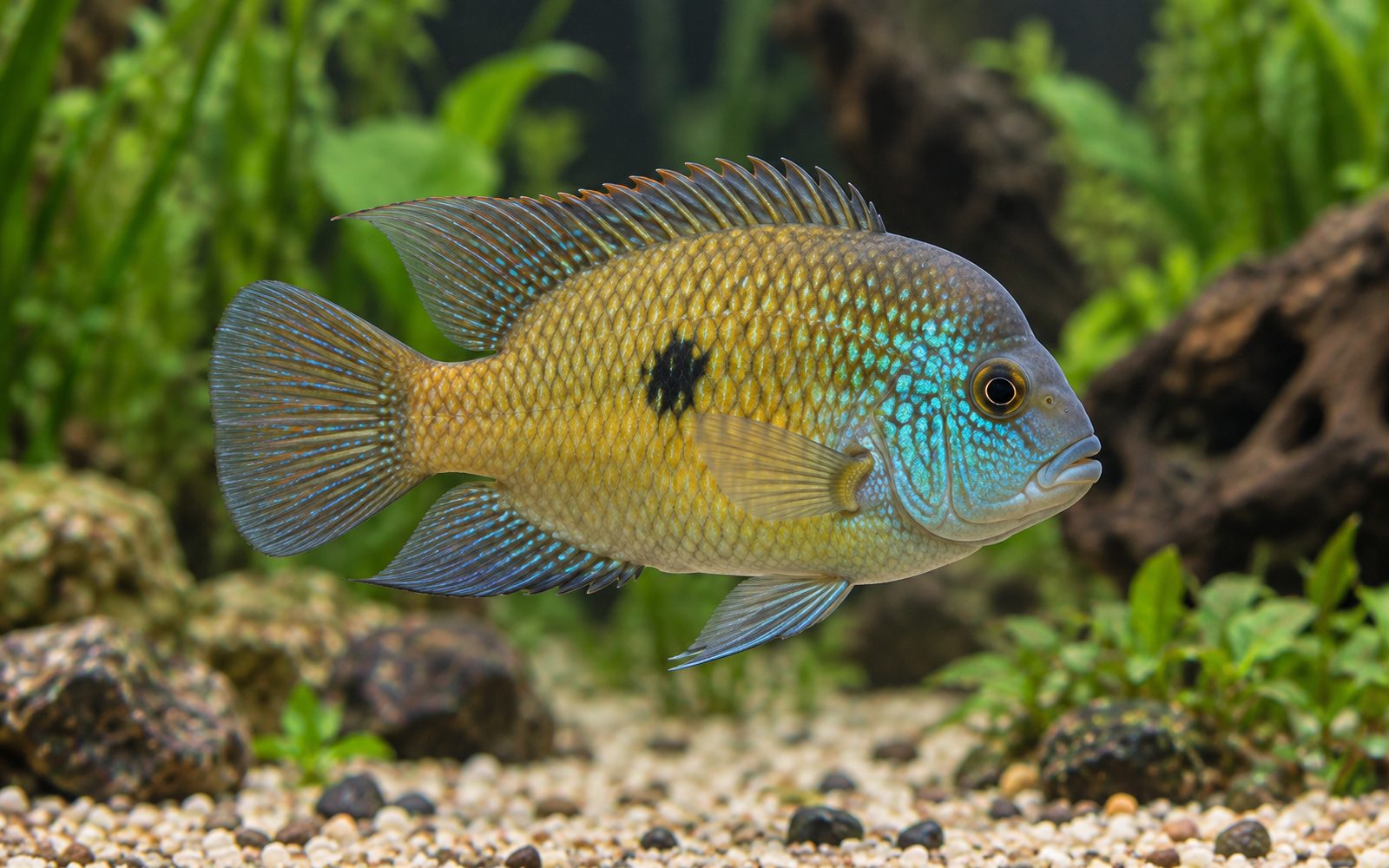
The Nicaragua cichlid is one of the most colorful Central American cichlids, with its gold–bronze body and shimmering blue–green head. There is a dark spot in the middle of the body; the forehead profile is steep and rounded, and the mouth is small and points slightly downward. Juveniles are a plain gray–brown with bands; the color comes with maturity.
Males reach 20–25 cm, while females stay smaller. Its temperament is mild for its size: it is not a predator but a species that feeds from the substrate and rock surfaces. During breeding, however, it digs deep pits and defends its territory.
Natural Habitat
It lives in Lakes Nicaragua and Managua and in the rivers of Nicaragua and Costa Rica that drain into the Atlantic. It is found in waters with moderate current and rocky and sandy bottoms, feeding on algae and small invertebrates on rock surfaces.
Tank Setup
- Volume: at least 250 liters and 120–150 cm of length for a pair.
- Substrate: sand; it digs pits and tunnels and uproots plants.
- Decor: large rocks and caves; seat the rocks firmly so they do not topple when the sand beneath them is dug out.
- Water: moderately hard, alkaline water; good oxygenation and moderate current. Change 30% weekly.
Diet
Omnivorous. Make a cichlid granule containing spirulina the staple; vary it with frozen bloodworms, mysis, shrimp and blanched vegetables. Plant matter is good for digestion and color. Since its mouth is small, choose medium-sized granules; one or two meals a day are enough for adults.
Behavior and Compatibility
It has a calm daily routine; outside the breeding period it rarely bothers other fish. When breeding, the pair fiercely guards the area around the nest it has dug.
Good companions: mild cichlids of similar size (rainbow cichlid, firemouth, severum in a large tank), silver dollars, large livebearers, plecos.
Avoid: very aggressive and predatory large cichlids, small shrimp, planted layouts.
Group and Colony Structure
Kept as a pair. Juveniles are raised together and a pair that bonds is selected. In a large, divided aquarium it can live with cichlids of other species.
Breeding
An interesting feature of this species is that its eggs are not sticky. The pair digs a pit or tunnel under rocks or in the substrate; the eggs are laid inside this pit and the parents guard them, fanning them constantly. Once the fry become free-swimming they roam with both parents and are fed baby brine shrimp.
Health and Common Problems
Hardy. Hole-in-the-head disease (HLLE) and bacterial problems can appear in poor water quality. Rocks toppled during digging can cause injuries. Digestive problems and faded color are seen in fish fed only meaty foods.
Sexing
The male is noticeably larger, its forehead is more prominent and its dorsal and anal fins are longer and more pointed. The female is smaller. Sexing is confirmed by the papilla.
Tank mates
This list is calculated automatically from the species profile and grows as new species are added to the catalog. Try it in the planner for a definite answer.
Usually compatible
 Yellow Regal Peacock
Glass Tetra
Yellow Regal Peacock
Glass Tetra
 Emerald Betta
 Firemouth Cichlid
 Buffalohead Cichlid
 Chocolate Cichlid
 Demasoni Cichlid
 Festivum
 Rainbow Cichlid
 Gymnogeophagus balzanii
Should not be kept together



Hobbyist notes
Things you won't find in books, learned by trial and error. The most helpful ones are on top.
Change history and contributors
- Page created · October 16, 2026