
Water parameters
Overview
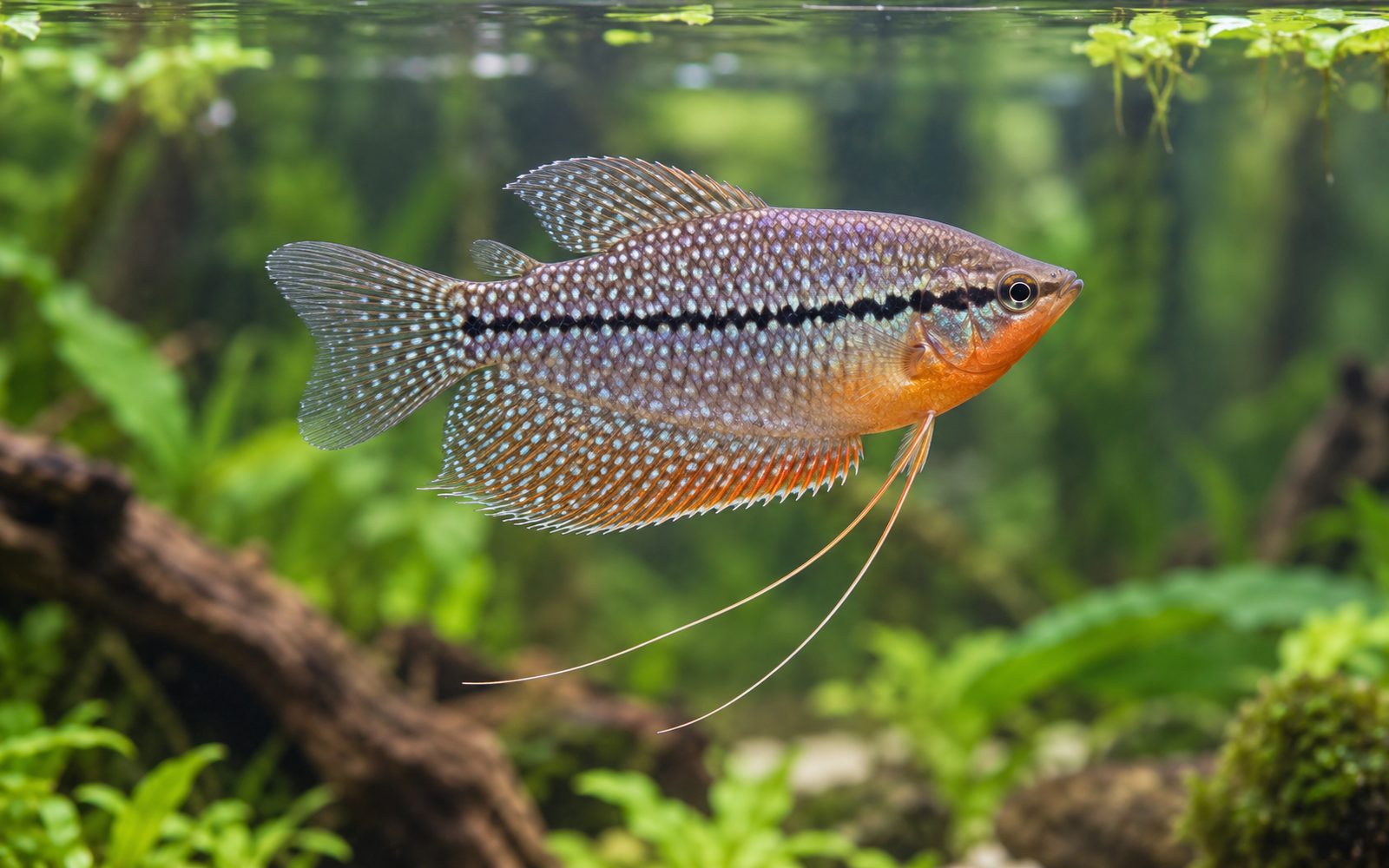
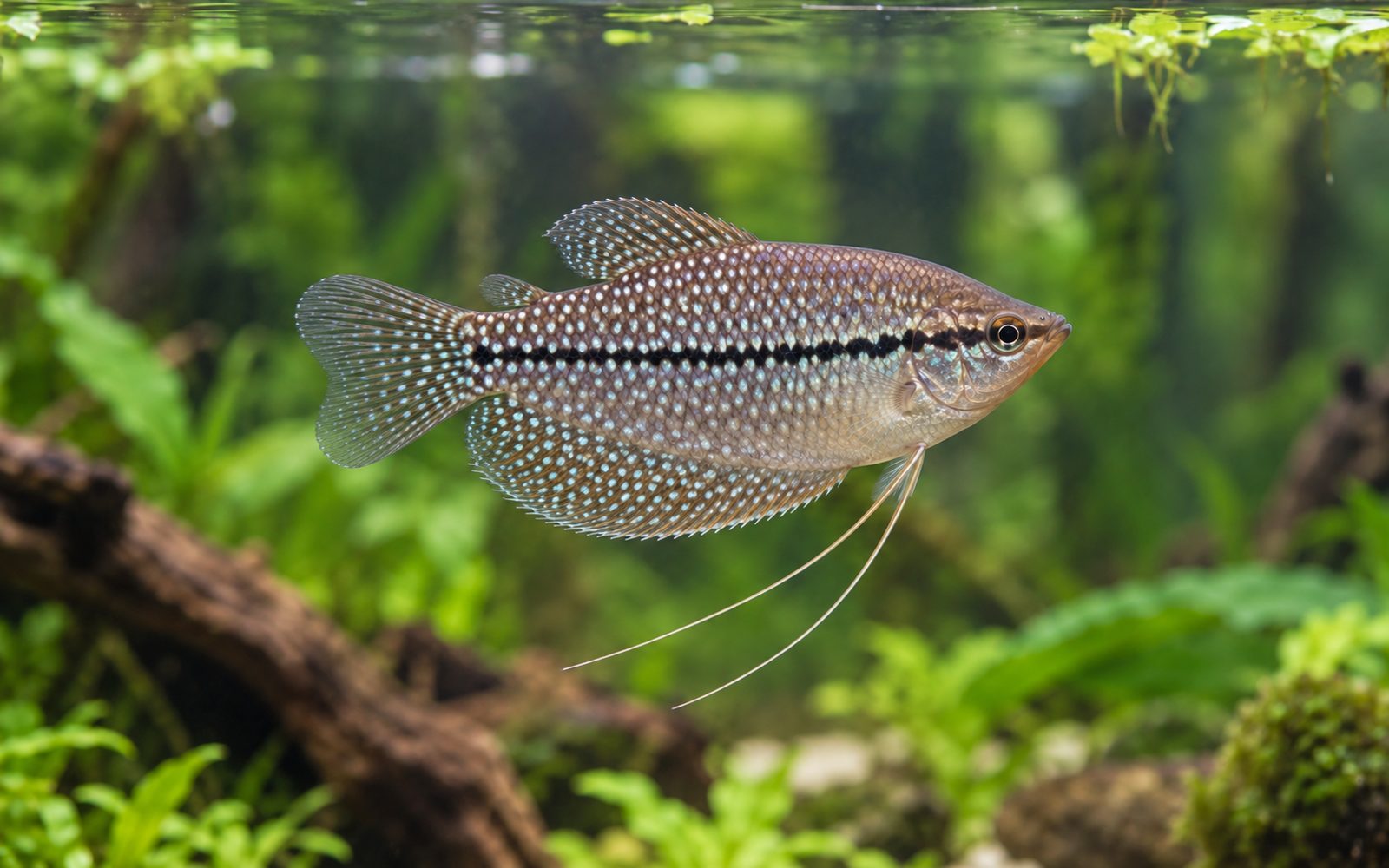
With pearl-like white spots covering its silvery-purple body and a thin black zigzag line running from snout to tail, the pearl gourami is one of the most elegant gouramis. It is noticeably more peaceful than the blue gourami, which makes it the most suitable large gourami for community aquariums.
Natural Habitat
It lives in the peat swamps and lowland waters of Southeast Asia, in planted, soft and acidic water.
Tank Setup
- Volume: at least 120 liters; with its long fins and 11–12 cm length it wants plenty of room.
- Surface: floating plants and a calm surface; warm air should remain between the lid and the water.
- Water: 25–27°C, soft to moderately hard. Dim light and a dark substrate bring out its colors.
Diet
Omnivorous. Flakes and granules, frozen brine shrimp, bloodworms and daphnia; foods containing spirulina. It feeds near the surface.
Behavior and Compatibility
Peaceful and somewhat shy. Males display to each other in the breeding season and short chases occur. It usually leaves adult shrimp alone but may eat their young.
Good companions: tetras, rasboras, corydoras, kuhli loach, otocinclus, angelfish, discus (temperatures match).
Avoid: fin nippers (tiger barb, black skirt tetra), aggressive cichlids, male blue gouramis.
Group and Colony Structure
1 male and 2 females is the most balanced setup; a single male also lives happily. In a large aquarium (200 liters or more), several males usually get along without trouble if the surface is divided by plants.
Breeding
The male builds a large bubble nest among floating plants at the surface. The female releases hundreds of eggs beneath the nest, and the male carries the eggs into the nest and guards them. The female is removed after spawning, and the male once the fry become free-swimming. The fry are fed infusoria.
Health and Common Problems
Hardy. In poor water, fin rot and bacterial infections can occur; sudden temperature drops trigger ich.
Sexing
Males have an orange-red throat and chest (very bright in the breeding season), a long, pointed dorsal fin and a fringed anal fin. Females have a silvery throat and a short, rounded dorsal fin.
Tank mates
This list is calculated automatically from the species profile and grows as new species are added to the catalog. Try it in the planner for a definite answer.
Usually compatible
 Flame Tetra
Glass Tetra
Flame Tetra
Glass Tetra
 Blackfin Corydoras
 Polystictus Corydoras
 Emerald Betta
 Emerald Cory
 Porthole Catfish
 Keyhole Cichlid
 Cupid Cichlid
 Geophagus altifrons
Should not be kept together






Hobbyist notes
Things you won't find in books, learned by trial and error. The most helpful ones are on top.
Change history and contributors
- Page created · October 16, 2026