
Water parameters
Overview
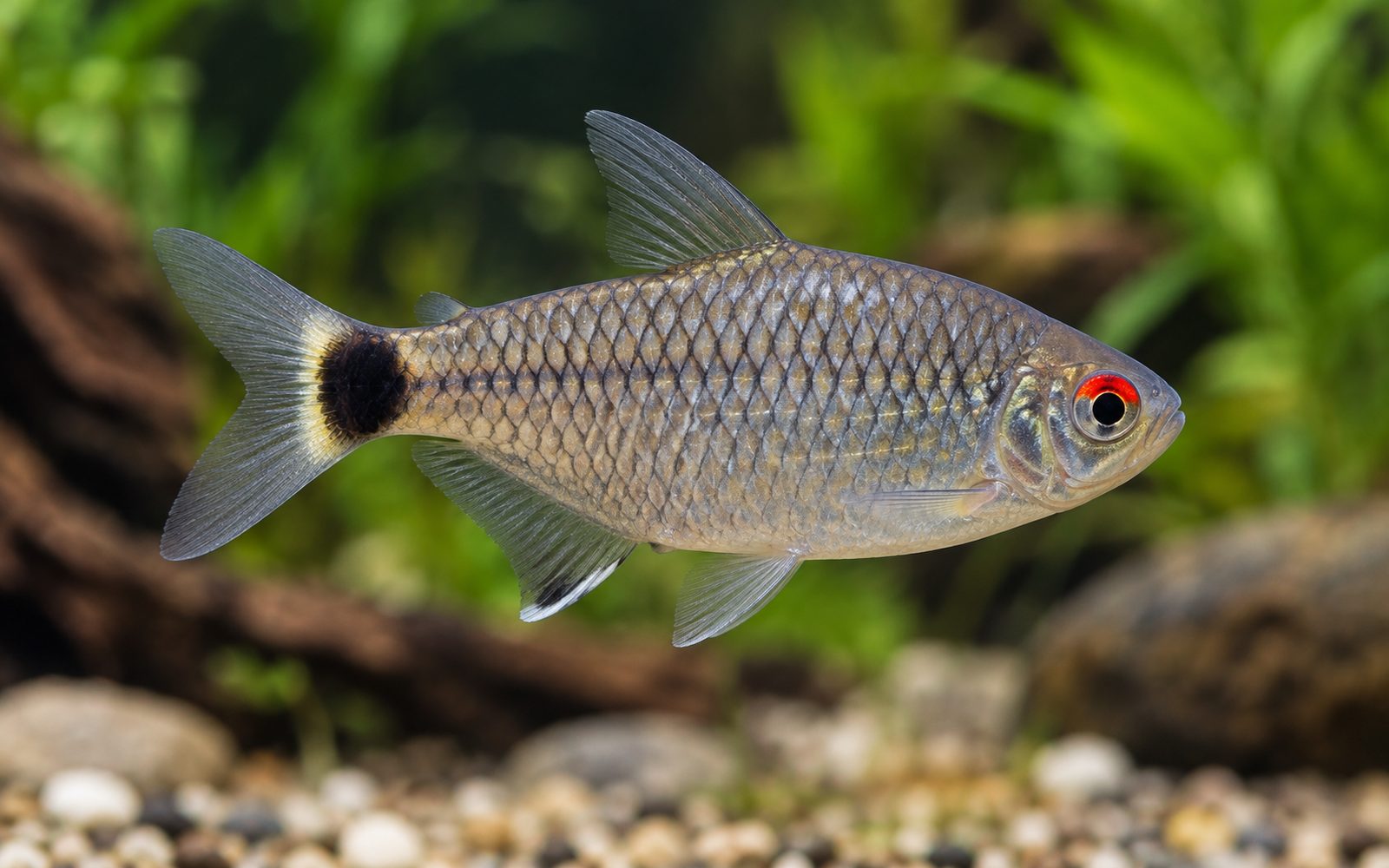
The red eye tetra is recognized by the bright red color on the upper half of its eye and the broad black band wrapping around the tail base; in front of this band is a whitish-yellow stripe. The body is silver, and the dark edges of its large scales create a net-like pattern. It is a sturdily built tetra that grows up to 7 cm.
It is very hardy and adapts to a wide range of water values. However, because of its active nature and the fin-nipping habit that appears in small groups, tankmates need to be chosen carefully.
Natural Habitat
It lives in slow-flowing tributaries and lakes of the Paraná-Paraguay and São Francisco river systems in Brazil, Paraguay and Bolivia. It is found in both clear and murky waters and has a wide distribution, which explains its tolerant nature in the aquarium.
Tank Setup
- Volume: at least 100 liters for a group of 6–10; a length of 80 cm or more.
- Water: 23–27°C, pH 6–7.5; it adapts to a wide range of hardness.
- Decor: planted edges and a large open swimming area.
- Plants: some individuals may pick at soft-leaved plants; food with plant ingredients reduces this behavior.
Diet
Omnivorous with a big appetite. Make flakes and granules the staple, vary it with frozen brine shrimp, bloodworms and mysis shrimp, and add spirulina foods to the menu as well.
Behavior and Compatibility
An active midwater swimmer. In a large group it usually behaves peacefully; when kept in small numbers or together with slow, long-finned species, it nips fins. It may eat shrimplets.
Good companions: tetras of similar size, barbs, danios, corydoras, plecos, peaceful medium-sized cichlids.
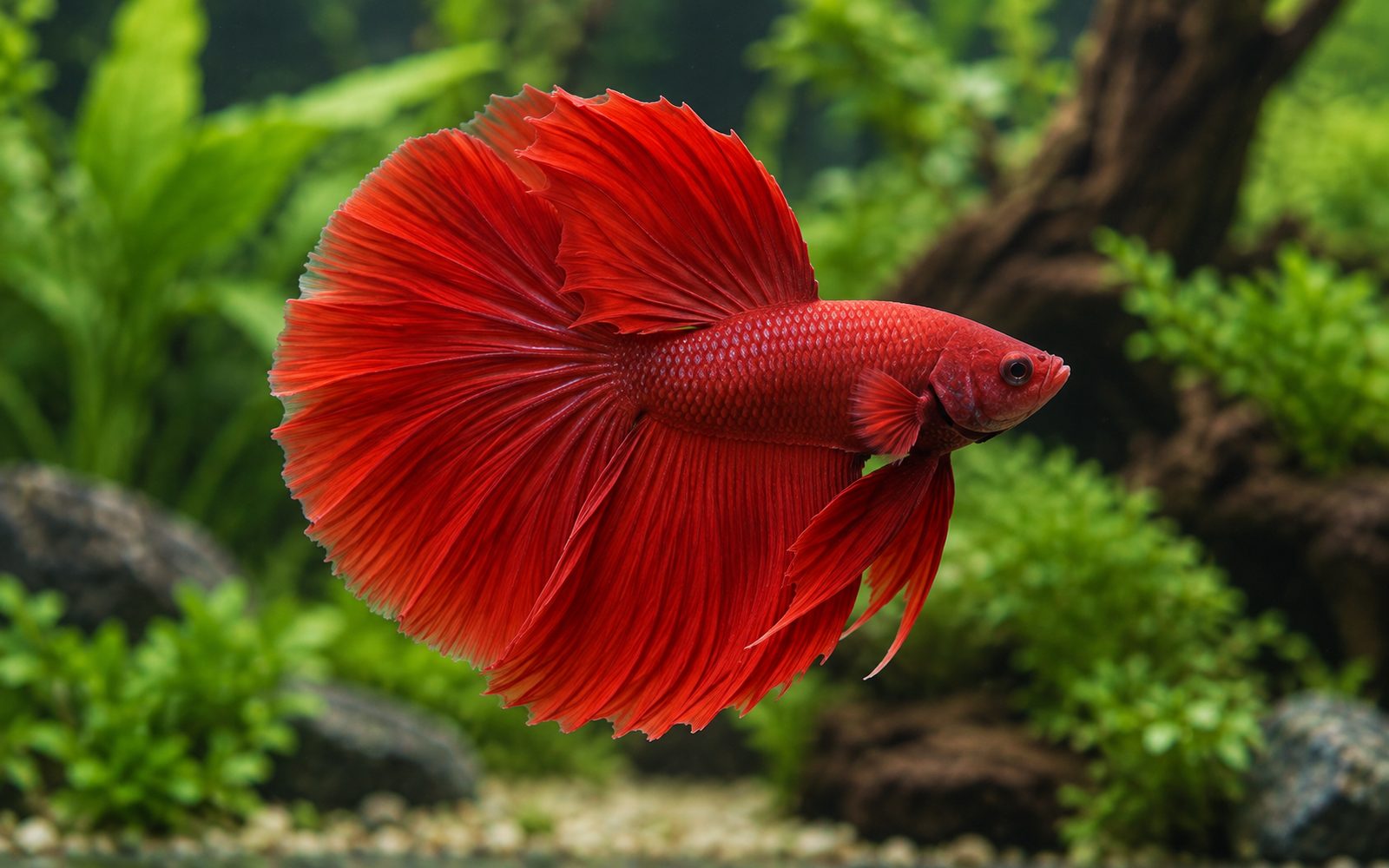
Avoid: bettas, angelfish, fancy guppies, dwarf gouramis and other slow, long-finned species; nano fish.
Group and Colony Structure
A group of at least 6, ideally 10 is recommended. In a large school the chasing stays within the group and harassment of other species decreases. The sex ratio does not matter. Building the school at the same time from fish of similar size shortens the fights over rank.
Breeding
It is an egg scatterer and quite prolific. In a separate tank it spawns over fine-leaved plants or a spawning mop; the parents should be removed right away. The fry become free-swimming within a few days and are fed infusoria and newly hatched brine shrimp.
Health and Common Problems
- Hardiness: it is very resistant to disease.
- White spot (ich): may appear after sudden temperature changes.
- Obesity: it has a big appetite; avoid overfeeding, and skipping food one day a week eases digestion.
Sexing
Females are larger with a plumper belly. Males are slimmer; the difference is best seen by comparing mature fish side by side.
Tank mates
This list is calculated automatically from the species profile and grows as new species are added to the catalog. Try it in the planner for a definite answer.
Usually compatible
 Yellow Regal Peacock
Glass Tetra
Yellow Regal Peacock
Glass Tetra
 Emerald Betta
 Emerald Cory
 Porthole Catfish
 Keyhole Cichlid
 Firemouth Cichlid
 Cupid Cichlid
 Buffalohead Cichlid
 Geophagus altifrons
Should not be kept together






Hobbyist notes
Things you won't find in books, learned by trial and error. The most helpful ones are on top.
Change history and contributors
- Page created · October 16, 2026