
Water parameters
Overview
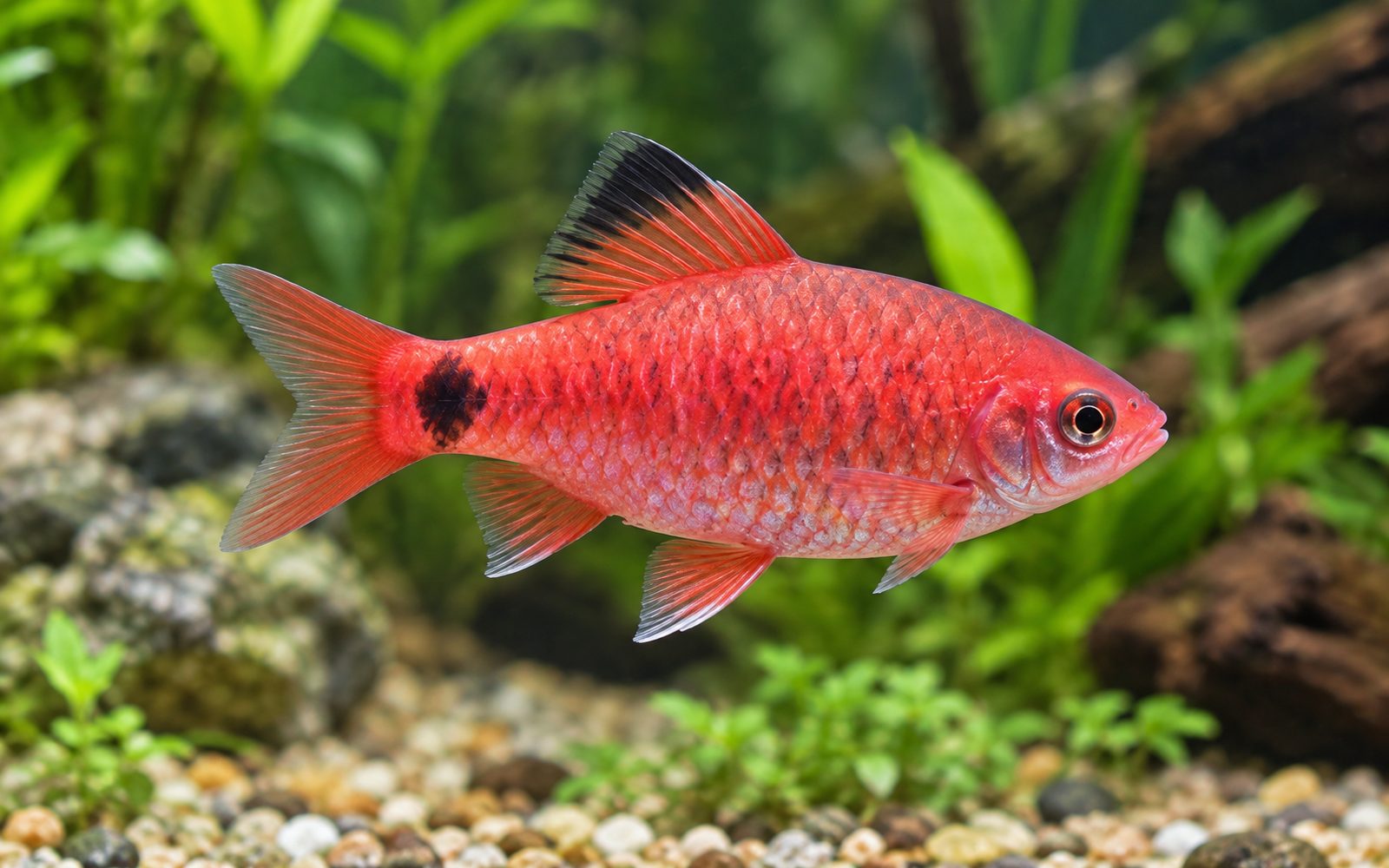
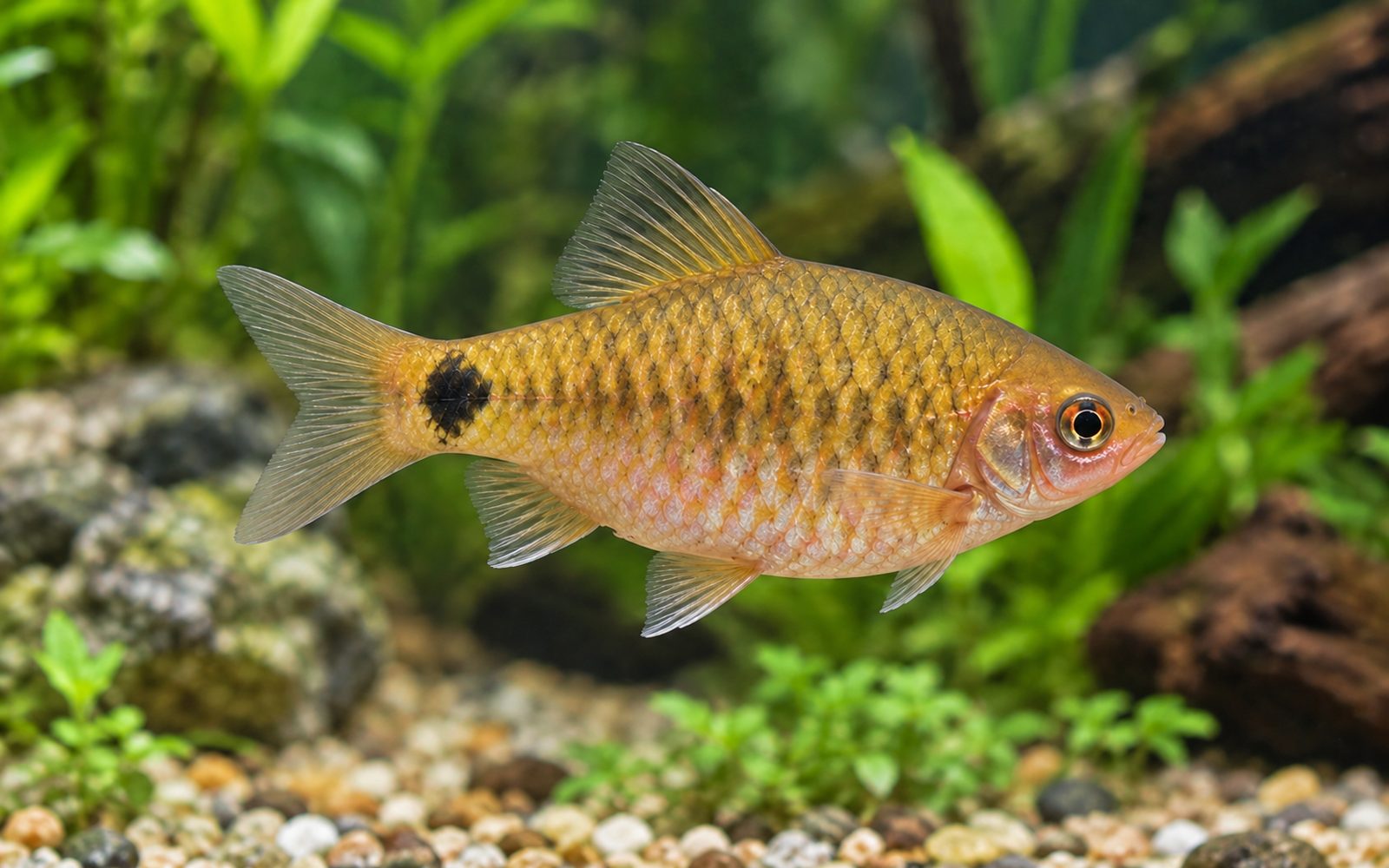
The rosy barb is one of the oldest known aquarium barbs. Males take on a bright pink–red color along the body, especially during the breeding season; there is a black spot on the caudal peduncle and a black tip on the dorsal fin. Females are golden–olive. A long-finned ("long fin") form is also common.
Being a subtropical species, it likes cool water; it is suitable for unheated room aquariums and for garden ponds in summer.
Natural Habitat
It lives in rivers, lakes and ponds of the Indian subcontinent, at temperatures that vary with the seasons; in winter the water can drop to 15°C.
Tank Setup
- Volume: at least 120 liters and 100 cm of length for a school of 6–8; it is an active fish that can reach 10–14 cm.
- Water: 18–24°C is ideal; constant temperatures above 26°C shorten its lifespan.
- Setting: planted edges and a wide swimming area. It may nibble soft-leaved plants; tough-leaved plants hold up better.
Diet
Omnivorous with a big appetite. Flakes and granules, spirulina, vegetables, frozen and live foods. Plant matter is important.
Behavior and Compatibility
Active and playful. It is peaceful in a large school; when kept in small numbers it may nip the fins of slow, long-finned fish.
Good companions: zebra danio, other barbs, goldfish (they like the same cool water; but mind the size difference), corydoras, swordtails.
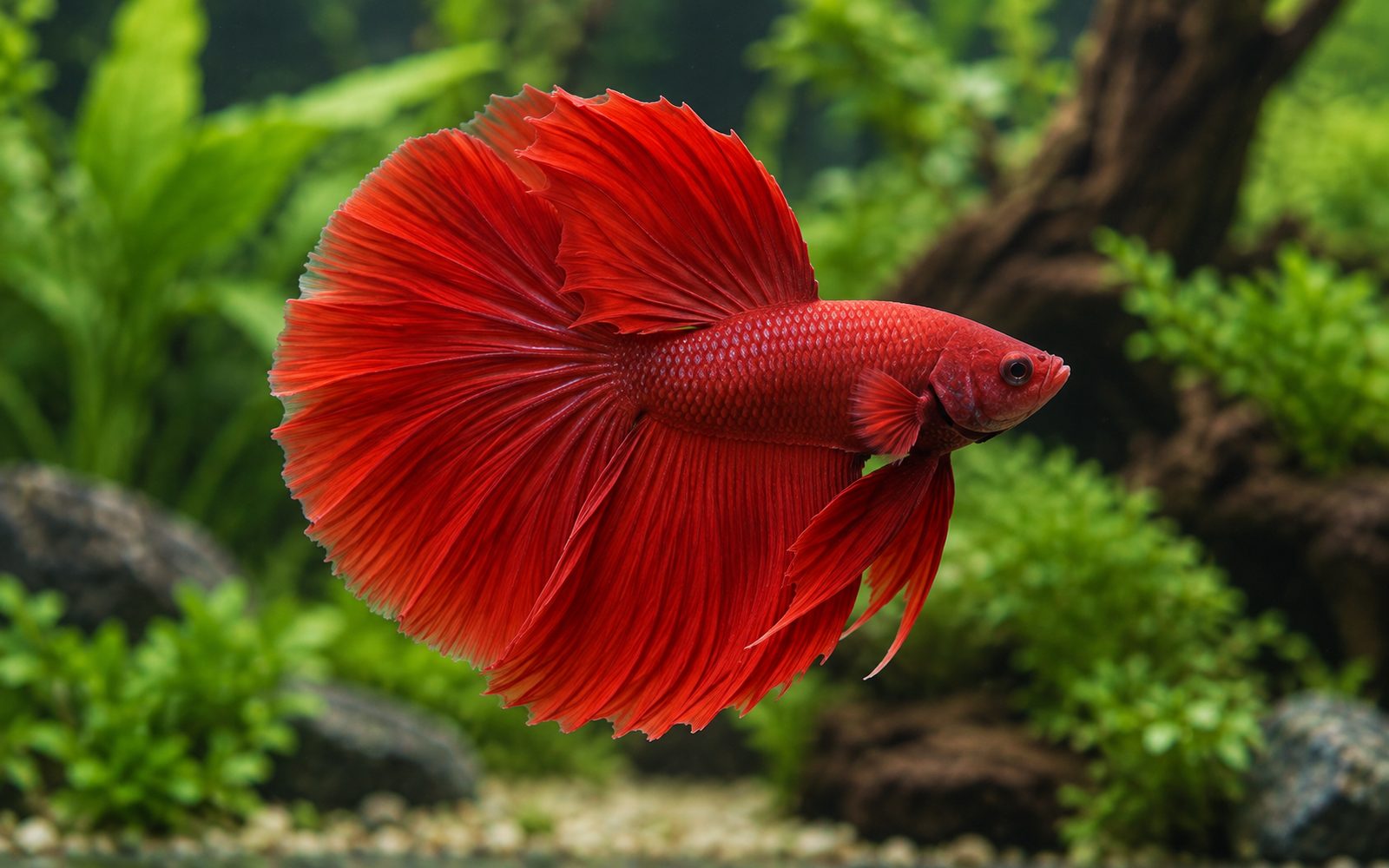
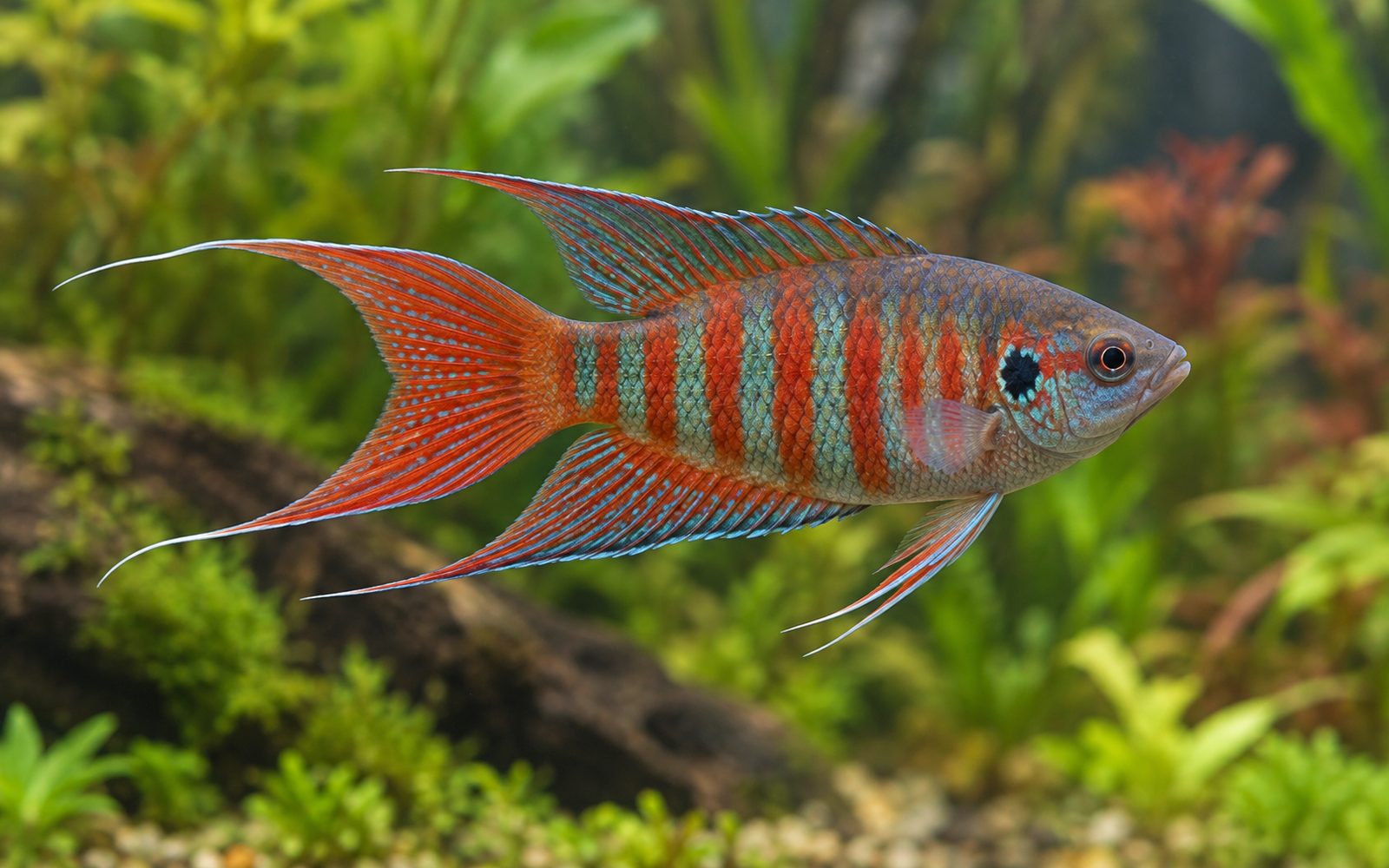
Avoid: long-finned fish such as bettas, guppies, dwarf gouramis and angelfish; very small fish.
Group and Colony Structure
At least 6, ideally 8 or more individuals; a female-heavy group (2 females per male) is recommended. Males chase the females and show off their colors to each other; in a large group this behavior stays within the school.
Breeding
Breeds easily. In spring, when the temperature rises a little, males turn deep red and chase the females; the eggs are scattered among plants. The parents eat the eggs; a separate tank or dense moss is needed. The eggs hatch in 1–2 days.
Health and Common Problems
Hardy. Constantly high temperatures and poor water lead to white spot and bacterial infections.
Sexing
Males are bright pink–red and slimmer, with a black-tipped dorsal fin. Females are golden–olive, plumper and paler; their fins are colorless.
Tank mates
This list is calculated automatically from the species profile and grows as new species are added to the catalog. Try it in the planner for a definite answer.
Usually compatible
 Keyhole Cichlid
 Firemouth Cichlid
 Rainbow Cichlid
 Gymnogeophagus balzanii
 Pearl Cichlid
 Red Hump Eartheater
 Cryptocoryne Parva
 Egyptian Mouthbrooder
 Weeping Moss
Should not be kept together




Hobbyist notes
Things you won't find in books, learned by trial and error. The most helpful ones are on top.
Change history and contributors
- Page created · October 16, 2026