
Water parameters
Overview
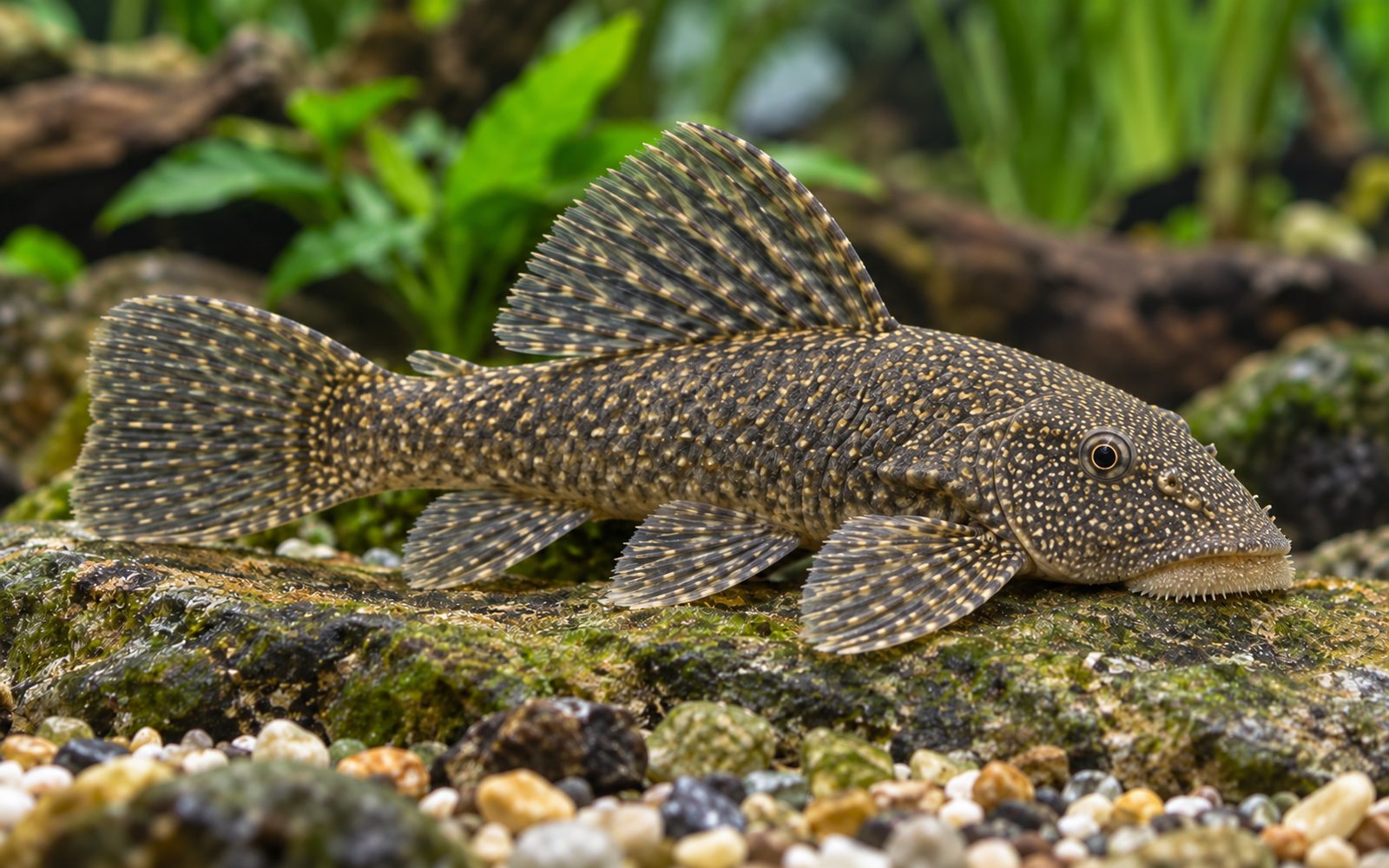
The rubber lip pleco is easily told apart from other plecos by its large, round sucker mouth. Its head is broad and flat; because of this look it is also called the "bulldog pleco". In the trade it is sometimes sold simply as Chaetostoma sp.
In the aquarium it stays at 10–12 cm, feeds well on algae and does not harm plants. Unlike most tropical plecos, however, it needs cool, flowing and very oxygen-rich water. It does not stay healthy for long in warm aquariums above 26°C.
Natural Habitat
It lives in fast-flowing, rocky and gravelly streams in the foothills of the Andes in Colombia and Venezuela. The water is cool, clear and very rich in oxygen; the layer of algae on the rocks gets plenty of light.
Tank Setup
- Volume: 100 liters for one fish; a long tank should be preferred.
- Flow: a strong filter and a powerhead; a river tank layout is ideal.
- Decor: flat stones, gravel, roots; allow algae to grow on stones that receive light.
- Water: 21–24°C; in hot summer months cooling or a fan may be needed.
Diet
Herbivorous. It grazes the algae and biofilm on stones and glass. Spirulina tablets, blanched zucchini, spinach and cucumber should be given regularly. A small amount of frozen food (brine shrimp, bloodworms) can be added now and then. The natural layer of algae that forms on stones receiving light is its most valuable food, so do not scrub the stones at every water change.
Behavior and Compatibility
Peaceful toward other species. It can be territorial toward its own kind and other plecos that share a similar habitat; it especially claims its favorite stone.
Good companions: Fish that like cool, flowing water: zebra danios, White Cloud Mountain minnows, hillstream loach species, coolwater barbs.
Avoid: Discus and species that need warm water, still-water fish, other territorial bottom dwellers (in limited space).
Group and Colony Structure
It can be kept singly. In a large aquarium, several fish live together if each has its own stone and hiding place. Serious fights among them are rare, but in limited space the largest fish claims the best stone and feeding spot.
Breeding
In the wild it is thought to breed under stones or in rock crevices. Breeding in the aquarium has rarely been reported.
Health and Common Problems
The most common problems are high temperature and low oxygen; faster breathing is the first warning sign. Fish kept in warm water weaken and become prone to disease. Sensitive to copper.
Sexing
Hard to tell apart externally. In mature males the first ray of the pectoral fin may be thicker; females are plumper when viewed from above.
Tank mates
This list is calculated automatically from the species profile and grows as new species are added to the catalog. Try it in the planner for a definite answer.
Usually compatible
 Flame Tetra
Glass Tetra
Flame Tetra
Glass Tetra
 Blackfin Corydoras
 Polystictus Corydoras
 Emerald Cory
 Emerald Dwarf Rasbora
 Porthole Catfish
 Keyhole Cichlid
 Rainbow Cichlid
 Cryptocoryne Parva
Should not be kept together






Hobbyist notes
Things you won't find in books, learned by trial and error. The most helpful ones are on top.
Change history and contributors
- Page created · October 16, 2026