
Water parameters
Overview
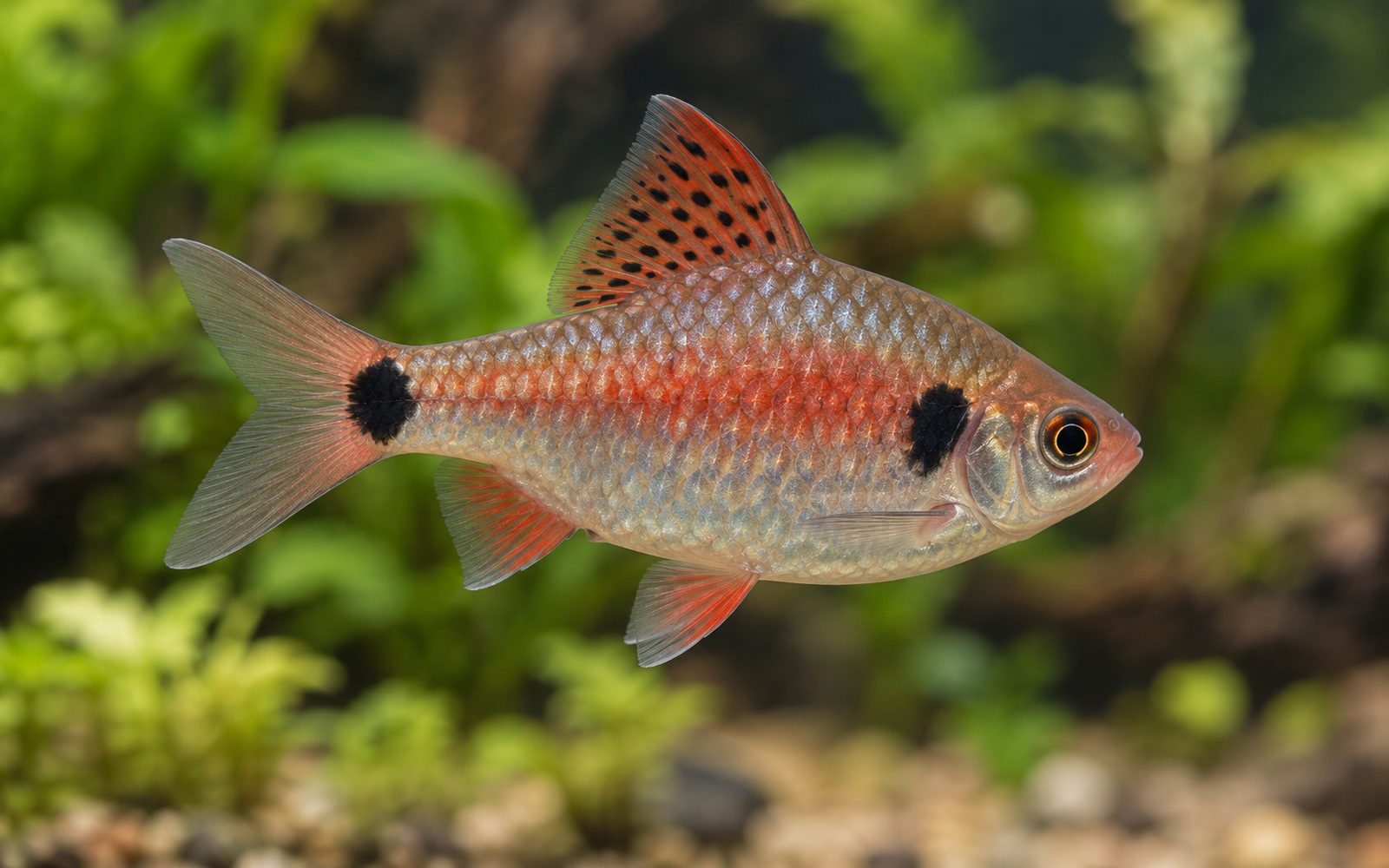
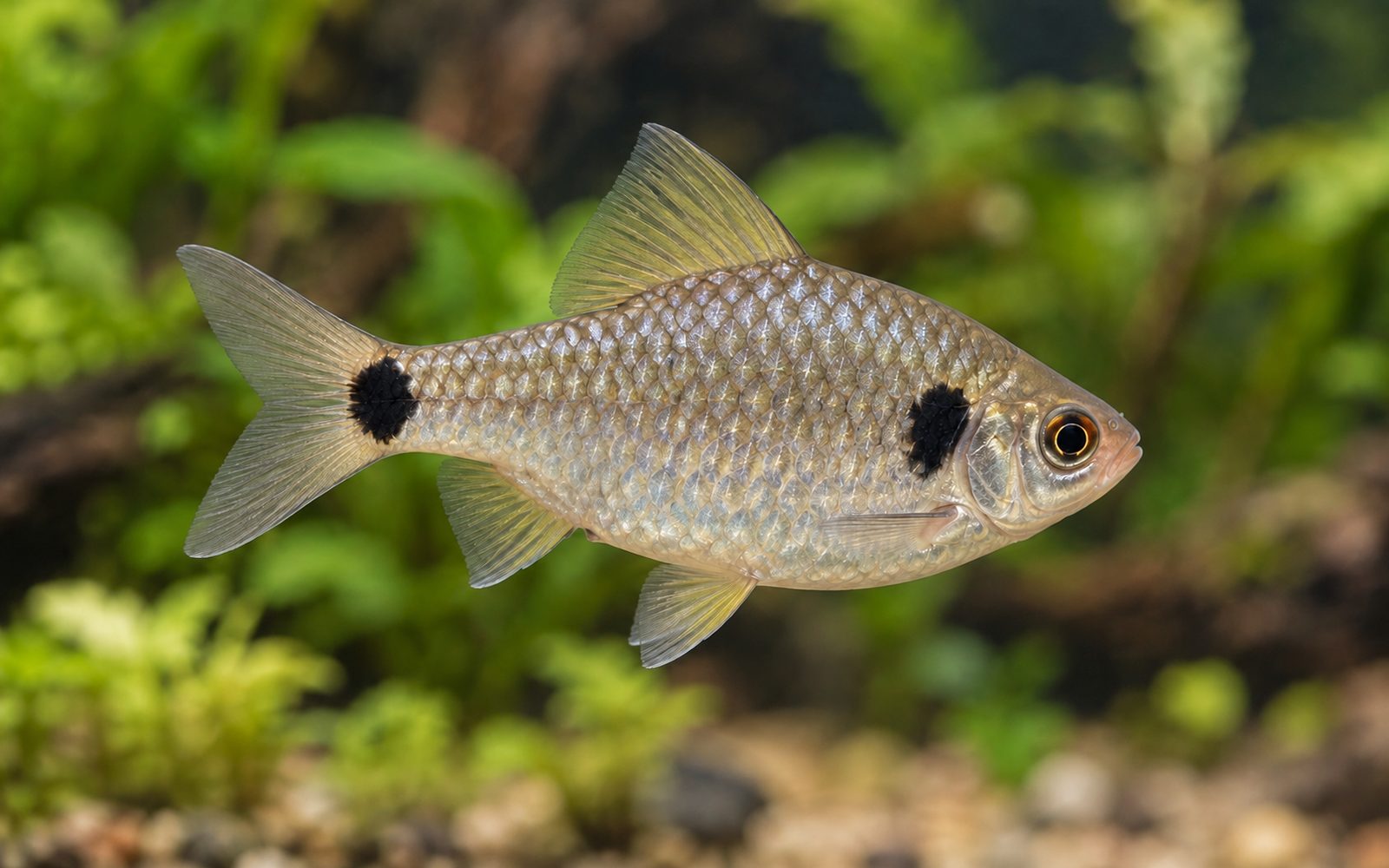
The ticto barb is a hardy barb with a wide range across the Indian subcontinent. The two black spots on its silver body (one just behind the gill cover, one on the caudal peduncle) are its most distinctive feature. During the breeding season males take on a reddish color, and their dorsal fins are red with black spots.
For many years the Odessa barb was thought to be a form of this species; today it is recognized as a separate species. Because it tolerates cool water, it can also be kept in unheated tanks.
Natural Habitat
It lives in streams, ponds, lakes and irrigation canals in the lowland and hilly regions of India, Pakistan, Nepal and Bangladesh. These waters warm and cool with the seasons; the species is used to a wide range of temperature and hardness.
Tank Setup
- Volume: at least 100 liters and 80–100 cm in length for a group of 6–10.
- Water: comfortable at 18–24°C; no heater is needed if the room temperature does not drop below 18°C. Neutral to slightly alkaline, moderately hard water is suitable.
- Decor: plants along the edges, plenty of swimming space in the middle; sand or fine gravel substrate.
- Maintenance: a 25–30% weekly water change; well-oxygenated water.
Diet
Omnivorous with a good appetite. Flakes and granules, spirulina food and vegetables; frozen bloodworms, brine shrimp and daphnia. A varied diet brings out the males' breeding color.
Behavior and Compatibility
Active and playful. There are chases within the group; in a small group or when bored, it may nip the fins of slow, long-finned fish.
Good companions: rosy barbs, gold barbs, zebra danios, white cloud mountain minnows, platies, swordtails, bristlenose plecos, corydoras species that tolerate cool water.
Avoid: long-finned, slow species such as bettas, guppies, angelfish and fancy goldfish.
Group and Colony Structure
Keep at least 6, ideally 10 or more. In a large group, fin-nipping stays within its own kind. A female-heavy group (1 male : 2 females) keeps the females from being worn out.
Breeding
Breeds easily. It scatters its eggs over fine-leaved plants or a spawning mop; the parents eat the eggs. Separate the adults after spawning. The eggs hatch in 1–2 days.
Health and Common Problems
Hardy. Sudden temperature changes can trigger white spot; fin rot may occur in poor water. In an unheated tank, keep the day-night temperature difference small; a slow change of a few degrees is not a problem, but cold tap water should not be added directly during water changes. Quarantine new arrivals.
Sexing
Males have a red dorsal fin with black spots; in the breeding season a reddish color appears along the body. Females are plumper and plain silver, with clear or pale yellow dorsal fins.
Tank mates
This list is calculated automatically from the species profile and grows as new species are added to the catalog. Try it in the planner for a definite answer.
Usually compatible
 Emerald Cory
 Porthole Catfish
 Keyhole Cichlid
 Firemouth Cichlid
 Rainbow Cichlid
 Gymnogeophagus balzanii
 Red Hump Eartheater
 Cryptocoryne Parva
 Egyptian Mouthbrooder
Should not be kept together




Hobbyist notes
Things you won't find in books, learned by trial and error. The most helpful ones are on top.
Change history and contributors
- Page created · October 16, 2026