
Water parameters
Overview
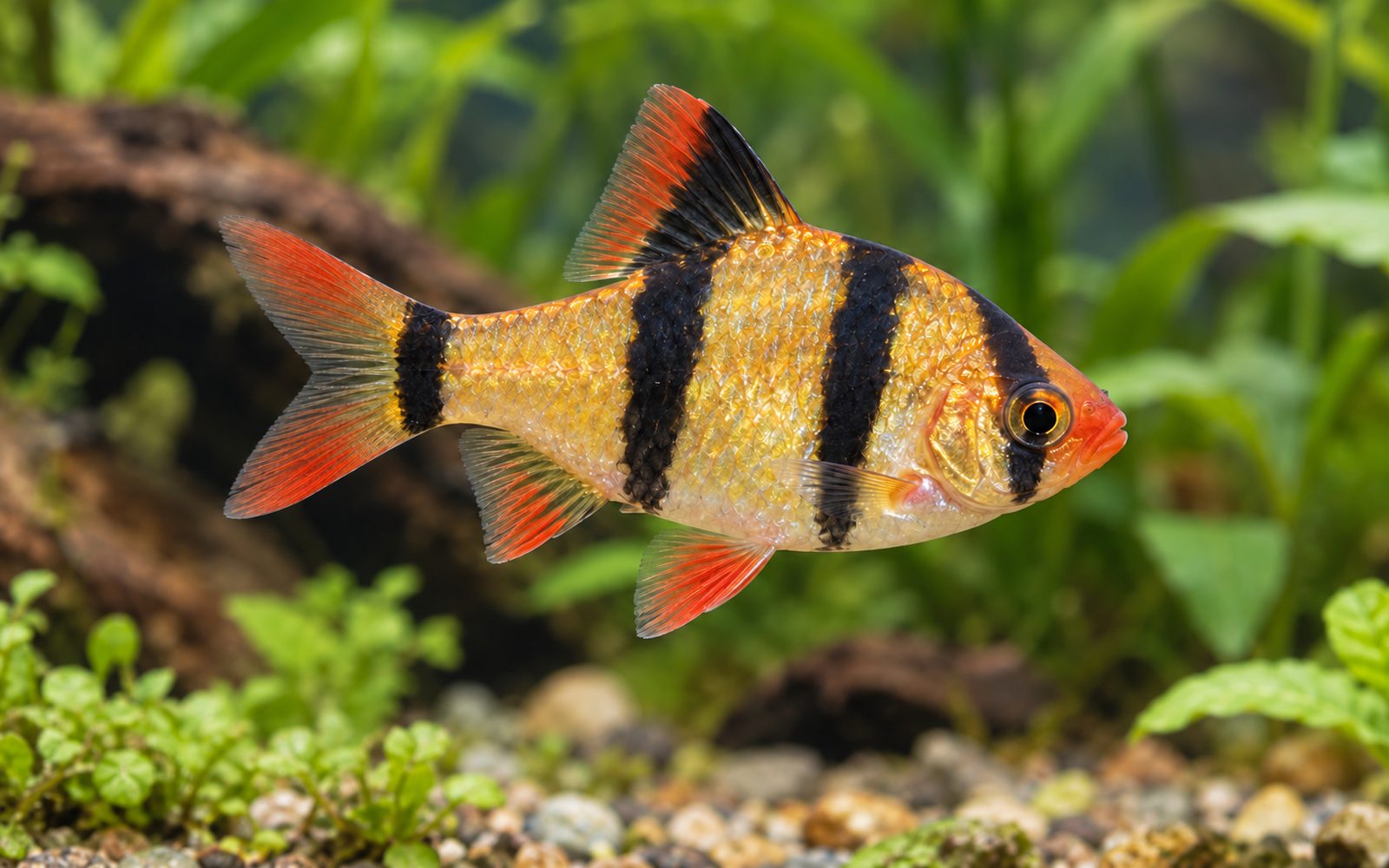
The tiger barb is one of the best-known barbs, with four black vertical bands on its golden-orange body and red-tipped fins. There are also forms such as "green" (mossy), albino and "GloFish". It is hardy, has a big appetite and is constantly on the move.
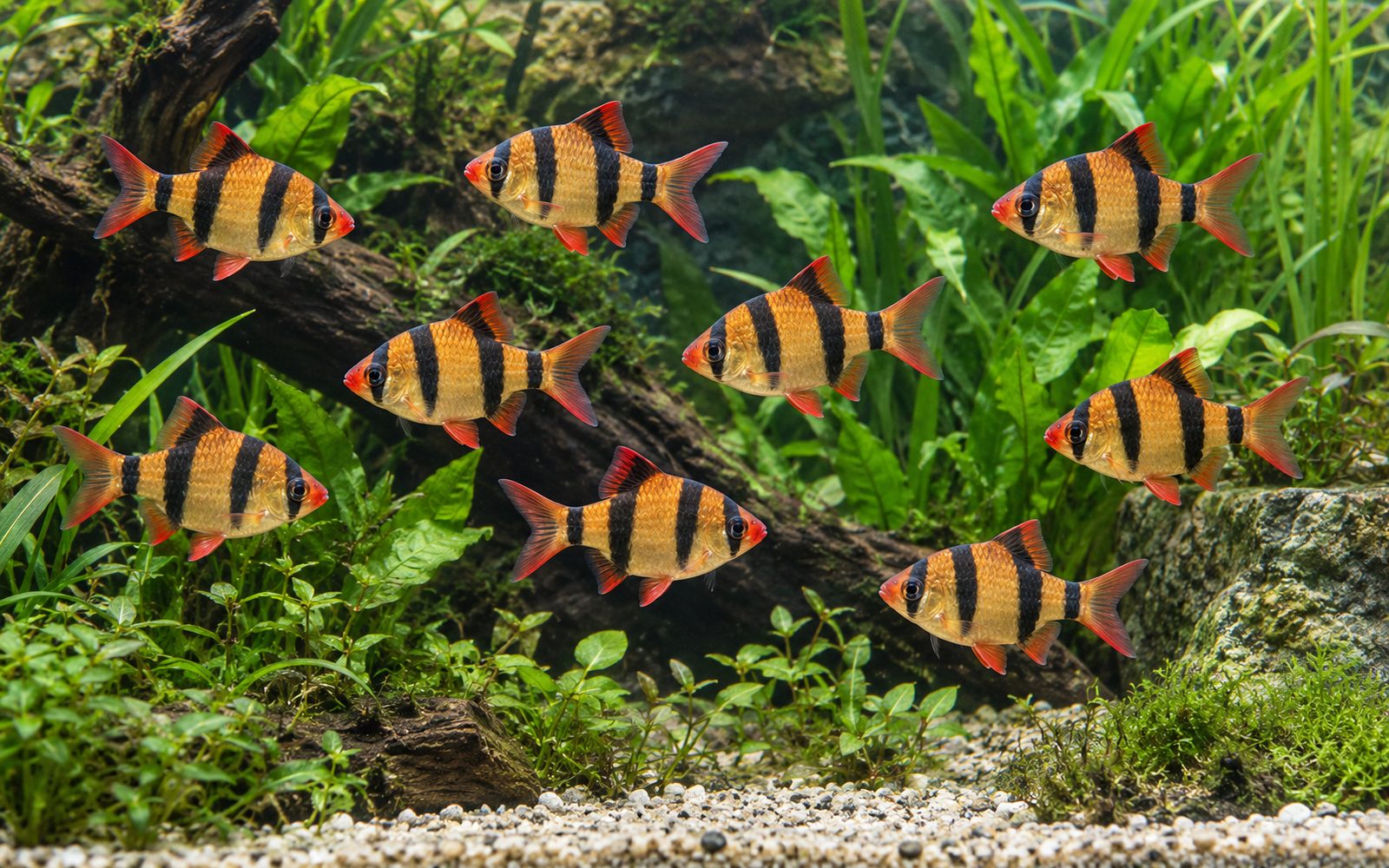
Its famous habit is fin-nipping. This habit appears mostly when the school is kept small: barbs kept in groups of 8–10 or more spend their energy chasing each other.
Natural Habitat
It lives in clear or slightly tannin-stained, oxygen-rich streams with moderate flow on Sumatra and Borneo. The bottom is sandy or gravelly and the banks are planted.
Tank Setup
- Volume: at least 80 liters and 80 cm in length for a school of 8–10.
- Water: 22–25°C, a wide pH range. It likes oxygenated water and moderate flow.
- Decor: dense planting along the edges, plenty of swimming space in the middle.
Diet
Omnivorous with a very big appetite. Flakes and granules, spirulina food, vegetables, frozen and live foods. It never seems full; avoid overfeeding.
Behavior and Compatibility
Playful and hierarchical with its own kind. In a large school it pays less attention to other fish; when kept in small numbers or when bored, it nips the fins of slow, long-finned fish.
Good companions: fast, short-finned fish: zebra danios, other barbs, platies, swordtails, corydoras, bristlenose plecos.
Avoid: long-finned and slow species — guppies, bettas, angelfish, dwarf gouramis, long-finned goldfish. These are the pairings most often reported as problems in community reports.
Group and Colony Structure
In the tiger barb, group size directly shapes behavior: at least 8, ideally 10–12 or more individuals. In a large school, barbs set up a hierarchy among themselves and play chase; the fin-nipping habit stays largely within the school. Small groups of 3–5, on the other hand, get bored and turn on other fish.
The sex ratio does not matter; a mixed group shows the most natural behavior.
Breeding
Breeds easily. It scatters its eggs over fine-leaved plants or a spawning mop and immediately starts eating them; the adults should be removed after spawning. The eggs hatch in 1–2 days.
Health and Common Problems
Hardy. White spot and tail rot in poor water may occur. Painted/dyed specimens may be sold in stores; dyed fish live shorter lives and should be avoided (GloFish are a genetic form, not dyed).
Sexing
Males are smaller, slimmer and more brightly colored; in the breeding season their snouts and fin edges turn distinctly red. Females are larger and plumper.
Tank mates
This list is calculated automatically from the species profile and grows as new species are added to the catalog. Try it in the planner for a definite answer.
Usually compatible
 Yellow Regal Peacock
Glass Tetra
Yellow Regal Peacock
Glass Tetra
 Emerald Betta
 Emerald Cory
 Porthole Catfish
 Keyhole Cichlid
 Buffalohead Cichlid
 Geophagus surinamensis
 Rainbow Cichlid
 Gymnogeophagus balzanii
Should not be kept together






Hobbyist notes
Things you won't find in books, learned by trial and error. The most helpful ones are on top.
Change history and contributors
- Page created · October 16, 2026