
Water parameters
Overview
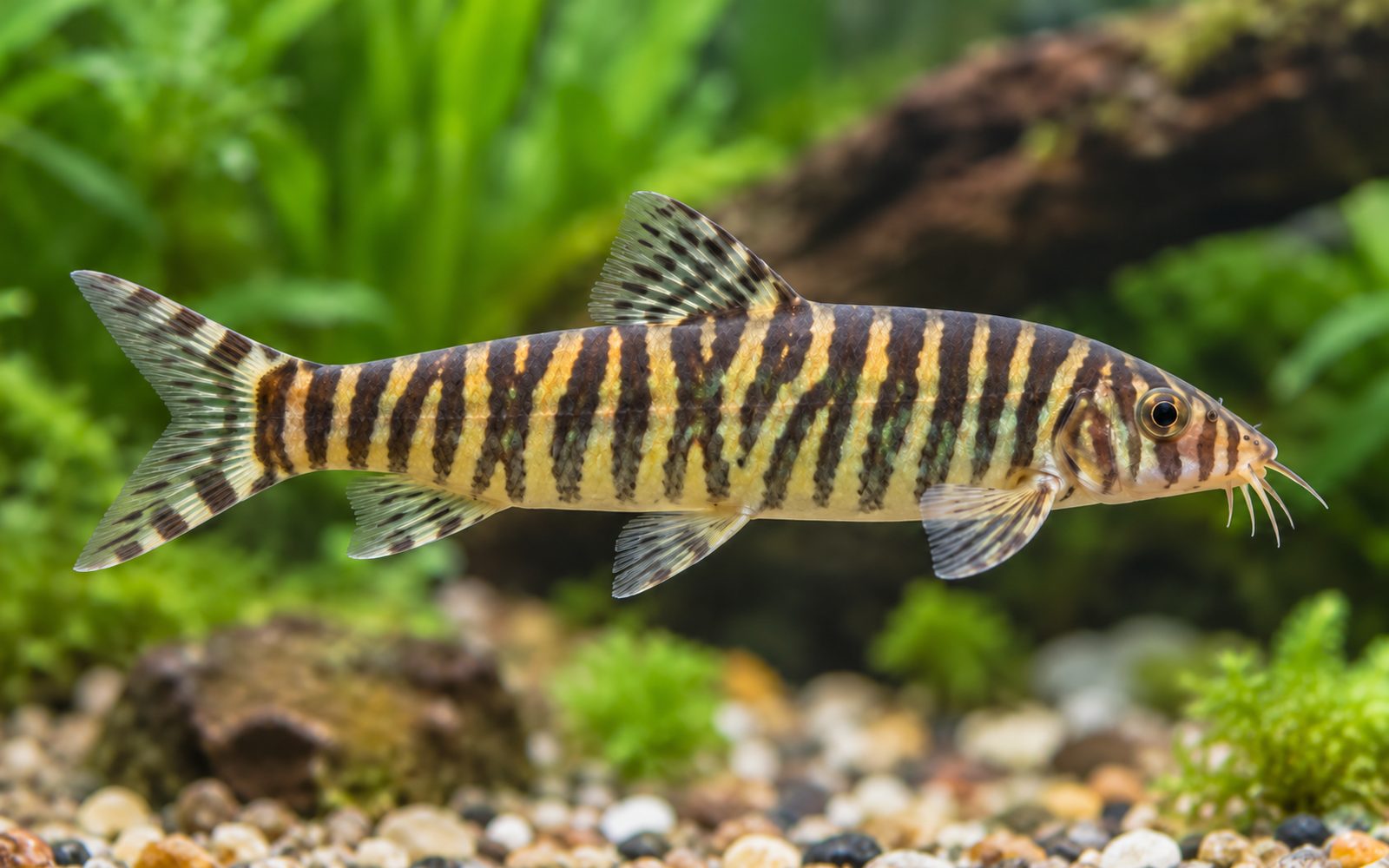
With thin dark and light lines covering its body from end to end, the zebra loach is one of the easiest botias to recognize. Adults reach 8–9 cm; this is why it can be kept as a group even in medium-sized aquariums that are not big enough for clown loaches or blue botias.
It is a calm botia but playful within its group. In an aquarium where it feels at ease it is seen during the day too, constantly combing the bottom with its barbels.
Natural Habitat
It lives in southern India in rivers descending from the Western Ghats mountains, especially in tributaries of the Krishna basin. These waters are clear, well oxygenated and flowing; the bottom consists of sand, gravel and large stones. Its natural range is narrow.
Tank Setup
- Volume: at least 110 liters and 100–120 cm of length for a group of 5–6.
- Water: 21–26°C, pH 6–7.5, soft to moderately hard. A 25–30% water change every week.
- Flow: Gentle to moderate flow and good aeration.
- Substrate: Fine sand or rounded gravel.
- Decor: Piles of stones, roots and caves; a few narrow shelters serve as resting places.
- Lid: A tight lid is needed.
Diet
An omnivore leaning toward meaty foods. Offer small sinking granules and tablets, frozen bloodworms, brine shrimp and daphnia. It also nibbles blanched vegetables. It hunts small snails; it helps keep snail numbers low in a planted aquarium. Giving part of the food in the evening ensures that the group, which is more active at night, gets its share.
Behavior and Compatibility
Peaceful and compatible. It can startle very small fish with its activity and may nip the fins of slow, long-finned fish. There is chasing and rank fighting within the group, but it is harmless.
Good companions: rasboras, danios, medium-sized tetras, small barbs, small botias such as the dwarf chain loach.
Avoid: snails, shrimp, slow fish such as bettas and long-finned guppies, cichlids that claim the bottom.
Group and Colony Structure
The zebra loach needs a group of at least 5–6 individuals; 8–10 is ideal. As the group grows the fish become bolder and their natural play behavior emerges. The most dominant member of the group is usually the largest, and this is often a female. A zebra loach kept alone hides and loses color.
Breeding
Reliable records of it being bred in the aquarium are almost nonexistent. Most of the fish sold come from the wild or from farms that breed with hormones.
Health and Common Problems
- White spot: Common in botias; new fish should be quarantined.
- Medication sensitivity: It has small scales; start medications at half the dose.
- Water quality: It is sensitive to nitrate buildup and low oxygen; regular water changes are essential.
Sexing
Mature females look plumper and full of eggs; males are slimmer. Beyond that there is no obvious external difference.
Tank mates
This list is calculated automatically from the species profile and grows as new species are added to the catalog. Try it in the planner for a definite answer.
Usually compatible
 Flame Tetra
 Blackfin Corydoras
 Polystictus Corydoras
 Emerald Betta
 Emerald Cory
 Emerald Dwarf Rasbora
 Porthole Catfish
 Keyhole Cichlid
 Geophagus surinamensis
 Cryptocoryne Parva
Should not be kept together







Hobbyist notes
Things you won't find in books, learned by trial and error. The most helpful ones are on top.
Change history and contributors
- Page created · October 16, 2026