
Water parameters
Overview
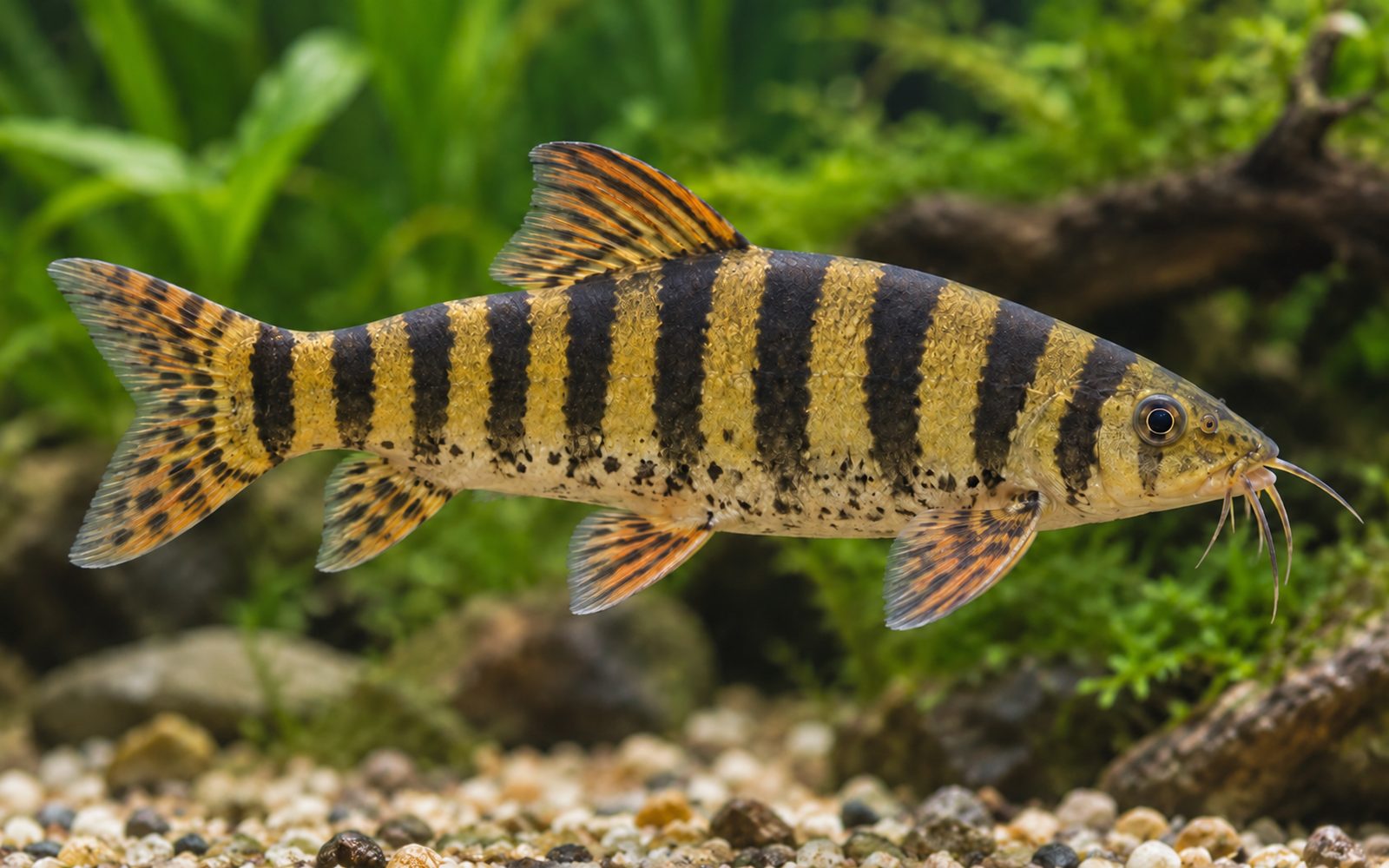
The banded tiger loach truly resembles a tiger, with 10–12 broad dark bands on its greenish-yellow or golden body. It is sold in stores as cute 5–6 cm juveniles, but it grows into a deep-bodied, powerful fish that reaches 25 cm, and up to 30 cm in large aquariums.
It differs from the similar-looking green tiger loach (Syncrossus hymenophysa) by the small irregular dark marks on the belly, bands without a bluish edge and the absence of a dark blotch on the dorsal fin.
Natural Habitat
It lives in the Mekong basin and in Thailand's Chao Phraya and Mae Klong rivers. It is found in the main channels and tributaries of large rivers; in the rainy season it migrates into flooded areas.
Tank Setup
- Volume: at least 400 liters and 180 cm of length for an adult group. This species is a big commitment for a home aquarium.
- Water: 25–30°C, pH 6–7.5. Very clean, well-oxygenated water; a 30–40% water change every week.
- Flow: Strong filtration and moderate to strong current.
- Decor: Large roots, heavy stones and plenty of caves. Decor must be secure; powerful fish dislodge light pieces.
- Lid: A tight, heavy lid is essential.
Diet
An omnivore leaning toward meaty foods, with a very big appetite. Offer large sinking granules and tablets, frozen bloodworms, mysis, shrimp meat, mussel and blanched vegetables. It hunts snails and shrimp.
Behavior and Compatibility
Noisy, assertive and aggressive. They frequently fight among themselves over rank; this is more pronounced in newly formed groups. It frightens very small fish and nips slow and long-finned species.
Good companions: clown loaches, blue botias, large barbs (such as the tinfoil barb), large devarios, big and robust tetras.
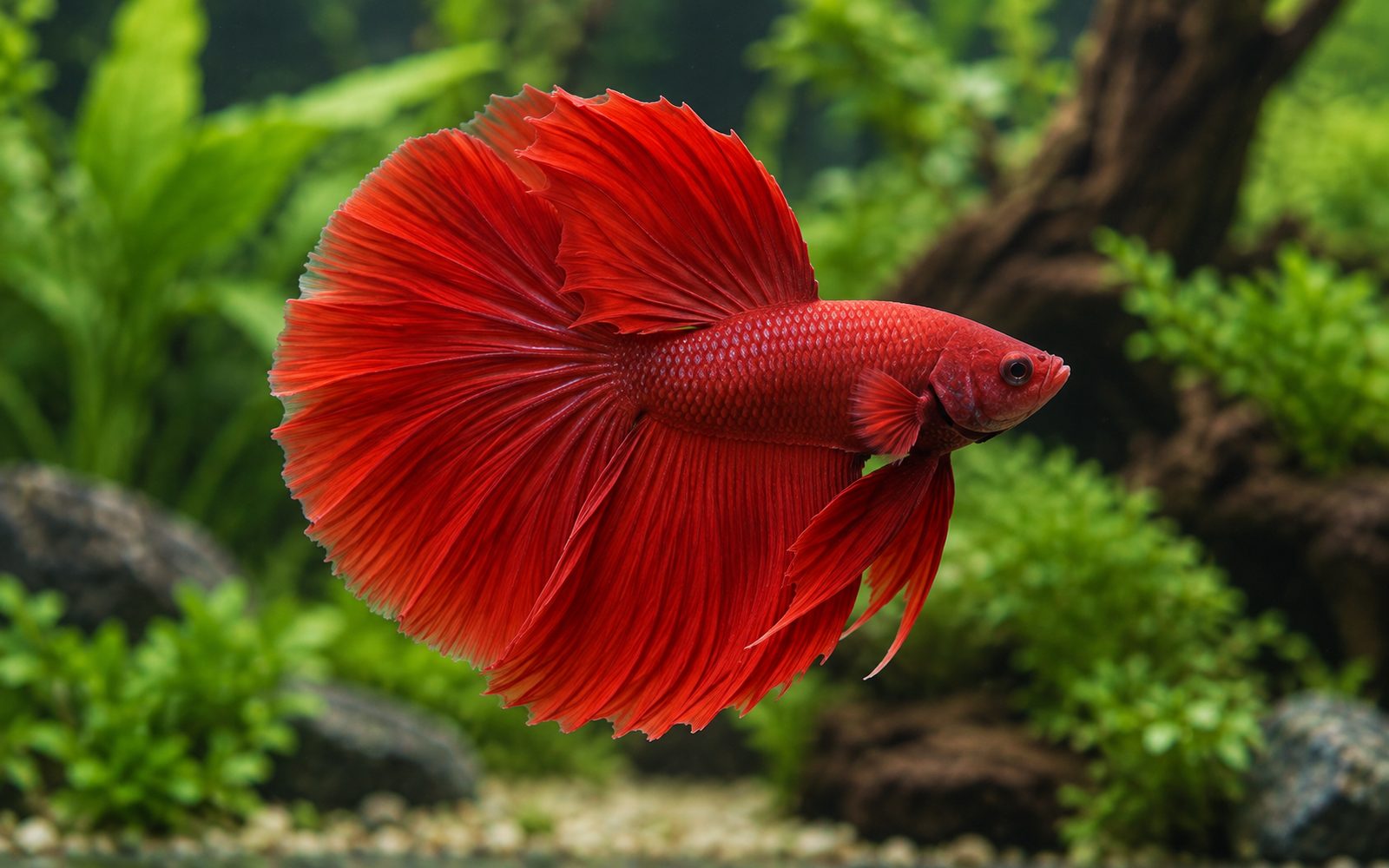
Avoid: snails, shrimp, small and timid species, slow or long-finned fish such as angelfish, discus and bettas.
Group and Colony Structure
At least 5–6, more if possible individuals. One or two banded tiger loaches are either constantly bullied or bully the whole aquarium. In a large group the aggression is spread out. Because this number can only be accommodated in a very large aquarium, the species is suitable only for experienced hobbyists with large volumes.
Breeding
Breeding in the aquarium is not known. Fish in the trade are collected from the wild.
Health and Common Problems
- White spot: Common in new fish; quarantine is essential.
- Medication sensitivity: It has small scales; start medication at half the dose.
- Injury: The folding spines under the eyes can get caught in nets; use a container when catching it.
Sexing
Adult females are stockier and probably grow larger. Otherwise no external difference is known.
Tank mates
This list is calculated automatically from the species profile and grows as new species are added to the catalog. Try it in the planner for a definite answer.
Usually compatible
 Emerald Betta
 Firemouth Cichlid
 Buffalohead Cichlid
 Chocolate Cichlid
 Geophagus altifrons
 Geophagus surinamensis
 Rainbow Cichlid
 Pearl Cichlid
 Threadfin Acara
Should not be kept together



Hobbyist notes
Things you won't find in books, learned by trial and error. The most helpful ones are on top.
Change history and contributors
- Page created · October 16, 2026